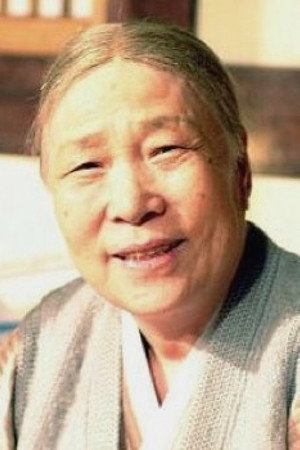
Jeong Ae-ran Movies, TV Shows, and Filmography
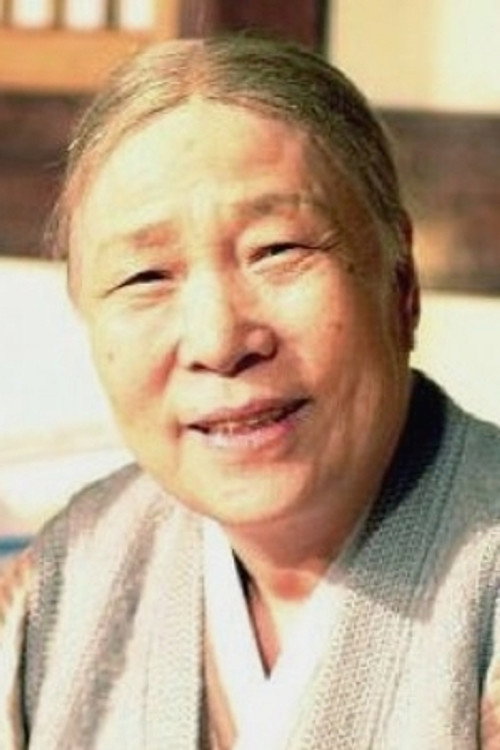
Jeong Ae-ran
Acting
Biography
Born in 1927 in Pyeongtaek, Gyeonggi-do, her real name was Ye Dae-im. She dropped out of Huaguang Girls' School in China. In 1943, she joined a musical theater group and began her acting career with plays. She debuted as a film actress in 1955 through director Lee Hyun's Watermill. She also appeared as a regular protagonist in horror films. In 1979, she showed off her passionate performance in director Byeon Jang-ho's Eulhwa, for which she won the 18th Grand Bell Awards for Best Supporting Actress. She passed away from old age at her home in Gyeonggi-do in 2005.
Filmography Movies
Acting
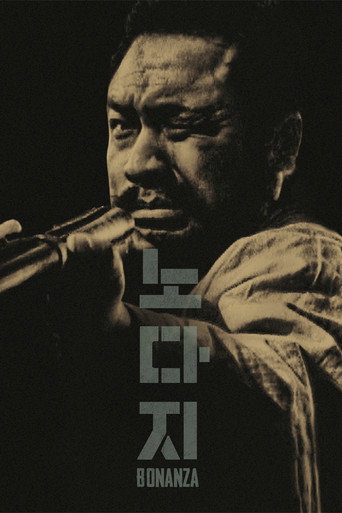
Bonanza
A young sailor arrives in Busan Harbour; an outrageous-looking, woolly bear of a man appears in downtown Busan with a shotgun over one shoulder, a heavy knapsack thrown over the other; a tough-looking young woman joins her friend in robbing a naïve fat man in a suit. The strands of character and story will slowly converge, well after the audience, tuned to the coincidences and mistaken identities of melodrama, has recognised that these three have a shared history and are fated to meet and reconcile.
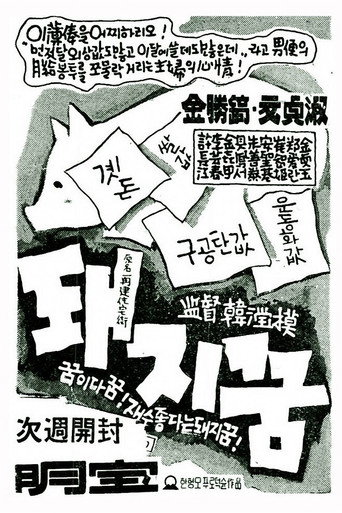
A Dream of Fortune
Son Hak-su (Kim Seung-ho) is a middle school teacher who barely gets by on his income because he's paying off a monthly mortgage for his welfare housing facility sold by the government. One day, Mr. Son and his wife make the acquaintance of a U.S. immigrant Charlie Hong (Heo Chang-kang) who is engaged in the smuggling business.
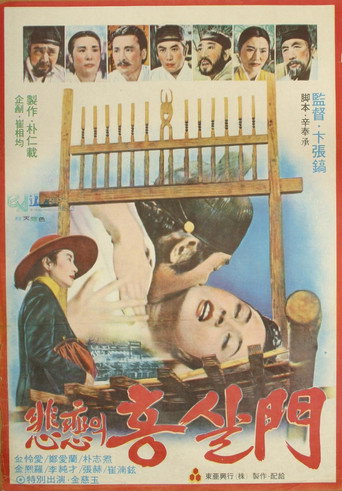
Red Gate of Tragedy
A woman arrives in Korea and makes her way to her ancestral home to learn the mysterious history of an ornate silver dagger in her possession.
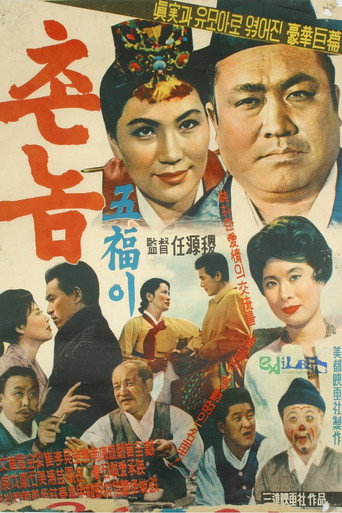
Bumpkin Oh-bok
Kind-hearted country bumpkin O-bok leads a simple life working as a long-time farmhand for the rich landlord Soon-young. When Soon-young discovers that his son Jae-seok has fallen for local girl Soon-yi, he protests the relationship and arranges for Soon-yi to be wed to O-bok instead. Despite the initial heartbreak, Soon-yi grows fond of O-bok over time and they have a daughter together named Sook-hee. However, when Jae-seok returns into Soon-yi’s life, she cannot resist his charms and runs away with him, leaving Jae-seok to raise Sook-hee on his own. Years later, Sook-hee is now a grown woman working in the city and in close contact with her father. However, a series of coincidences threaten to forcibly reunite O-bok and Sook-hee with Jae-seok and Soon-young in the most dramatic way possible.
A Shoeshine Boy
Following the death of his parents, Yeong-cheol shines shoes in the streets, struggling to care for his sick younger sister Yeong-hui and make ends meet. Despite the persuasive efforts of low-life criminal boss Wang-cho, pickpocket Jjang-gu, and prostitute Mi-hwa, Yeong-cheol vows to lead an honest life by looking after Yeong-hui with cigarette salesgirl Myeong-sun and helping newly arrived shoeshine boy Dong-seok settle in. However, a tragic accident forces Yeong-cheol to make an important decision that may change his life. ※ Sharing the same Korean title with Vittorio De Sica’s classic Shoeshine (1946), this film was noted at the time of release for its strong neorealistic approach. All of the picture elements have been lost and only 4 original sound negative reels (around 40 minutes) survive today. The plot summary and scene descriptions have been added in the form of title cards as well as a selection of production stills to aid the viewing experience.
For My Husband
His own father had hated Crown Prince Sado. The king finally orders to kill him by locking him up in a rice-chest. After his death, his wife Hong goes with her son to her parents' house to live there. Some high officials in the court constantly try to harm Sado's son because they don't want him to become king. But Hong's wisdom saved her son, who grows up to become the 22nd king of the Joseon Dynasty (1392-1910).
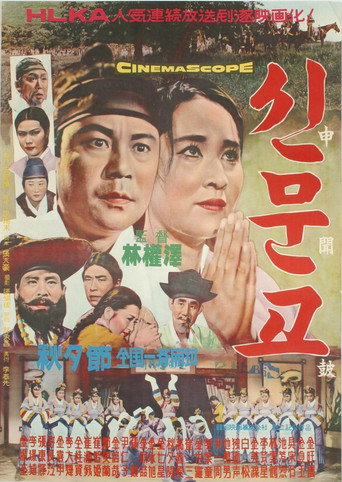
Sinmungo
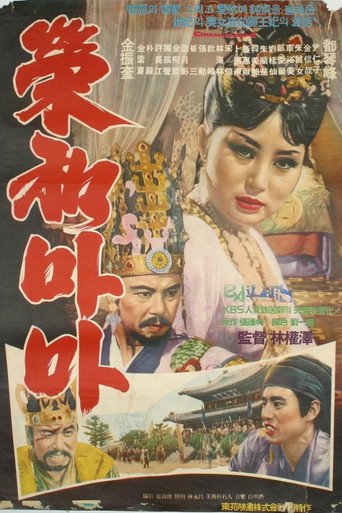
Her Majesty Yeonghwa
At the close of the reign of Sin the Great in Goguryeo (B.C.37-A.D.668), royalist Uso is executed by a false incrimination made by a treacherous retainer Yangsin and his sister Jangssi. His daughter becomes a royal concubine of King Nammu, and called Her Majesty Yeonghwa. She revenges herself on the party of Yangsin. After the king passes away, she makes his brother Yeonu accede to the throne and has the whole country under her thumb. But she has no child. When the king begets a son from another woman, she dies of jealousy at last.
The Regular Tardy Student
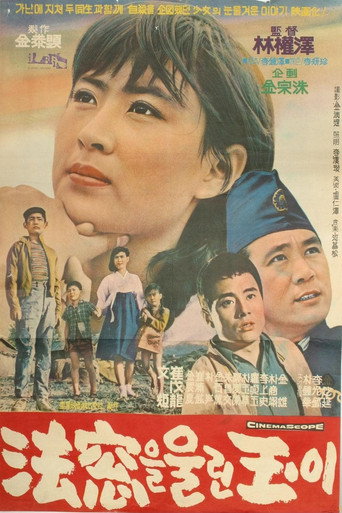
Ok-i Makes a Judge Cry
After her father, failed at stock investment and was shocked to death, a girl enters a textile factory and supports her family. But living on her small salary and repaying her father's debt is too difficult for her. In the end, she tries to kill herself together with her young brother. But only her brother dies, and she, who survives, stands at the bar guilty of patricide. She deserves the death penalty, but the court takes into consideration her circumstances and is generous enough to open up a new road for her to start again. A real-life story.
Gallery