Jeffrey Skoller Movies, TV Shows, and Filmography
Jeffrey Skoller
Camera
Biography
No biography available.
Filmography Movies
Production
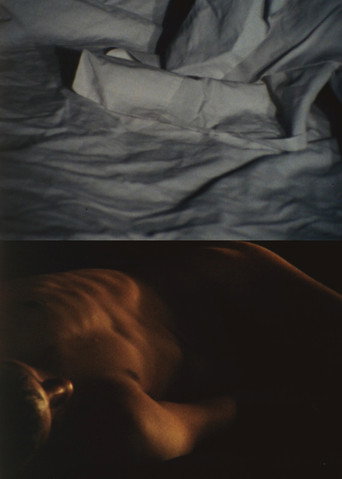
The Malady of Death
The Malady of Death is an adaptation of Marguerite Duras's story of the same name: her text comprises the voiceover, which is a particular reading of the story in which word and image, in a complex interplay, explore male sexuality.
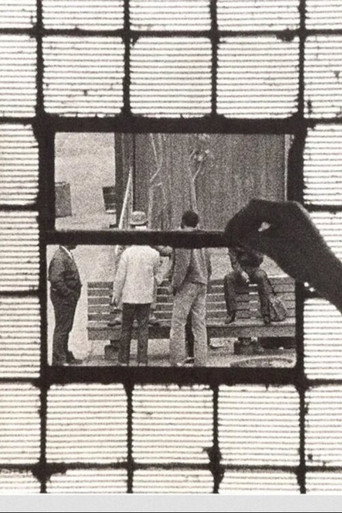
Moving In
MOVING IN begins as a documentary on the growing problem of homelessness in San Francisco in the wake of Reagan-era budget cuts and ends as a meditation on the filmmaker's own relationship to the situation. Having moved into a "bad" area as a middle-class artist searching for affordable living and working space, the filmmaker is confronted with his own luxury of choice about where he places himself in the world while surrounded by people who have no real choice. The film uses the filmmaker's "liberal guilt" about his own privilege to raise questions about whether or not it is possible to represent a world that the filmmaker has had little connection to without further exploiting, sentimentalizing or reinforcing the dehumanization of people who are victims of a political system that privileges greed over equality. MOVING IN is at once a film about homelessness and a question about how that situation is represented.
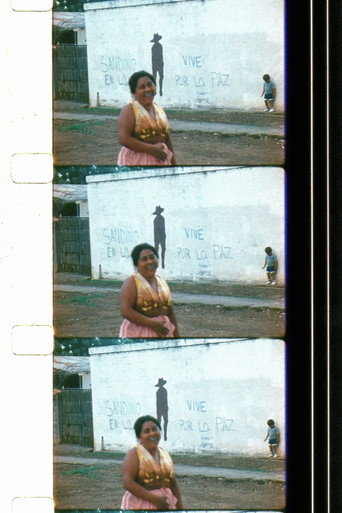
Nicaragua: Hear-say/see-here
This film is a modest attempt to better understand a situation that my own country's government and media have mystified and depersonalized by reducing the representations of Nicaragua to a war zone rather than a place where people live their lives. Using the process of making the film as a starting point for my own engagement with my subject, a world so different from my own, I begin with a question: As a North American, what is my relationship to Nicaragua?

Emily - Third Party Speculation
Emily - Third Party Speculation is the second of a ‘domestic trilogy’ exploring the relationship between the restricted camera viewpoint and the construction of documentary narrative. The other two films in the series are Blackbird Descending - tense alignment and Finnegan's Chin - temporal economy. Constructed around the repetition of ‘neutral’ domestic scenes, this film attempts to address the problems of identification in cinema.
Emily - Third Party Speculation
Emily - Third Party Speculation is the second of a ‘domestic trilogy’ exploring the relationship between the restricted camera viewpoint and the construction of documentary narrative. The other two films in the series are Blackbird Descending - tense alignment and Finnegan's Chin - temporal economy. Constructed around the repetition of ‘neutral’ domestic scenes, this film attempts to address the problems of identification in cinema.
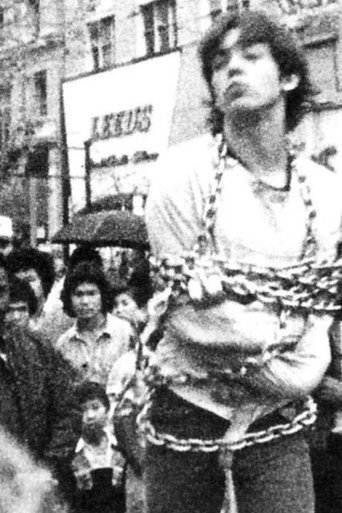
Topography/Surface Writing
“Starting from the adage by Walter Benjamin ‘not to aestheticize politics, but rather to politicize aesthetics,’ the thrust of my explorations ask the question: What does it mean to be a socially aware person who chooses to be active as a film-artist in the age of Reagan and Star Wars. Topography Surface Writing is a film of bits and pieces. It is a film without a center. Like daily life we move between events, images, sounds, ideas which never really begin or end; yet in their constant parade, they become who we are and what we are; it is the surface upon which we traverse.” – J.S.