Jean Painlevé Movies, TV Shows, and Filmography
Jean Painlevé
Directing
Biography
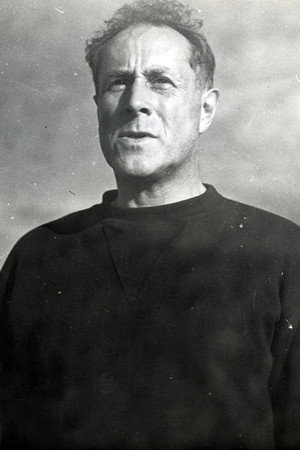
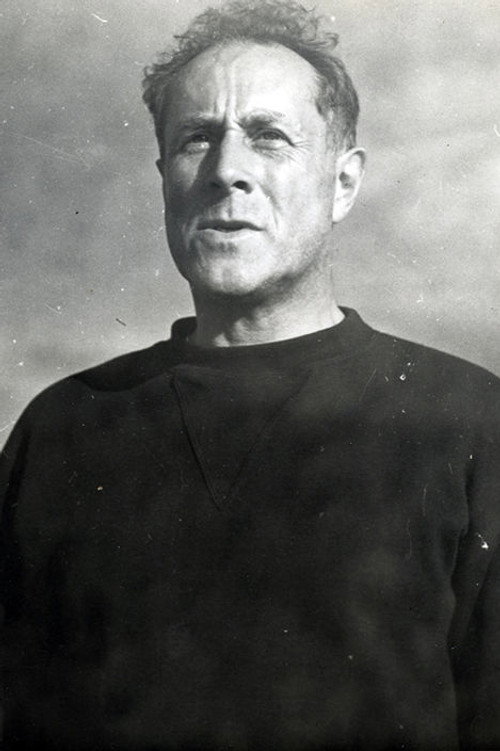
Jean Painlevé was a French photographer and filmmaker who specialized in underwater fauna.
Filmography Movies
Acting
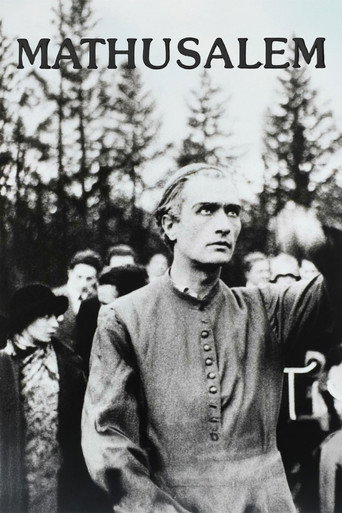
Mathusalem
Mathusalem (or Methuselah) is a 1922 play by Ivan Goll, considered a precursor of the theater of the absurd. The 1927 run of the play saw five sequences-- some of Jean Painlevé's earliest film work-- projected against a backdrop of white clouds.
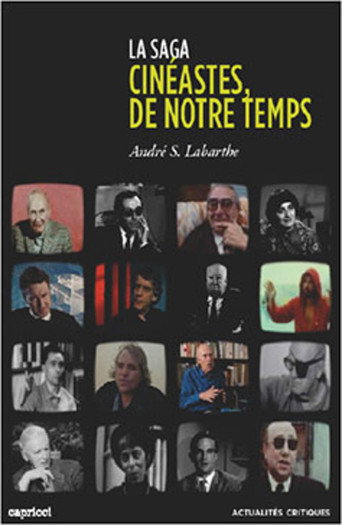
Cinéastes de notre temps : Jean Vigo
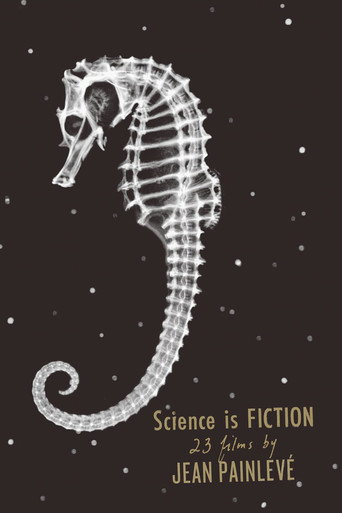
Jean Painlevé Through His Films
This documentary about the life and work of filmmaker Jean Painlevé was originally presented in eight parts on French television. It was edited to remove duplicated material from its original length of 240 minutes.
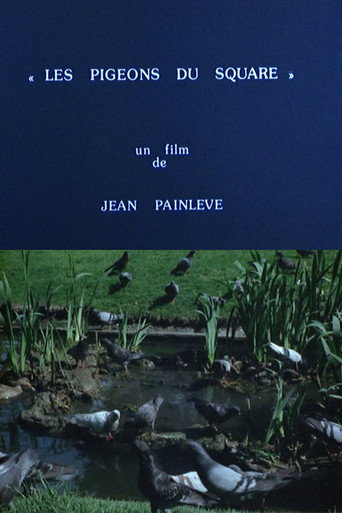
Pigeons in the Square
An enthusiastic grandfather sits with children in a Parisian park talking about pigeons. First. their physical appearance—eye, wings and tail, and color—and their varieties. Then, he encourages the children to imitate their walk. He points out courtship and mating rituals, then provides an illustrated discussion of how they eat. This section is punctuated by a flock of pigeons fighting over a small, hard ball each wants to eat; the narrator's describes it as if it were a soccer match. He concludes with a discussion of pigeons taking off, landing, and flying; he uses slow motion and stop-time photography to show his audience.
Production
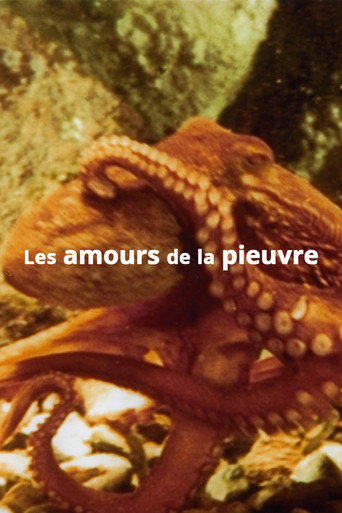
The Love Life of an Octopus
An octopus slithers into a narrow crack near the shore; we see its eye up close. It feeds on a crab. In spring it's time to mate. A male grabs a female; he inserts his third arm in her respiratory cavity. We watch another pair: a larger female is the aggressor here. Mating is repeated over hours and days. The female releases strings of fertilized eggs that hang from the roof of a nest. She guards her spawn for a month, fanning the strings to circulate water for oxygen and cleanliness.
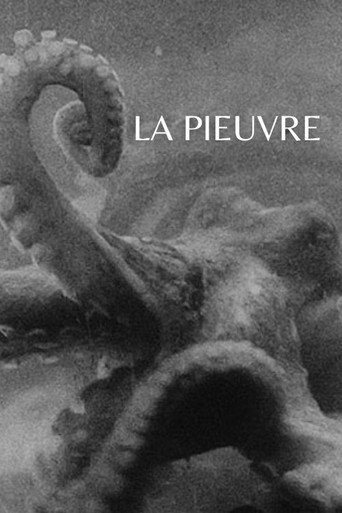
The Octopus
An octopus slithers over objects on land—a doll, a skull—then oozes along the shore into the sea. It secretes its ink. The camera follows it along rocks into deeper water, watching closely as it breathes. Its eye is closed then open. Simple titles, in French and German, suggest what to watch. The octopus alternates the use of breathing tubes on either side. It changes color as cells on its skin contract or dilate. Extreme magnification helps us see these changes. Two struggle, one dies. On shore, fishermen catch them and put them in pails. A single tentacle still has life. Back in the sea, two octopi attack a crab. Soon only a couple of crab legs are visible in the mouth of the victor.
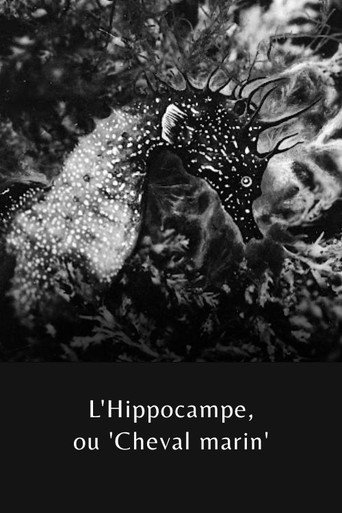
The Sea Horse
Examines the sea horse, the only fish that swims upright. We watch it use its prehensile tail to wrap around plants and other sea horses. A frontal bulge houses organs including an air ballast. Three fins propel this fish. We see a female place her eggs in a male's pouch where they are fertilized and nurtured until birth in violent contractions. Inside the pouch are nurturing blood vessels. We then follow the growth of an embryo, greatly magnified: we examine its heart beating and its dorsal fin moving. Young sea horses attach themselves to each other. The film ends with images of many sea horses moving on the ocean floor, superimposed on a horse race.
The Sea Horse
Examines the sea horse, the only fish that swims upright. We watch it use its prehensile tail to wrap around plants and other sea horses. A frontal bulge houses organs including an air ballast. Three fins propel this fish. We see a female place her eggs in a male's pouch where they are fertilized and nurtured until birth in violent contractions. Inside the pouch are nurturing blood vessels. We then follow the growth of an embryo, greatly magnified: we examine its heart beating and its dorsal fin moving. Young sea horses attach themselves to each other. The film ends with images of many sea horses moving on the ocean floor, superimposed on a horse race.
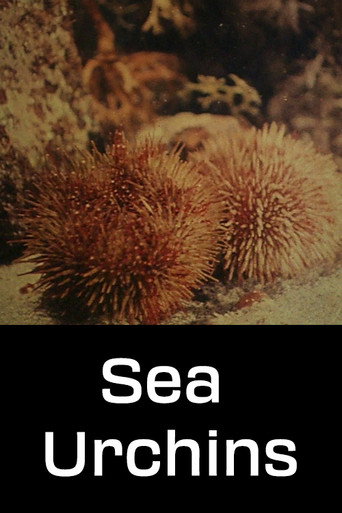
Sea Urchins
Underwater photography, magnified close-ups, and film through microscope present the sea urchin, a complex creature. We see their mouth and five teeth close and open. After injecting one with gelatin, the shell is removed and we see the muscle structure, digestive tube, and reproductive organs. Magnified stems reveal suction cups; stems lengthen and contract allowing the sea urchin to move. We see microscopic calcareous stems; at their ends are jaws with various uses. Cilia everywhere are in constant motion, stirring up water and debris. African music on the soundtrack suggests a shuffle dance.
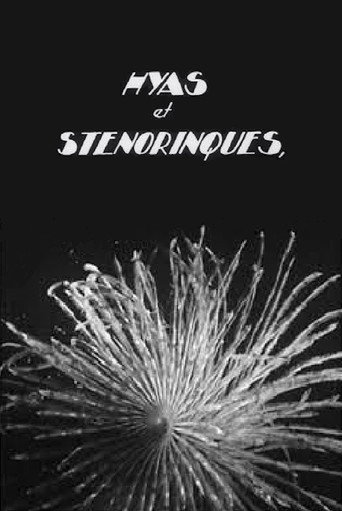
Hyas and Stenorhynchus
In close-ups and extreme close-ups, we watch two small species of marine crustaceans, the slender long-legged stenorhynchus and the clumsy, short-legged hyas. To blend in, both cover themselves with found objects, such as algae and sponges. We watch them move, eat, greet each other, and fight. They have small mandibles and large claws. Near them are spirograph worms, 6 inches long, with a plume of branchiae that fan out like exploding fireworks. We see vibrating cilia, 0.001 mm long, on the branchiae, sending food toward the mouth at the plume's center. Chopin's music and an off-screen narrator suggest we're watching a ballet.
The Sea Horse
Examines the sea horse, the only fish that swims upright. We watch it use its prehensile tail to wrap around plants and other sea horses. A frontal bulge houses organs including an air ballast. Three fins propel this fish. We see a female place her eggs in a male's pouch where they are fertilized and nurtured until birth in violent contractions. Inside the pouch are nurturing blood vessels. We then follow the growth of an embryo, greatly magnified: we examine its heart beating and its dorsal fin moving. Young sea horses attach themselves to each other. The film ends with images of many sea horses moving on the ocean floor, superimposed on a horse race.
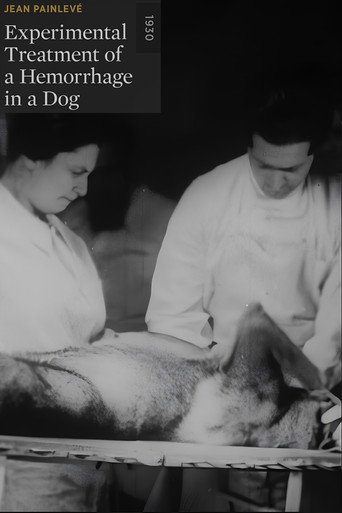
Experimental Treatment of a Hemorrhage in a Dog
Jean Painleve short about an experimental canine surgery.
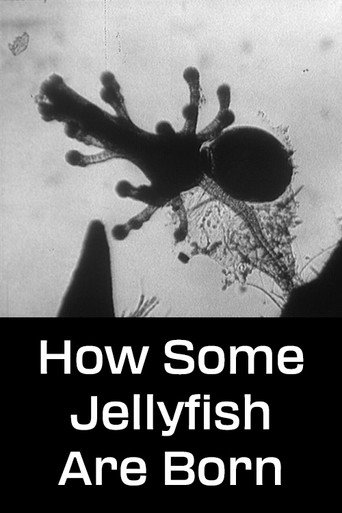
How Some Jellyfish Are Born
At a marine biology station, a clump of algae reveals polyps, stomachs with limbs, limbs with buds, buds with poison cells. This animal reproduces by buds, which we watch close up in time-lapse images. In another kind of jellyfish, the buds grow inside then live outside for a few days until being on their own. Another produces eggs, sometimes self-fertilized. Some single eggs become buds with colonies. Another clump gathered at low tide consists of filaments of a colony - plumes with poison ends. In images taking 72 hours, we see filaments grow and produce a feeding organ from which a plume emerges. New jellyfish emerge from buds twice a day at set times to form a new colonies.
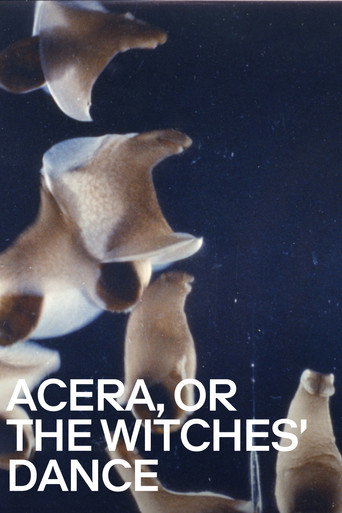
Acera, or the Witches' Dance
In mud flats along the coast of Brittany we watch acera, small ball-shaped mollusks that are about two inches in diameter. They rest in mud; then, in water, they dance, their skirt-like hood spreading like a dervish's cassock. They spin and spin. The film adds musical accompaniment. We watch them mate and secrete eggs: acera are both male and female, and can form chains with other acera in which they simultaneously mate as a male and as a female. The eggs hatch, and the cycle begins again.
Gallery