Jean-Michel Bouhours Movies, TV Shows, and Filmography
Jean-Michel Bouhours
Directing
Biography
Master in cinema, University of Paris VIII-Vincennes. Co-founder of Paris Films Coop in 1976. Member of the board of Light Cone between 2008 and 2016. In charge of film programs then first curator for the film, head of cinema department between 1992 and 2003 at Musée national d'art moderne, Centre Pompidou. Director of Nouveau musée national de Monaco 2003-2008. Curator in chief, head of Modern collections at Musée national d'art moderne, Centre Pompidou since 2008. Curator and historian of art free lance since 2017.
Filmography Movies
Acting
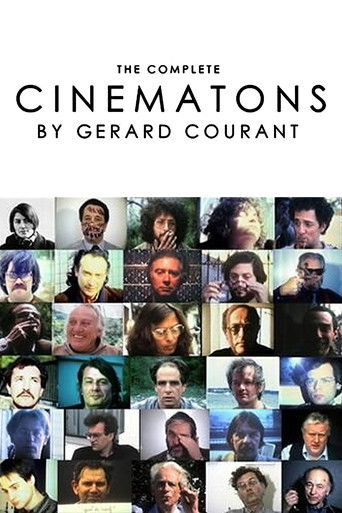
Cinématon
Cinématon is a 156-hour long experimental film by French director Gérard Courant. It was the longest film ever released until 2011. Composed over 36 years from 1978 until 2006, it consists of a series of over 2,821 silent vignettes (cinématons), each 3 minutes and 25 seconds long, of various celebrities, artists, journalists and friends of the director, each doing whatever they want for the allotted time. Subjects of the film include directors Barbet Schroeder, Nagisa Oshima, Volker Schlöndorff, Ken Loach, Benjamin Cuq, Youssef Chahine, Wim Wenders, Joseph Losey, Jean-Luc Godard, Samuel Fuller and Terry Gilliam, chess grandmaster Joël Lautier, and actors Roberto Benigni, Stéphane Audran, Julie Delpy and Lesley Chatterley. Gilliam is featured eating a 100-franc note, while Fuller smokes a cigar. Courant's favourite subject was a 7-month-old baby. The film was screened in its then-entirety in Avignon in November 2009 and was screened in Redondo Beach, CA on April 9, 2010.
Cinématon XV
Reel 15 of Gérard Courant's on-going Cinematon series.
Melba Film Coop
Covers the making of the multicolored magazine for technological arts, Melba, edited by Claudine Eizykman and in which Guy Fihman, Dominique Willoughby, among others, were active participants, with 5 issues published between 1976 and 1979.
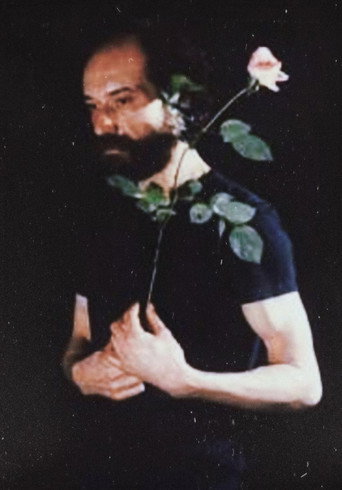
Portraits / Mirrors
A single-screen version of the Portraits / Mirrors multi-projection. Featuring portraits of: Aloual, Gaël Badaud, Raphaël Bassan, Yann Beauvais, Jean-Michel Bouhours, Gérard Courant, Berndt Deprez, Bertrand Gadenne, Mythia Kolésar, Christian Lebrat, Stéphane Marti, Pascal Martin, Michel Nedjar, Dominique Noguez, Vivian Ostrovsky, Bernard Roué, Martine Rousset, Alain Sayag, Unglee, and Catherine Zbinden.
Production
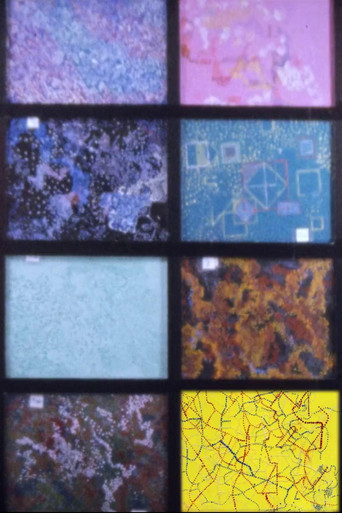
Chantilly Revisited
Chantilly Revisited combines the slow-motion images of the film Chantilly (1976) and the original painted elements. It is a work of deconstruction of the grid of the original film which confronts the cinematographic framework as a unit with multiple subdivisions. Does the image framework remain an unsurpassable convention, inherent in the very principle of the traditional image? A reflection on abstraction in cinema.
Ombre blanche de l'homme qui marche
In The Strange Story of Peter Schlemihl written in 1813 by Adelbert von Chamisso, out of necessity of money, the hero decides to sell his shadow to the devil; this shadow is of no use to him; as much as having money. But his life of a being without shade soon becomes unbearable; he is stigmatized as a being apart and is the laughing stock of everyone he crosses. Strange story of a being become strange. So he decides to re buy it back but for that will have to sell his soul to the devil. The shadow (black) is a double that never leaves the Being. The white shadow, negative of the previous one, is obtained by means of a china plate with bas-relief motifs and lit by the back. The expression "White Shadow" thanks to its poetic power became the title of a film by Flaherty, then the name of a bookstore, which was so flourishing that by consulting google today I could not find the origin of the word.
Sol y Jaima
A cinema experience with sun, wind and a piece of cloth as the only elements. Man's experience of the play of light and movement preceded not only the invention of the cinematographic device, but also the cave described by Plato in The Republic.
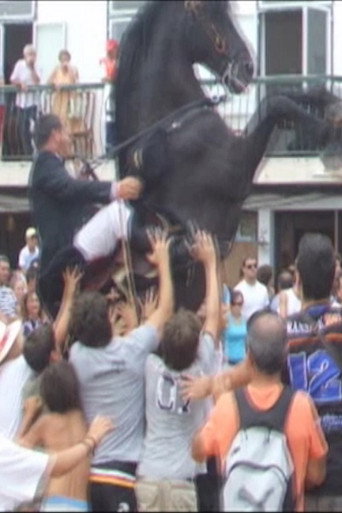
Jaleo
The Jaleo is a summer festival on the island of Menorca (Spain) based on a parade of horses native to the island and exemplary docility, ridden by funny riders, dressed as clergymen or academicians wearing bicorns. The party lasts 24 hours without interruption. The most reckless among the public, often under the influence of alcohol, must raise the animal and move it forward on its two hind legs as long as possible. The musical motif is constantly repeated and becomes a haunting, obsessive tune. The images were captured with what I had on hand: a mobile phone that forced me to record very short sequences. The montage highlights the power of enchantment by repeating situations, gestures and musical motifs. JMB
Film blanc
The history of modern painting includes white paintings . So why not a "white film"? This film includes images, from the oldest Romanesque cloister in Aragon, dating from the 10th century. These are diaphanous images, devoid of temporality and materiality, bordering on visibility. The repetitive and evanescent character is peculiar to a meditative state, to an illumination. The rhythm is that of the metamorphoses of the shapes of the clouds.
Sous le signe du lion
It was while proceeding with the digital restoration of the film CHANTILLY produced in 1976 that the idea for this project came about. Originally the idea was to do a follow-up to the original film, a sort of unrolling of all the graphic elements of the "multi-screen" grid; but very quickly, another film came to the fore. The superimposition of 80 painted transparent celluloid gels and monochromes used for the backgrounds called for new elements to come from a different personal, contemporary reality.
Proscenium
A meditative film on a composite A+B image. Image B will be in turn an extract from a film by Vittorio de Sica (DUE DONNE), the sun in the trees, the sea, a cliff, the Traveller Contemplating a Sea of Clouds (Friedrich) or his heirs. When image A is alone on the screen, it is a green theatre. When image B appears inside image A, the gaze is immediately drawn to this smaller image, the cinema image.
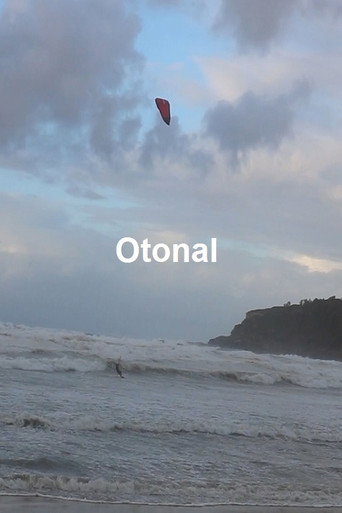
Otonal
According to Hesiod, autumn begins when the Pleiades, the daughters of Atlas, rise. It is generally said that autumn is the most beautiful of the seasons, for the spectacle that nature offers but also because it is the time of the harvest and the grape harvest: "the march of Bacchus and his procession" wrote Lucretius.
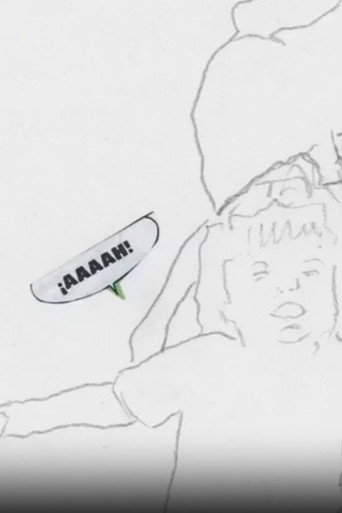
Elna In Motion
The psychomotor development of a young child followed between the ages of 8 and 18 months serves as a reminder of how this extraordinary potential for human development will very quickly be undermined by the capture of the child's attention via screens, with the aim of making him or her as good a part of consumerist society as possible as quickly as possible. The film is based on a discrepancy between this global phenomenon of child sacrifice, with its devastating effects, which is the work of the mass media, and an 'experimental' cinematographic language that cannot be retrieved by what is known as the 'attention economy'.