Directing
No biography available.
The last film prohibited by Francisco Franco. Jean-Marie Buchet plays the role of a collector of used tampons in this avant-garde comedy-adventure film.
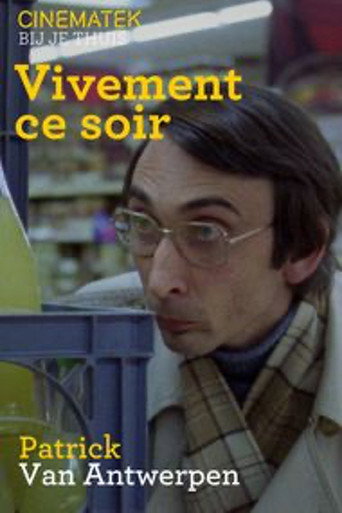
The film records a day in a supermarket in the Brussels region. The story of this day's little events, both comic and touching, provides the general framework of the film. The situations which are conveyed through an accumulation of quick, light touches, highlight some of the ways we behave in connection with food, the repetitive element in our gestures and movements in this everyday, enclosed world which is so familiar. The film is based on the observation of a supermarket and the people who shop or work there. More and more of their various personalities emerge in the course of the day. They all have their importance: we get to know them from the outside, like people in a group photo where each has his own place. All these individuals cross each other's paths, meet each other, bump into each other again and fill in the framework of the film with a many-sided tableau.
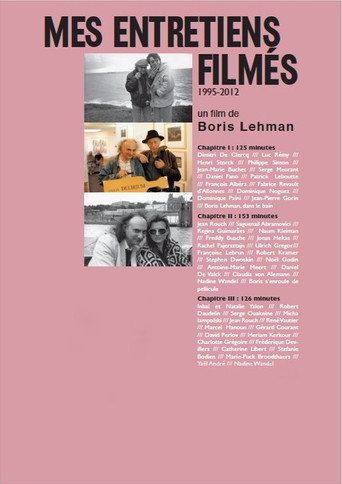
This distinctly personal journey into the artistic possibilities of independent film is not to be missed. Jonas Mekas, Jean-Pierre Gorin, Robert Kramer and many other visionaries and mavericks of the silver screen – as well as a book seller, a critic and a psychoanalyst – discuss what cinema has meant to them, what it is and what it could be and, implicitly, how it has changed over the 18 years in which this film was shot. Director Boris Lehman leads the charge, drawing in moments of absurdist humour and inventive camera work; he keeps things raw and spontaneous. His encounters with the now much-missed Jean Rouch and Stephen Dwoskin are particularly touching and stand testament to their personal playfulness and candour. An engaging, absorbing, epic odyssey of a movie.
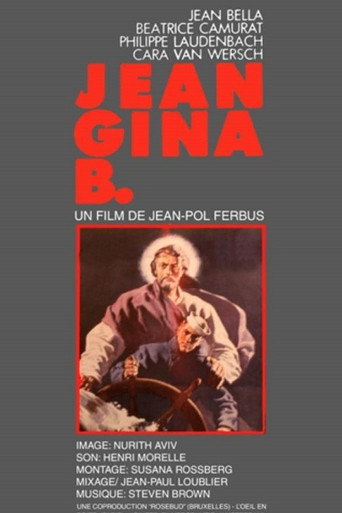
This film is based on the true story of Jean Bella, who served as an officer in the Belgian Marine while being convinced, from an early age, that he was in fact a woman. Director Jean-Pol Ferbus follows Jean Bella and makes him talk about his life, psychological and spiritual experiences and reveals the true poet who remained undisclosed for most of this person's life. The film ultimately isn't about transexuality but about loneliness one can experience when he/she feels very deeply that she/he belongs to the two sexes and this in a deep, almost religious, fashion, to such an extent that sexuality itself is being erased from one's life. Jean-Gina Bella is a woman in the body of a man who bravely lived a life on the sea, eventually fighting the elements, talking to God when lost on the immense solitary ocean. This testimony is a very touching and poetic one.
Marilyn’s shine flickering into your eyes, Marilyn’s mind melting into your mind, Marilyn’s heart beating inside of your chest,…if you so wish. – R.L.Before you start the film please light a candle and after stopping the film, please blow it out. Should the candle accidentally stop burning, do not light it anew: it means that the performance is over.
Pierre lives with his mother in an antiquated house in a run-down working-class area. Every morning, Pierre takes the tram to his job at the town hall, where he listens to his colleagues' jokes over the lunch break. His only hope of banishing his boredom and frustration is a girl from the gymnastics club. One evening, when his mother is out of the house, he decides to invite her into his home [Avila].
An actor pretends to be a writer. He sits in his office, reflects and puts words to paper, which are then performed by Jan Decorte. The text influences the situations shown and vice versa [Avila].
Caught between the impetuousness of youth and the responsibilities of adulthood, five angsty teens face an uncertain future.
This short-film depicts the life of a couple with nothing to do and that has no TV, on a sunday afternoon.
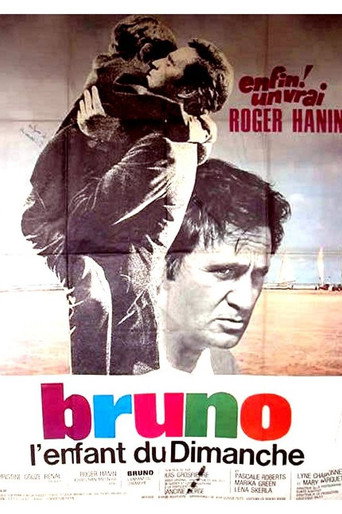
The weekend of August 15th gives the opportunity to Michel Fauvet, a recently divorced father, to spend two full days with Bruno, his thirteen-year-old son, that he can normally see only one Sunday a month. Feeling guilty, he tries to compensate for the trauma inflicted to Bruno by giving him presents. This time around, Michel has decided to treat him to a nice trip to Bruges and the Belgian Coast. Which will not prevent Bruno from asking his father disturbing questions.
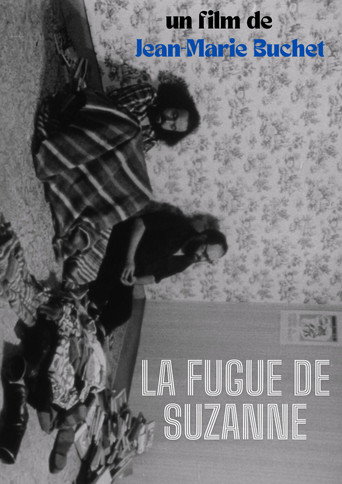
Suzanne has had enough of her boyfriend Albert. The drama unfolds in fifteen tableaux, in which she goes over to Albert's friend Emile. Still, these romantic worries go hand in hand with insatiable boredom.
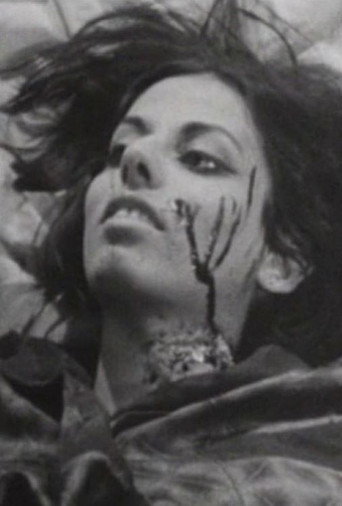
Shots of a car speeding down the road are intercut with kinky sex flashes (a woman with a whip rides a guy, for instance). Then the car crashes into a tree, the male driver (Christian Chaix) is decapitated and the bloody, injured female (Marie-Paule Mailleux) scoops up his head and returns to her home. There, she cleans herself and the head off, prepares dinner for herself and the head, buys the head a Ken Doll to keep it company, puts the head on a mannequin's body and then has a series of strange hallucinations, which include having sex with her bloodied lover, dancing in a room by herself with a spotlight, etc. Things culminate in her having sex with the head and then throwing it into the trash bin.
absurdist short about a wonderful day.
The terrible revenge of a woman who sees the man she desires with another woman...