Jean-Louis Milesi Movies, TV Shows, and Filmography

Jean-Louis Milesi
Writing
Biography
No biography available.
Filmography Movies

Production

Marius and Jeannette
Jeannette is a single mother living in a working-class community in Marseilles; she tries to support herself and her two kids on her salary as a check-out girl at a supermarket and lives in an apartment complex where everyone is thrown into close proximity with everyone else. Marius is working as a security guard at a cement factory that has gone out of business; he's also squatting in the building, since the plant is soon to be demolished and he'll be needing his money later on. One day, Jeannette happens by the factory, and spotting several cans of paint, tries to take two of them home with her. Marius spots her and tries to chase her away, while she rails at him with curses against the capitalist system. The next day, an apologetic Marius appears at her doorstep, cans of paint in hand; the two soon become friendly, and a romance begins to bloom, though it quickly becomes obvious that Jeannette's romance novel fantasies are a bit off the mark from what Marius has in mind.
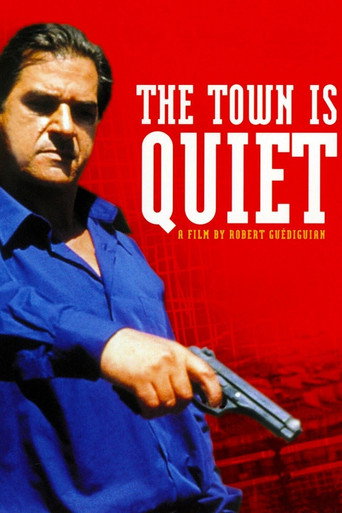
The Town Is Quiet
A dark tale of working-class life in Marseilles, a city in crisis. Interesting characters include a hard-bitten but compassionate fish market worker with a drug addicted daughter and a moody bartender with a shocking secret life.

Marie-Jo and Her 2 Loves
Marie-Jo is a middleaged woman living an ordinary life in Marseilles with her husband, Daniel and her daughter, Julie. Daniel runs a small construction business in which Marie-Jo helps. She also works at the local hospital. Outwardly their marriage is loving. But Marie-Jo has been in love with another man for more than twelve months.Marco works as a harbour pilot and is deeply in love with Marie-Jo. Learning that loving two men is impossible, Marie-Jo is forced to make a choice.
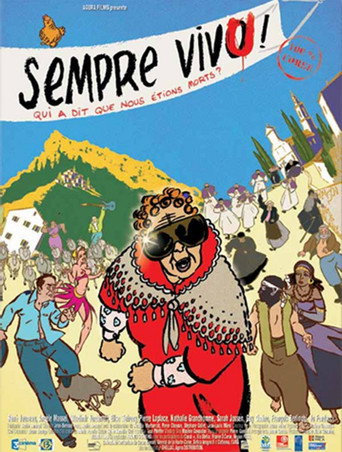
Always Alive
Ange, the mayor of a distant mountain village in Corsica becoming depopulated has launched a drama workshop supposed to give new life to the region. To this end he is to sign a contract with a cabinet minister for whom the villagers are rehearsing a play. It is the very day of the coming of the minister that Ange chooses to pass away, which infuriates his cantankerous wife Lellè. The contract must be signed anyway but how to go about it, mainly with such a family as Ange's: Rinatu, the nationalist, traditionalist son; Sauveur, the former local policeman turned politician; Marcia, Rinatu's daughter, determined to perform the play at any cost; Ange's two wives, the official one: the bad-tempered Lellè, and the unofficial one, the Indian domestic worker of Indian origin? To say nothing of Pantaleone, the deputy mayor, whose wife has been one of Ange's (numerous) mistresses.
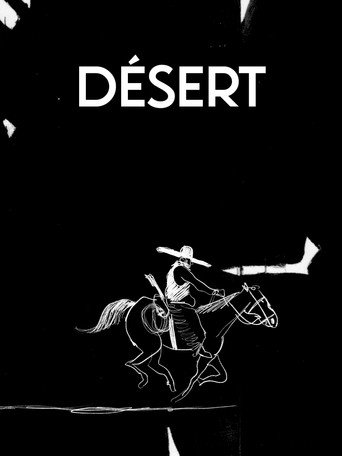
Désert
1889. Having come to France as part of Buffalo Bill's Wild West Show Tour for the Paris World Fair, Rahimé Valladier, known as the Mexican, sets off in search of the Holy Spirit, a treasure supposedly left behind by his ancestors, Protestants from the Cévennes who had fled Catholic repression following the revocation of the Edict of Nantes (1685). Back on his ancestral land, and despite the new-found freedom of religion, he discovered the Cévennes people's struggle to survive: after the boom in silkworms and mining, the Cévennes became impoverished from the mid-19th century onwards. At the same time, a law imposed the French language on schools, to the detriment of Occitan. A culture was dying.
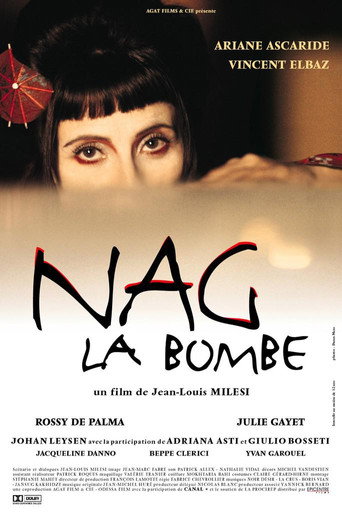
Nag la Bombe
Nag, a prostitute, walks the streets. One night, a violent man sends her to the hospital. There she meets Herve, a nurse obsessed with people's age and death in general. He falls madly in love with Nag and enters a world that amounts to very little.
Nag la Bombe
Nag, a prostitute, walks the streets. One night, a violent man sends her to the hospital. There she meets Herve, a nurse obsessed with people's age and death in general. He falls madly in love with Nag and enters a world that amounts to very little.
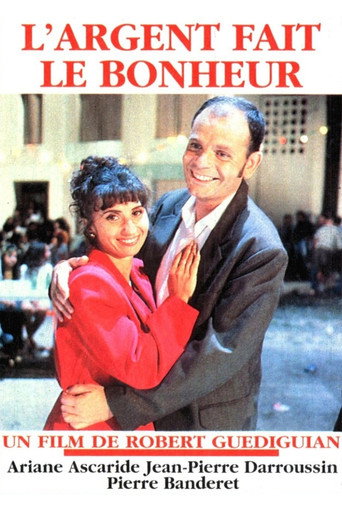
L'argent fait le bonheur
How the mothers of a deprived suburb of Marseille will create a solidarity committee under the aegis of the parish priest. Gathered in assembly, they will invent a solution to the endemic misery of their city.
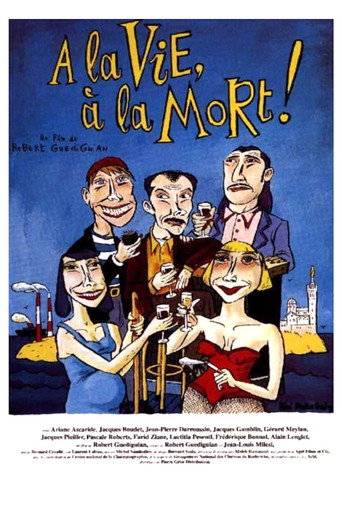
'Till Death Do Us Part
In Estaque, a northern suburb of Marseilles, stuck between oil refinery smokestacks and the Mediterranean sea, a handful of die-hards has taken refuge in a cabaret. There is José, the owner, a big-hearted gypsy who loves cars and women's bodies; Joséfa, his wife, the establishment's stripper despite her advanced years and Marie-Sol who climbs the hill every day to visit Notre-Dame de la Garde and beseech Virgin Mary to give her a child. There is Patrick, her husband who has been unemployed for ages but who is kind despite appearances and their friend Jaco who is having a hard time. His wife and daughters hate him for not keeping up on the mortgage repayments. Last but not least is Papa Carlossa who believes that Franco still rules Spain and fantasizes about bumping him off.

Where the Heart Is
From the director of Marius et Jeannette, this story of two working-class families is a fable with an optimist streak. A young black man, Francois, is wrongly accused of rape by a racist policeman. The story is told in voiceover by his childhood friend, neighbor, and the mother of his future child, Clementine, who is white. The city is Marseilles as in the previous film, symbolic with its churches, prisons and ruins. Except in this film, director Robert Guediguian also ventures outside, taking the story to Sarajevo; two different cities, one devastated by war, the other by a bad economy and unemployment. A la Place du coeur won a Special Jury Prize at the 1998 San Sebastian Film Festival and was also shown at the 1998 Toronto Film Festival and the 1998 Montreal Film Festival.
Gallery