Jean Brahn Movies, TV Shows, and Filmography
Jean Brahn
Acting
Biography
No biography available.
Filmography Movies
Acting
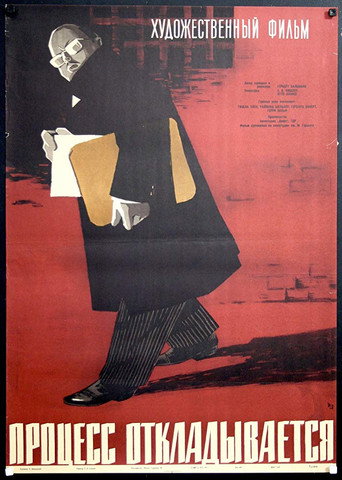
Der Prozeß wird vertagt
In 1955, Michael Vierkant, a Jew who had emigrated during the Nazi era, returns from abroad to the Federal Republic of Germany to obtain the conviction of Korn, the former informer responsible for the murder of his sister. Korn is back in office; Michael's efforts remain unsuccessful. There is a direct confrontation between the two, and Michael shoots Korn in self-defense. He flees and is hidden by the young, reclusive artist Marie Jäger, but is then caught by the police and charged with premeditated murder. The case is taken out of the hands of the criminal investigation department by the Office for the Protection of the Constitution, which constructs an act of political revenge on behalf of the communists. Michael manages to escape from prison. Marie and her friends organize a press conference at which Michael reveals the connections. The trial is postponed.
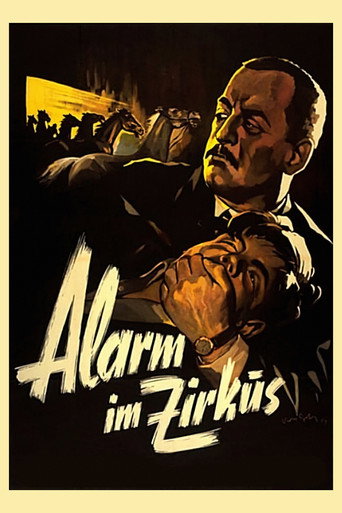
Alarm at the Circus
Two boys from West Berlin, Klaus and Max, live in poverty. They dream of a career in boxing and save every penny in order to buy boxing gloves for training. Nevertheless, they cannot seem to save enough and so they let themselves be hired by the bartender Klott for a twisted scheme. However, Klaus overhears one of Klott's conversations and learns that Klott intends for the boys to steal horses from the East Berlin Barlay Circus, where Klaus recently made some good friends. Indignant, he sets out to stop the robbery—and an adventurous action story results.
Kawulke contra Meyer
A heated argument has broken out between two parties in a block of flats in Berlin. The families in question, the Kawulkes and the Meyers, clashed over a garbage can. In addition, all the tenants in the building are annoyed by the eternal puddle in front of the front door. But things get even more heated when a "house community" is formed. The story gets its special flair as a rendezvous of typical Berliners, equipped with a certain brashness and with heart and humor.
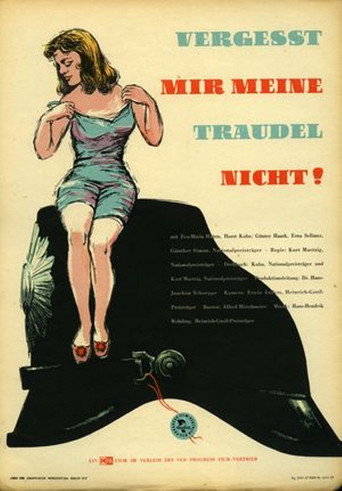
Don't Forget My Little Traudel
17-year-old Traudel flees the orphanage she has to live in, in order to venture to Berlin.
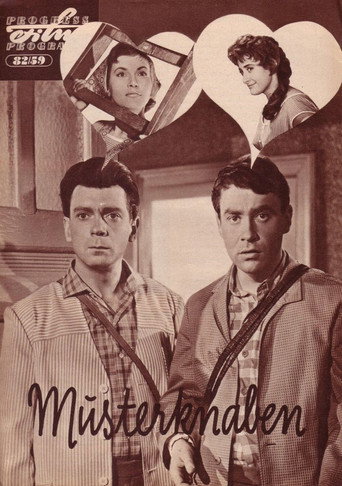
Musterknaben
Two young building workers are more interested in girls than their work; complications ensue at home.
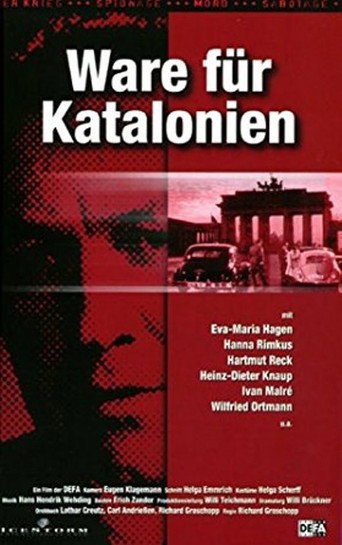
Ware für Katalonien
At the end of the 1950s, the production of optics in the German Democratic Republic has reached top quality and instigates interest in the West. When national demand rises strongly and at the same time the export to South America heavily decreases, the Volkspolizei - the GDR police force - starts to look into the case. Two seemingly unrelated cases are the starting point for the investigation by second lieutenant Schellenberg of the department for optics racketeering: An old woman who was arrested in the Berlin city railway for trying to smuggle a pair of binoculars to West Berlin, and a dead person in an area of allotments who was involved in obscure dealings with optical devices.
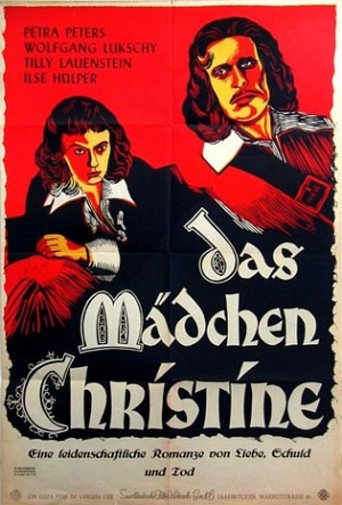
Das Mädchen Christine
During the Thirty Years' War, Christine, an orphan, falls in love with the colonel Count Merian. In order to always be with him, she puts on men's clothes, becomes a troop boy and later even a cornet - only the sutler knows her secret. Little by little, Christine realizes that the man she loves has been brutalized by the war and is no longer capable of true feelings. When she gives herself to him instead of a peasant maid, she is horrified by his brutality. She shoots him in a duel. She is sentenced to death as a cornet, but acquitted as a woman.
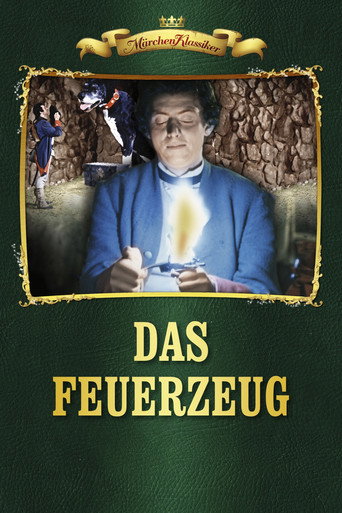
The Tinder Box
A young soldier discovers three chests of copper, silver and gold and an old tinder-box in the hollow of an old oak tree. He is now rich. But he squanders the money until it is all gone. All he has left is the old tinder-box. He uses it to light a small pipe and three large dogs come to his rescue. Based on the fairy-tale by Hans Christian Anderson.
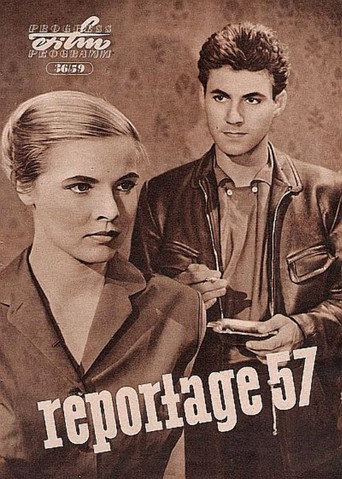
Reportage 57
The film centers on the story of newlyweds Inga and Heinz. Heinz works in the western sector of Berlin. A gang of crooks involved in various shady dealings tries to draw Heinz into their dark affairs. However, after accidentally learning about the "activities" of his "friends," Heinz informs the police about the impending crime. The gang is arrested.
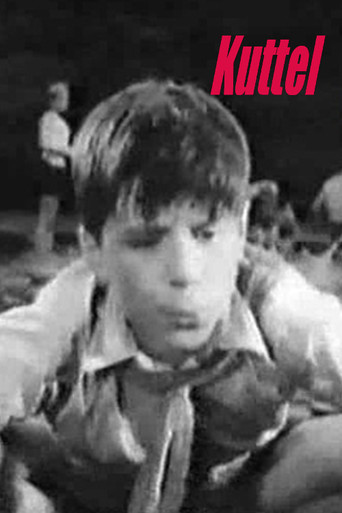
Kuttel
Young Kuttel belongs to a group of working-class children who live in Berlin at the beginning of the 1930s. In the big summer holidays in 1931, the children want to make a race with their model boats and choose as a venue for the small artificial water in the park of their neighborhood. All children in the area are invited to participate in the competition. But there is a traitor among them, who tells the company to the local police officers, who in any case look with arrogance on the "Reds"...