Jean Afanassieff Movies, TV Shows, and Filmography
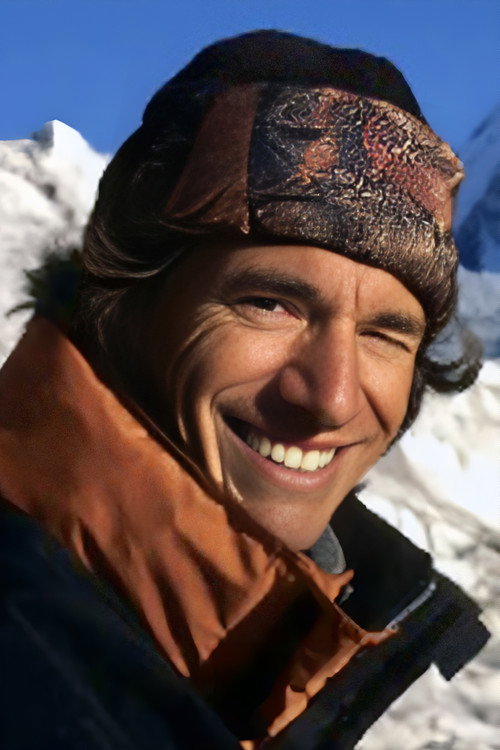
Jean Afanassieff
Directing
Biography
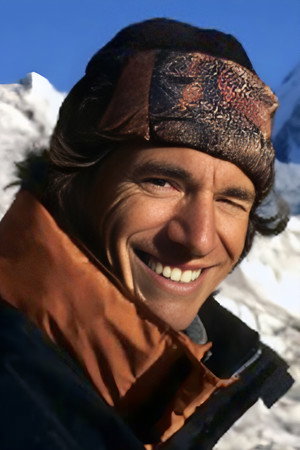
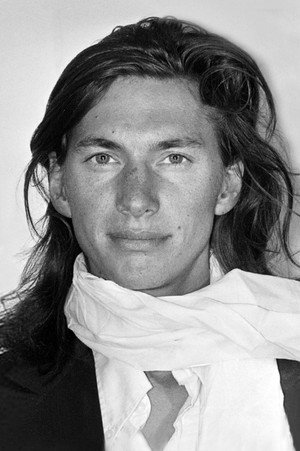
Jean Afanassieff, born February 17, 1953 born in Paris and died in the same city on January 10, 2015, is a French mountaineer and director of Russian origin, considered one of the best climbers of his generation. On October 15, 1978, he was one of the first French people to reach the summit of Everest, with Pierre Mazeaud and Nicolas Jaeger Accompanied by the Austrian Kurt Diemberger, altitude cameraman. Grandson of the Russian emigration of 1917, having fled Crimea, son of Igor Afanassieff engineer at Thomson, Jean Afanassieff was born on February 17, 1953 in Paris. He discovered climbing in Fontainebleau with his family before his parents enrolled him at the age of fourteen in the French Alpine Club. He made his first races two years later [ref. desired] then left at the age of eighteen for Chamonix where he made several first solo ascents. Became a high mountain guide at the age of twenty, a member of the Chamonix Guides Companion, he was the first to climb Mount Ross with Patrick Cordier in the Kerguelen Islands in 1975. The same year, he founded with Patrick Cordier, Gilles and Patrice Bodin, the independent association of Mont Blanc guides (AIGMB). On October 15, 1978, Jean Afanassieff, Nicolas Jaeger and Pierre Mazeaud are the first three French people to reach the summit of Everest. Jean Afanassieff and Nicolas Jaeger then made the first descent of Everest on skis, from an altitude of 8,300 meters. This ski descent (cable bindings) is done without oxygen. With the TF1 team which follows the expedition, he is interested in this other passion which was going to make him rock in his second life di him: the audiovisual one. The documentary film will become his job di him, he will realize nearly 80 for various television channels. Jean Afanassieff makes documentaries by first filming the expeditions in which he participates, including four expeditions to Everest, K2, Broad Peak and Nanga Parbat, two to Fitz Roy in the Andes of Argentina and Chile. He then moved away from mountaineering, traveled with the schooner Antarctica around the Antarctic and devoted himself to his new job as a documentary filmmaker. He makes documentaries on various themes, especially in Russia where his family was originally from. Little by little Afanassieff will divert his camera from this mountain which has lost the scent of adventure of the pioneers to film other horizons. Off the marked paths, he will capture ever more captivating subjects. Afanassieff, the terrible child, once unable to line up two sentences in a conference, having not done serious studies, becomes a member of the society of men of letters. Him and Knight of the Legion of Honor. Since the 90s, it was difficult not to browse a TV program without coming across a report signed by Afanassieff. His last series di lui, in 2014, Les Alpes Vues Du Ciel, was a reflection of his talent di lui and his sense of aesthetics. Married, father of four children and grandfather twice, he shared his life between Paris and his chalet des Bois in Chamonix. Jean Afanassieff died of pancreatic cancer on January 10, 2015 in Paris at the age of 61 years.
Filmography Movies
Acting
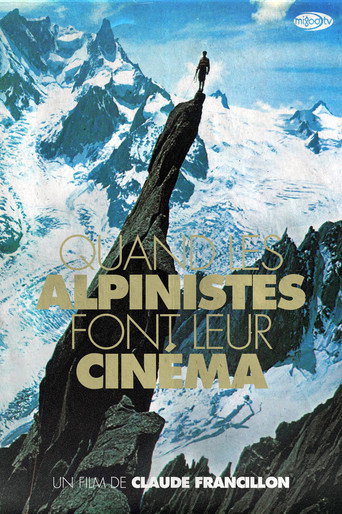
When the Mountaineers Make Their Cinema
Many mountaineers as part of their activity have used cameras and films to allow us to participate through images in their adventures and their emotions. Many of them have become true film professionals: Joseph Vallot, Lionel Terray, Marcel Ichac, Renè Vernadet, Jean Afanasieff, Pierre Royer, Denis Ducroz, Kurt Diemberg and many others are among the conquerors of the image of the mountain. The film depicts the passion of these men on the highest mountains in the world... behind the lens.
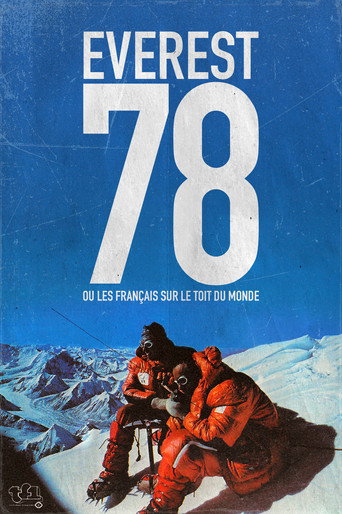
Everest 78, or the French on top of the world
It was a sporting feat, a national feat, but also and above all a technical feat: on October 15, 1978, three French mountaineers, for the first time, reached the summit of Everest: Pierre Mazeaud, Nicolas Jaeger, Jean Afanassieff, accompanied by Kurt Diemberger, Austrian mountaineer and cameraman. A performance broadcast live on the radio thanks to the France inter teams and filmed for television by TF1. Christian Brincourt, a great French reporter, tells us about this expedition and questions the members of the expedition on their motivations. With Pierre Mazeaud (expedition leader), Jean-François Mazeaud (doctor), Claude Deck, Raymond Despiau, Nicolas Jaeger, Walter Cecchinel, Jean Afanassieff, Kurt Diemberger.
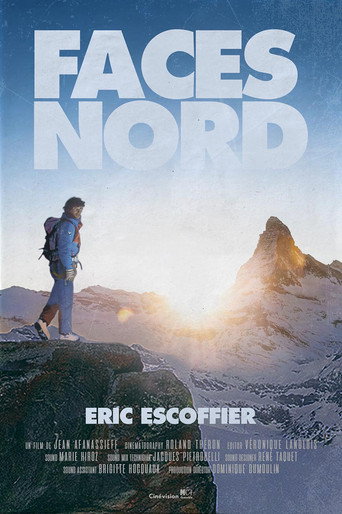
Faces Nord
March 12, 1987. The young French mountaineer Eric Escoffier prepares his equipment, very reduced in material and food. He leaves the next day and intends to chain three north faces in the Alps: Eiger, Matterhorn and Grandes Jorasses. The ascent of the first summit, the Eiger is slow, difficult and full of pitfalls. It takes 17 hours to reach it. Without recognizing the terrain -he prefers to improvise- the mountaineer continues through the Matterhorn. When night falls, anxiety is felt on Zermatt's side. Help is organized to pick him up. Despite his refusal to return, Escoffier is finally hoisted. Christophe Profit, a few hours earlier, managed the chain of three summits.
Eric Escoffier, la Fureur de Vivre
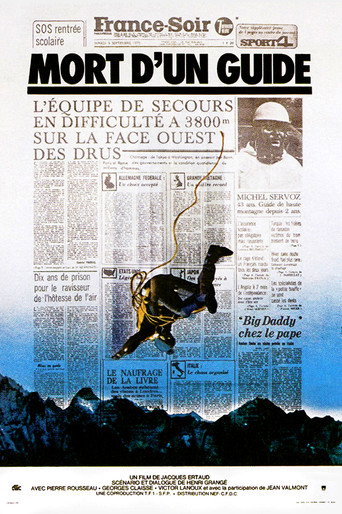
Death of a Guide
Veteran Chamonix mountain guide Michel Servoz and the young aspiring guide Patrick Falavier attempt to climb the west face of the Dru in the Mont-Blanc massif. When they are gone for five days, the captain of the gendarmerie in Morteau is worried, but he cannot undertake research for a rescue without the permission of the family.
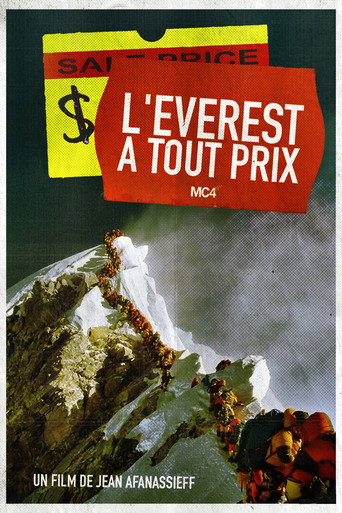
Everest At Any Cost
In 1983, three climbers became the first French people to reach the summit of Everest. Among them were expedition leader Pierre Mazeaud and a promising 25-year-old climber, Jean Afanassieff. Twenty years later, the two legends, accompanied by mountain guide Michel Pellé, retrace the steps of their exploit and make the trek from Kathmandu to the foot of the roof of the world. This is an opportunity to retrace the history of the successive assaults on Everest and to assess the current situation of a mountain that has become a victim of its own success: while Sherpas have been able to take advantage of Western enthusiasm and thus enrich themselves and equip the summit to make it more accessible, the site's attendance poses numerous problems, both human and ecological.
The Death Zone
To understand the difficulties of an ascent to over eight thousand metres, it is enough to remember the almost 300 victims these peaks have claimed. The Swiss alpinist Ehrart Loretan, the third alpinist in the world to have climbed all 14 8,000, and the Austrian alpinist Kurt Diemgerger cover the whole history of the conquest of the world’s 8,000, from the fifties to the present day, together with other alpinists and film directors who have climbed them. They talk about their experienced when they ventured into the death zone.
Faszination Bergfilm - Himmelhoch und Abgrundtief
A fascinating chronology of 100 years of mountain film history in the Alps. This documentary focuses primarily on films shot on the Matterhorn, the Eiger, and the Grandes Jorasses, considered until the 1930s as the "last problems of the Alps," and shows the evolution of mountain filmmaking through numerous excerpts from documentaries and feature films – notably on the Matterhorn in 1901. The genre, appropriated as a means of mass exaltation by "fascist" regimes during the Second World War, was reinvented in the 1950s by Gaston Rebuffat, Marcel Ichac, and Lionel Terray in the Mont Blanc massif, avant-garde figures of French mountain cinema, who reintroduced, beyond performance, the values of the mountains – and in color – poetry, humor, and sharing among people from all walks of life.
Production
Faces Nord
March 12, 1987. The young French mountaineer Eric Escoffier prepares his equipment, very reduced in material and food. He leaves the next day and intends to chain three north faces in the Alps: Eiger, Matterhorn and Grandes Jorasses. The ascent of the first summit, the Eiger is slow, difficult and full of pitfalls. It takes 17 hours to reach it. Without recognizing the terrain -he prefers to improvise- the mountaineer continues through the Matterhorn. When night falls, anxiety is felt on Zermatt's side. Help is organized to pick him up. Despite his refusal to return, Escoffier is finally hoisted. Christophe Profit, a few hours earlier, managed the chain of three summits.
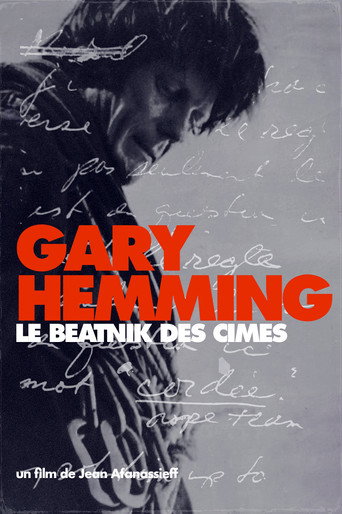
Gary Hemming, le beatnik des cimes
The American mountaineer Gary Hemming marked the era of the 1960s. The story of this "exceptional" character is intimately linked to that of the rescue of the two German mountaineers on the west face of the Drus, in 1966, a rescue which he had took the initiative. While the official emergency services of the EHM try to reach them from above, a pirate rope made up of Gary Hemming, René Desmaison, Lothar Mauch, Gil Bodin, Mike Brurke, François Guillot, the filmmaker Gérard Bauer organizes to join them from below and succeeded after a fierce struggle the rescue. The press seizes the event and elevates Gary Hemming to the rank of national hero. All the newspapers feature this big guy with a cool attitude, mismatched clothes, jovial smile and long blond hair on the front page. From then on, he was nicknamed: "the beatnik of the peaks".
Gary Hemming, le beatnik des cimes
The American mountaineer Gary Hemming marked the era of the 1960s. The story of this "exceptional" character is intimately linked to that of the rescue of the two German mountaineers on the west face of the Drus, in 1966, a rescue which he had took the initiative. While the official emergency services of the EHM try to reach them from above, a pirate rope made up of Gary Hemming, René Desmaison, Lothar Mauch, Gil Bodin, Mike Brurke, François Guillot, the filmmaker Gérard Bauer organizes to join them from below and succeeded after a fierce struggle the rescue. The press seizes the event and elevates Gary Hemming to the rank of national hero. All the newspapers feature this big guy with a cool attitude, mismatched clothes, jovial smile and long blond hair on the front page. From then on, he was nicknamed: "the beatnik of the peaks".
Gary Hemming, le beatnik des cimes
The American mountaineer Gary Hemming marked the era of the 1960s. The story of this "exceptional" character is intimately linked to that of the rescue of the two German mountaineers on the west face of the Drus, in 1966, a rescue which he had took the initiative. While the official emergency services of the EHM try to reach them from above, a pirate rope made up of Gary Hemming, René Desmaison, Lothar Mauch, Gil Bodin, Mike Brurke, François Guillot, the filmmaker Gérard Bauer organizes to join them from below and succeeded after a fierce struggle the rescue. The press seizes the event and elevates Gary Hemming to the rank of national hero. All the newspapers feature this big guy with a cool attitude, mismatched clothes, jovial smile and long blond hair on the front page. From then on, he was nicknamed: "the beatnik of the peaks".
Faces Nord
March 12, 1987. The young French mountaineer Eric Escoffier prepares his equipment, very reduced in material and food. He leaves the next day and intends to chain three north faces in the Alps: Eiger, Matterhorn and Grandes Jorasses. The ascent of the first summit, the Eiger is slow, difficult and full of pitfalls. It takes 17 hours to reach it. Without recognizing the terrain -he prefers to improvise- the mountaineer continues through the Matterhorn. When night falls, anxiety is felt on Zermatt's side. Help is organized to pick him up. Despite his refusal to return, Escoffier is finally hoisted. Christophe Profit, a few hours earlier, managed the chain of three summits.
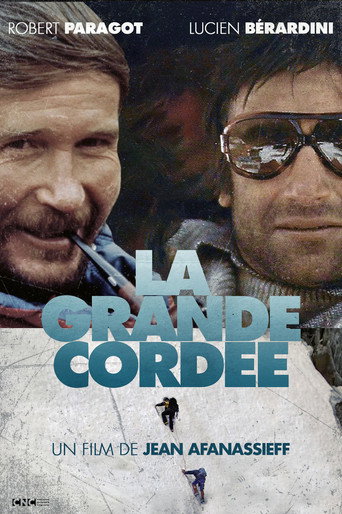
La Grande Cordée
La Grande Cordée
La Grande Cordée
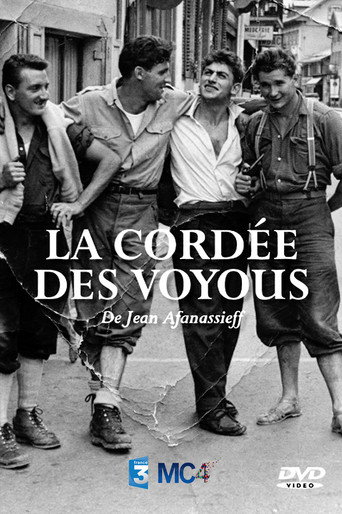
Paragot-Bérardini, La Cordée des Voyous
Paragot and Bérardini: two climbers who fill all climbing enthusiasts with admiration. In Fontainebleau, Saussois, the Alps, the Andes, the Himalayas, and all over the world, they have left their names attached to the most difficult routes and the most prestigious peaks. Here, they recount only the climbs they completed together: famous expeditions to Aconcagua and Huascarán, firsts in the Alps and the Dolomites. An unwavering friendship, comical and tragic adventures—this is what they share with us in the warm atmosphere of their memories. "La Cordée des Voyous" will be included in Jean Afanassieff's film "La Grande Cordée," which deals with post-war proletarian mountaineering.
Paragot-Bérardini, La Cordée des Voyous
Paragot and Bérardini: two climbers who fill all climbing enthusiasts with admiration. In Fontainebleau, Saussois, the Alps, the Andes, the Himalayas, and all over the world, they have left their names attached to the most difficult routes and the most prestigious peaks. Here, they recount only the climbs they completed together: famous expeditions to Aconcagua and Huascarán, firsts in the Alps and the Dolomites. An unwavering friendship, comical and tragic adventures—this is what they share with us in the warm atmosphere of their memories. "La Cordée des Voyous" will be included in Jean Afanassieff's film "La Grande Cordée," which deals with post-war proletarian mountaineering.
Gallery