Jaromil Jireš Movies, TV Shows, and Filmography

Jaromil Jireš
Directing
Biography
Jaromil Jireš (December 10, 1935 – October 24, 2001) was a director associated with the Czechoslovak New Wave movement. His 1963 film The Cry was entered into the 1964 Cannes Film Festival. It is often described as the first film of the Czechoslovak New Wave, a movement known for its dark humor, use of non-professional actors, and "art-cinema realism".
Filmography Movies
Acting
A Box of Film
A film about filmmaking.
An Occasion to Speak
Documentary about the film academy in Prague and the Czech Film in 1965.

CzechMate: In Search of Jiří Menzel
An epic exploration of the Czechoslovak New Wave cinema of the 1960s and 70s, structured around a series of conversations with one of its most acclaimed exponents - Closely Observed Trains director Jiří Menzel.
Zvláštní schopnosti
Production

The Cry
While a woman is in the hospital preparing to deliver her child, her husband has all day to reflect upon his wife and their relationship. As he tends to his job as a television repairman, Slavek fondly remembers how he first met Ivana and the days they spent getting to know one another. Slavek also grows increasingly aware of the environment that surrounds him and questions the society his new child will be entering.

Valerie and Her Week of Wonders
Valerie, a Czechoslovakian teenager living with her grandmother, is blossoming into womanhood, but that transformation proves secondary to the effects she experiences when she puts on a pair of magic earrings. Now seeing the world around her in a different light, Valerie must endure her sexual awakening while attempting to discern reality from fantasy as she encounters lecherous priest Gracian, a vampire-like stranger and otherworldly carnival folk.
Valerie and Her Week of Wonders
Valerie, a Czechoslovakian teenager living with her grandmother, is blossoming into womanhood, but that transformation proves secondary to the effects she experiences when she puts on a pair of magic earrings. Now seeing the world around her in a different light, Valerie must endure her sexual awakening while attempting to discern reality from fantasy as she encounters lecherous priest Gracian, a vampire-like stranger and otherworldly carnival folk.
The Joke
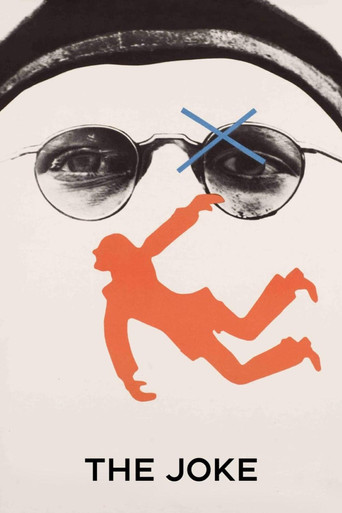
In the 1950s, Ludvik Jahn was expelled from the Communist Party and the University by his fellow students, because of a politically incorrect note he sent to his girlfriend. Fifteen years later, he tries to get his revenge by seducing Helena, the wife of one of his accusers.
The Joke
In the 1950s, Ludvik Jahn was expelled from the Communist Party and the University by his fellow students, because of a politically incorrect note he sent to his girlfriend. Fifteen years later, he tries to get his revenge by seducing Helena, the wife of one of his accusers.

Pearls of the Deep
A quintet of vignettes based on short stories by Bohumil Hrabal: an eventful trip to the motorcycle races results in drunkenness, long-winded discussions, and death; two elderly men create false biographies; insurance agents visit an eccentric painter/goat farmer and his mother; guests at a wedding reception remain oblivious to outlying misery; and a working-class boy romances a Roma girl.
Pearls of the Deep
A quintet of vignettes based on short stories by Bohumil Hrabal: an eventful trip to the motorcycle races results in drunkenness, long-winded discussions, and death; two elderly men create false biographies; insurance agents visit an eccentric painter/goat farmer and his mother; guests at a wedding reception remain oblivious to outlying misery; and a working-class boy romances a Roma girl.
The Cry
While a woman is in the hospital preparing to deliver her child, her husband has all day to reflect upon his wife and their relationship. As he tends to his job as a television repairman, Slavek fondly remembers how he first met Ivana and the days they spent getting to know one another. Slavek also grows increasingly aware of the environment that surrounds him and questions the society his new child will be entering.
Srub
It is the depths of winter and in the middle of a desolate landscape on a snowy slope stands a log cabin, inhabited by an old man. The man puts his last log into his stove and the warmth of the fire visibly delights him. He rocks his rocking chair energetically and sings merrily. The flames die away and the old man looks around for something to put on the fire. In the end he sacrifices the chair, but soon that too is burnt up. The man tears the remnants of posters from the walls, gathers various rags and throws everything into the stove. Then he takes an axe and gradually chops up the wooden walls of his house, although it is obvious that he cannot win this duel with cruel nature. The fire gradually eats up the planks and beams until the cabin entirely collapses. The man wants to get warm, and so runs around the dying flames. (https://www.filmovyprehled.cz/en/film/396670/the-log-cabin)
Srub
It is the depths of winter and in the middle of a desolate landscape on a snowy slope stands a log cabin, inhabited by an old man. The man puts his last log into his stove and the warmth of the fire visibly delights him. He rocks his rocking chair energetically and sings merrily. The flames die away and the old man looks around for something to put on the fire. In the end he sacrifices the chair, but soon that too is burnt up. The man tears the remnants of posters from the walls, gathers various rags and throws everything into the stove. Then he takes an axe and gradually chops up the wooden walls of his house, although it is obvious that he cannot win this duel with cruel nature. The fire gradually eats up the planks and beams until the cabin entirely collapses. The man wants to get warm, and so runs around the dying flames. (https://www.filmovyprehled.cz/en/film/396670/the-log-cabin)
Gallery