Directing
Janusz Marian Majewski (5 August 1931 – 10 January 2024) was a Polish film director and screenwriter. Majewski married Zofia Nasierowska, who was a noted portrait photographer. He died on 10 January 2024, at the age of 92.
A group of young Łódź hoodlums spends their time shoplifting, partying and drinking heavily, until they are faced with serious consequences of their reckless behaviour.
The main character of "Żyłem siedemnaście razy" reflects on his childhood in Gwoździec and tells a story about the beginning of his career as a filmmaker.
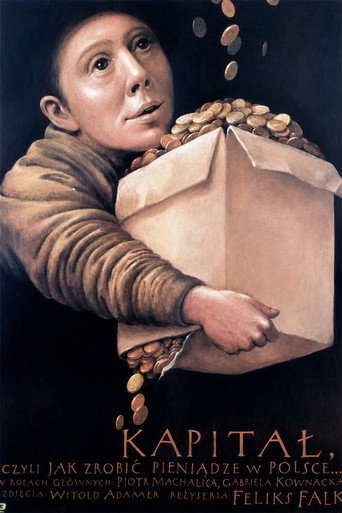
A sociologist nearing middle-aged returns to Poland after several years of giving lectures abroad. The changing economy of the country and business successes of the people around him inspire him to venture out into the deep and unpredictable world of capitalism himself.
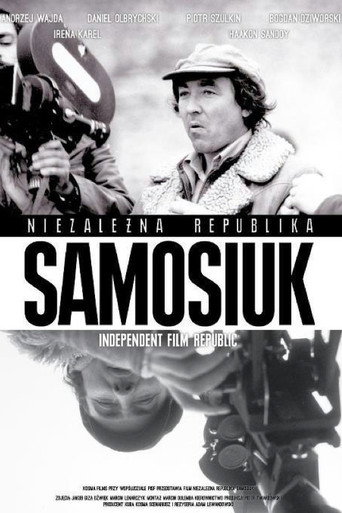
The film is a portrait of Zygmunt Samosiuk, a great forgotten cinematographer, who died in 1983. As a director of photography he worked on such films as The Birch Wood, Landscape Afterthe Battle and Austeria. He introduced, among others, hand‑held camera shots, colour lights and shooting at minimum exposure. Reminiscences of his colleagues and friends, including Andrzej Wajda and Piotr Szulkin, show a gifted artist and a modest man who valued his work above all.
Two strangers, Jerzy and Marta, accidentally end up holding tickets for the same sleeping chamber on an overnight train to the Baltic Sea coast. Also on board is Marta's spurned lover, who will not leave her alone. When the police enter the train in search of a murderer on the lam, rumors fly and everything seems to point toward one of the main characters as the culprit.
Janusz Majewski, an outstanding film director seen through the eyes of his friend, Stefan Szlachtycz. The passion for literature and film in Janusz Majewski's life is united by the motif of a dream - the film's title alludes to both Pedro Calderon de la Barca's drama and cinema as a dream factory.
"Deserter's Gold", the sequel to the very popular "The Deserters", is a rich war comedy, skipping humorously around the more serious dangers of a war. Deserters Gold takes place during World War II, while the first film happened during WWI. The heroes' mission is to rob a Nazi-run bank in Poland for gold that will buy military supplies for the Polish Underground.
Professor H., obsessed with replacing humans through artificial beings, has created Traumer—an unsettlingly perfect assistant whose cold efficiency conceals an unnatural origin. Believing he has found the ideal subject for his next experiment, the professor plots to transplant Traumer’s brain with that of a distinguished scientist. But the plan unravels when Traumer proves far less obedient, and far more uncanny, than expected.
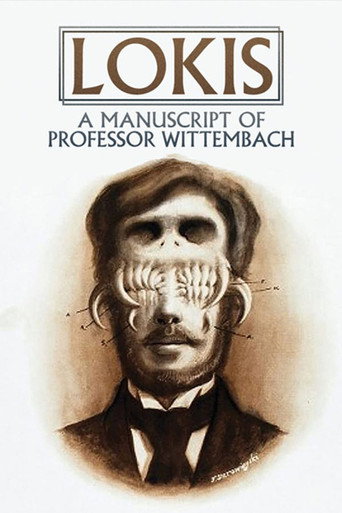
A pastor and ethnographer visits a remote corner of 19th-century Lithuania where folk customs associated with the area's pagan past still have a hold on the population.
The 1937 trial of communist journalists, working for the same student magazine in Vilnius, is shown through the tragic life of the paper's young collaborator Julek Szulc.
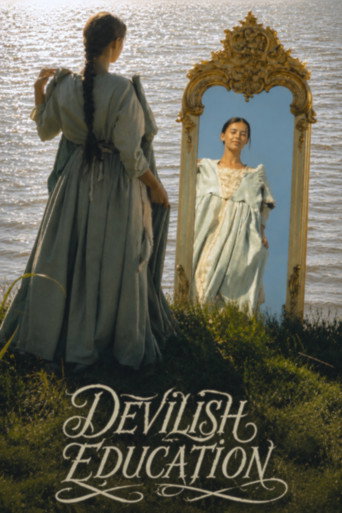
In a rural Catholic village, young Gosia tends cattle and lives an innocent, sheltered life. One summer day, while bathing in the river, she is unknowingly observed by a mysterious painter. When he later reveals his portrait of her, Gosia’s initial shame gives way to curiosity, drawing her into an awakening of desire and a confrontation with temptation.
One June evening, a Krakow prostitute nicknamed Rączka is accosted by a bloody man who wants to spend the night with her. The girl agrees, but when the next day she learns that a gruesome crime has been committed near the place where the mysterious customer accosted her, she reports the night's meeting to the police.
The dark drama of a peasant family from the second half of the 19th century: Seduced by a municipal clerk (in exchange for a promise to release her husband from military service), the woman dies at the hands of her jealous husband.
A historical drama about Barbara Radziwiłł, whose controversial love affair and marriage with King Sigismund II Augustus defied political opposition in 16th-century Poland. The film follows their romance, Barbara’s untimely death, and her posthumous return to Vilnius, framed through the king’s memories of his beloved queen.
Set in the early 1930s, a young man finds a job as a dishwasher in a hotel and quickly works his way up the ladder. Loosely based on the novel by Henryk Worcell.