Acting
No biography available.
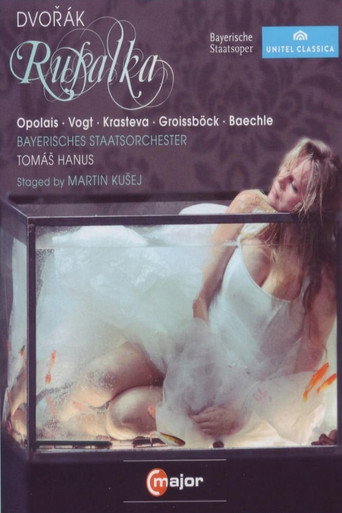
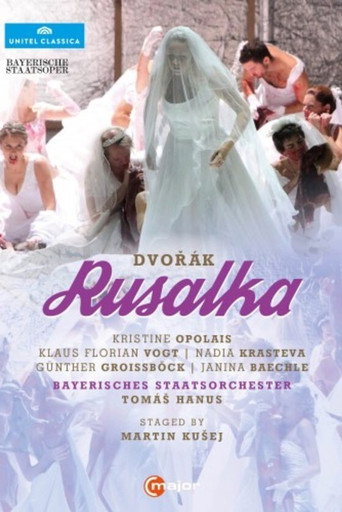
A legend of mermaids, mere mortals, and sylvan glades. Be transported to a mystical world of water sprites, witches, and wood nymphs. In exchange for love, Rusalka will relinquish not only her mermaid magic, but also her voice.
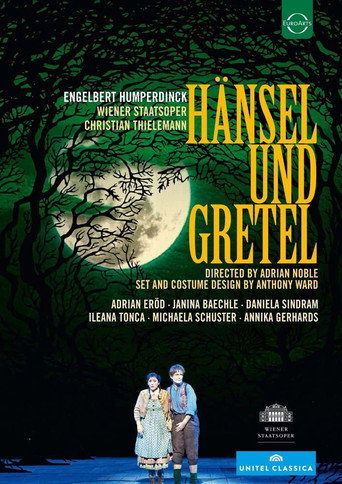
Since its premiere in 1893, Engelbert Humperdinck's fairytale opera »Hansel and Gretel« has awakened a passion for music theatre in generations of children. Even his great contemporaries – such as Richard Strauss, Gustav Mahler or Johannes Brahms – were delighted by this work. It is the successful combination of seemingly folkloric simplicity and the complex musical language of Wagner’s direct successor, of simple melody and artful orchestration, and of socio-critical realism and atmospheric magic that makes the music to the Brothers Grimm’s famous story so captivating. And so the Vienna State Opera's production speaks to both children and adults alike, leading through wondrous projections of a magic lantern into the middle of the fairytale storyline.
Rusalka is not a happily tragic fairy tale. Rusalka’s lake is a dark, damp cellar, where she is imprisoned with her sisters by her abusive father. But once she finally escapes, she is thrown mute and alone into an equally brutal world where she is utterly unequipped to survive, and he increasingly looks like a protector.
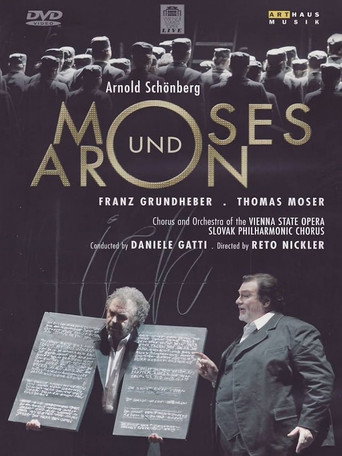
While a number of fine recordings of Moses und Aron exist, this unique DVD of the opera makes a staging of the work accessible, with a variety of camera angle, including a judicious mixture of close-ups and longer shots of the stage. The recording is all the more remarkable for its origins in a live performance, since audience sounds are almost negligible in the DVD. It is an exemplary presentation that merits attention for conveying the opera well. With the stage details intact, and the wide-angle shots planned to make the best use of the stagecraft, the Nickler production, prepared for television by Claus Viller, is a fine example of filmed opera. The sound is quite fine and brings across the nuanced direction of Daniele Gatti, whose efforts join the ranks of other fine interpreters of this work, including Pierre Boulez and Georg Solti.