Acting
No biography available.
A comedy concerning a down on his luck bookshop owner with a penchant for women who decides to make some money by pretending to be a waiter and collecting cash from unsuspecting diners.
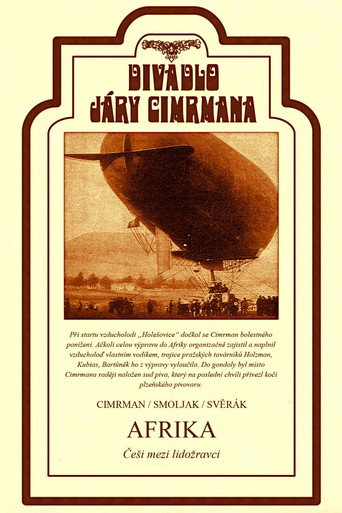
The fourteenth Cimrman play takes us to the heart of a continent almost untouched by civilization. Czech travelers encounter a strange tribe of cannibals and almost end up on their menu. The members of this tribe are unusual in two ways: their appearance and their extraordinary docility. These characteristics enabled Cimrman to solve linguistic and staging problems with an elegance that other world playwrights can only envy. If, say, G. B. Shaw had tackled such a theme, the audience would have spent 5 to 7 hours in the auditorium. Cimrman managed to do it in just one hour (not counting the introductory scientific seminar). For the first time in the history of the Jára Cimrman Theater, a live animal appears on stage.
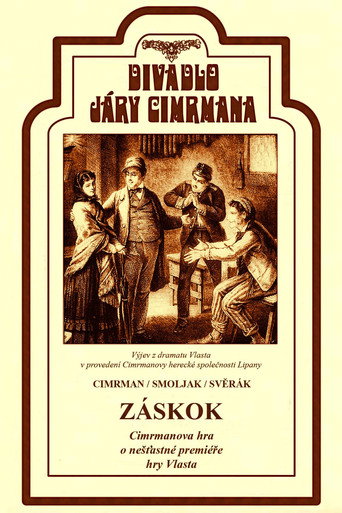
Poverty was one of the many unfortunate aspects of Cimrman's life. His traveling theater company, Lipany, suffered from high actor turnover. If an actor's departure was agreed upon well in advance, the situation could be managed. However, if it happened with shouting and slamming doors, often just a few hours before the performance, the troupe and its director experienced some tense moments. Such experiences form the backdrop to the play. Lovers of the work of this unrecognized Czech artist are now able to access testimony from this area of the master's life, in which his destiny was most fulfilled—the theater.
The play itself tells the story of a harrowing journey aimed at restoring Princess Goldilocks’s feminine beauty—she had been enchanted by the evil giant Koloděj. In the first scene, Prince Jasoň arrives at the royal castle and discovers that his beloved bride—Princess Zlatovláska—has (thanks to Koloděj’s magic) a beard and a foot size of “45.” Jason decides to free Zlatovláska from the evil curse, and together with her, her royal father, and Bystrozrakým, he sets off to see Děd Vševěd for advice on how to deal with Koloděj. Watching everything from afar is Jasoň’s twin—the evil Prince Drsoň, who is preparing to intervene at the right moment and claim the princess for himself...
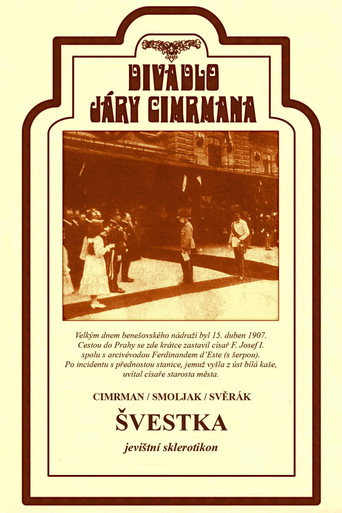
One day in life of simple dispatcher who meets remarkable people. They want to harvest plums.
Cimrman sees the reason for the popularity of the Blanik legend in Bohemia mainly in the geographical location of our homeland. In agreement with Palacký, he was aware that "we are here in Europe like a grain between two millstones. From the west, German imperialism presses upon us, and from the east, the expansionism of the Great Russian colossus crushes us. It is no wonder that a small nation under such pressure seeks supernatural and even miraculous protection, for only a miracle can enable it to survive here."
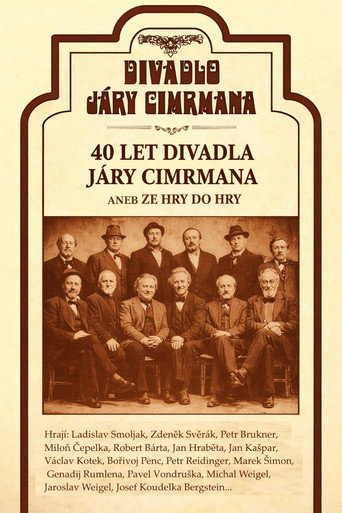
Jára Cimrman in the whirlwind of the past forty years, as discovered, recorded, and brought to life by the theater.
Two different productions of Václav Havel's Beggar's Opera reveal the political dynamics of Czechoslovakia before and after the velvet revolution.
The comedy tells the story of how cowboy Bill, thanks to his clever talking horse Lightning, became brave, defeated the evil Jackal, and thus freed the village from fear and the old tyrant, with humorous hyperbole.