James Paris Movies, TV Shows, and Filmography
James Paris
Production
Biography
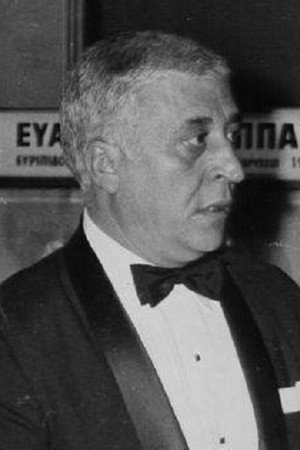
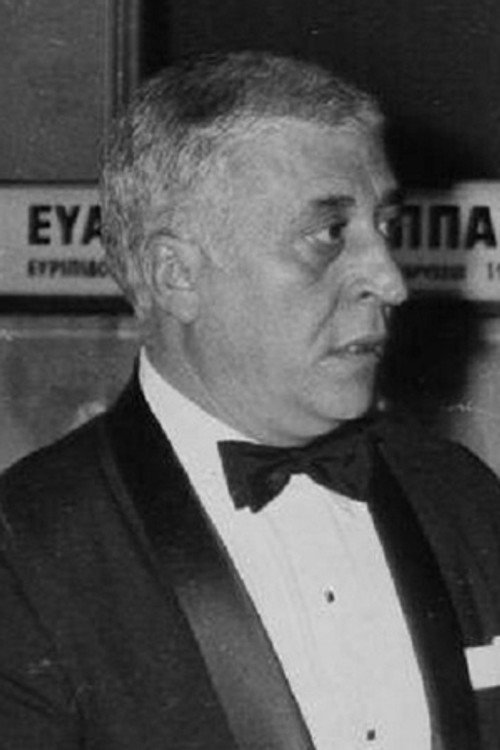
James Paris (1921 – 26 May 1982), born Dimitris Paraschakis, was a Greek film producer. Born in 1921 in the village of Vatoussa, Lesvos, he studied at the Agricultural School of Thessaloniki and the Agricultural Institute of the University of Beirut in Lebanon. In 1948 he emigrated to America and during his first years in the US he studied at the 20th Century Fox Film School, obtained American citizenship and became director of the advertising department of United Artists (1948-1952). After working as a production manager on 20th Century Fox films, he returned to Greece in the late 1950s, giving a new lease of life to film productions. In about a decade, he produced 54 Greek films, many of which were distinguished at the Thessaloniki Film Festival (5 Best Film Awards) and were box office successes. His first film was The Company of Miracles (1963) directed by Stefanos Stratigos. James Parris, the producer thanks to whom the concept of "overproduction" became known in the Greek cinema, died in 1982 at the age of 61.
Filmography Movies
Acting

1821 at the Cinema
In 1821, in Cinema, he records the cinematic representations of the Revolution from the first decades of the 20th century. until the present day. Despite the fact that the Revolution of 1821 constitutes the founding act of the modern Greek state, as a subject matter it is underrepresented in national film production. This is one of the points on which the research looks, which simultaneously examines the periods of concentration of films on the subject of the Revolution or, respectively, the periods of its collective silence. The purpose of the documentary is to study the ideological discourse and the cinematic language of the films with the theme of 1821, in order to highlight the function of the cinema as a carrier of Public History and as a factor in shaping the collective historical consciousness.

The Brightest Star
A girl from the slums of Athens becomes a famous singer while falling in love with her songwriter.
Production

Armida, the Tragedy of a Wife
The soldier Alessio escapes from the horrors of the war. He meets a young woman and hide in her home.
At the Battle of Crete
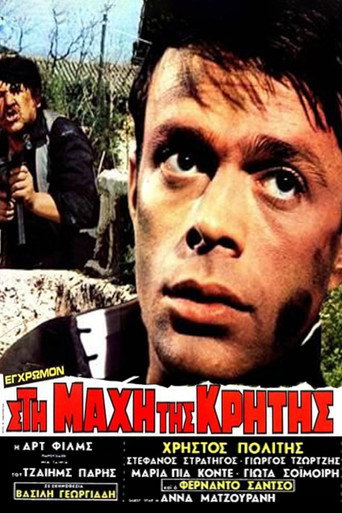
The picture is set during Battle of Greece and Crete Battle in 1941, after the fall of the mainland when the Germans entered Athens.

The Wild Pussycat
When good girl Nadia investigates her sisters death she finds out that sadistic pimp Nick is behind it all so she straps on the leather and whips and beats him at his own games.

The Deserter
A soldier runs away from the horrors of war, finds love with a virgin farm girl and a mistreated housewife, and will find that it is difficult to survive the battles of sex and love.

Dangerous Cargo
A pirate takes over a munitions ship, killing the captain, and when the crew mutinies and abandons ship, is left aboard with the captain's widow.

Serenity
Originally edited in two versions. Version I, 70 minutes; version II, 90 minutes. (The only known existing version is not Markopoulos’s edit and contains additional titles, music and voice-over added later than 1961. 65 minutes.) Filmed in Mytilene and Annavysos, Greece, 1958. Existing copy on video, J. and M. Paris Films, Athens.

The 201 Canaries
A deliberate injustice forces an orphaned music student to leave home, only to land a job as a pianist for an affluent woman's canaries. Now, it's time to turn the page. Can she find a bright future amid two hundred and one songbirds?
Company of Miracles
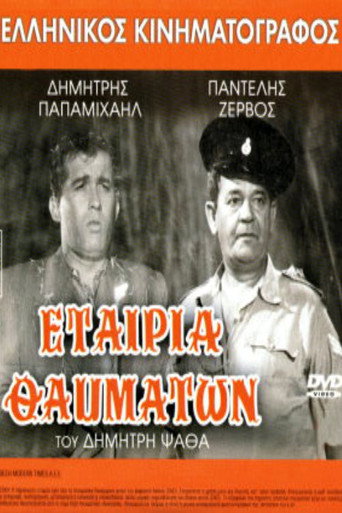
A God-fearing young man refuses to sell his, rich in ore, pasture to a mining company. So an agent of this company creates a scam of a so-called miracle in order to convince him.

Lesbian August
A young girl goes with her father and stepmother, with whom she has a lesbian affair, for vacation on a small island and a local fisherman gets between the two lovers.

Persecution
We are in 1942, in the middle of the German Occupation, on an island opposite the coast of Asia Minor, where a mature woman, Katerina Rodeli, cares for a wounded resistance fighter named Kanaris. In her memory, there are images of the past, the panic of the Asia Minor catastrophe and especially the entrance of the tsets in her village. There she lost her three-year-old son, Konstantin, whom he never ceased to look for. However, the village's mackerel maharagrite handed it over to the Germans and, in the face of the danger, they were arrested along with the wounded and a boat ride on the Turkish coast to find themselves immediately enclosed in a refugee camp. His commander is a tough second lieutenant, Osen, who is bought by the English consulate of Izmir to transfer the fugitives to Egypt.
Gallery