Jacques Leduc Movies, TV Shows, and Filmography
Jacques Leduc
Directing
Biography
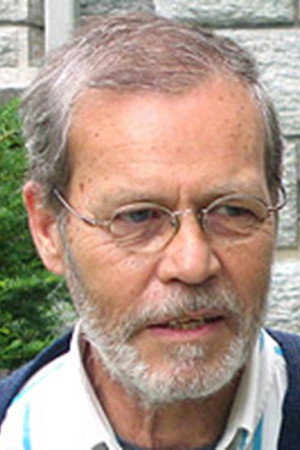
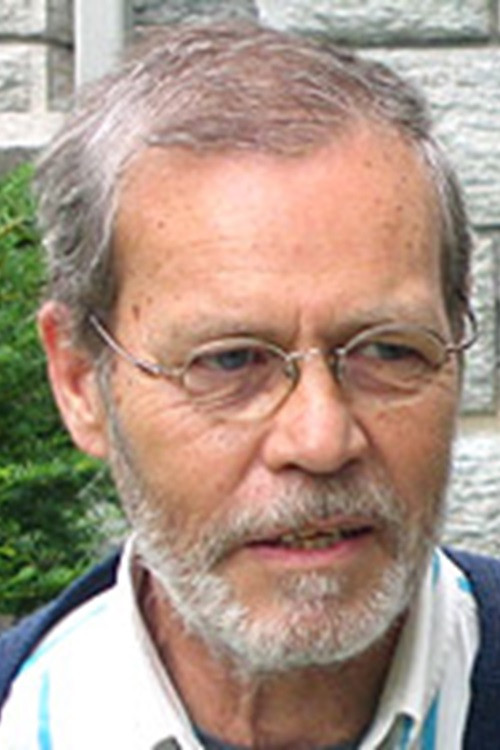
Jacques Leduc (born November 25, 1941) is a Canadian film director and cinematographer. Leduc began his career in 1961 working as a film critic for the magazine Objectif. The following year, at the age of 21, he was hired as a camera assistant by the NFB. Over the course of the next few years he worked under such filmmakers as Denys Arcand, Gilles Carle, and Don Owen. In 1965 he began working as both Director and Cinematographer; his first film as director was a documentary short entitled Chantal en vrac. Leduc continued his work as Director with his first feature film in 1967 entitled Nomininque, depuis qu'il existe and his first feature documentary film in 1969 entitled Cap d'espoir. The documentary film was "about the muted violence that existed [in Quebec] and the monopoly over news held by Power Corp." and became one of the most famous cases of censorship at the NFB when it was banned by NFB commissioner Hugo McPherson. Leduc continued working on critically acclaimed films throughout the 70s and 80s such as On est loin du soleil (1970), Tendresse ordinaire (1973), and Trois pommes à côté du sommeil (1988). In 1990 he left the NFB and became a freelance filmmaker.[3] In 1992 he directed the film La vie fantôme; the film was named Best Canadian Film at the Montreal World Film Festival and earned a Genie Award for Best Screenplay nomination. Since then he has primarily worked with other Directors as their cinematographer and in 2008 was awarded the Prix Albert-Tessier.
Filmography Movies
Acting
Réjeanne Padovani
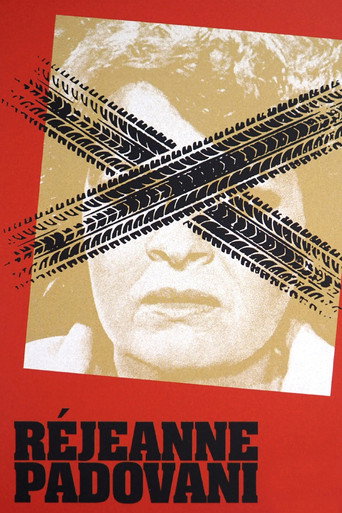
The unexpected return of his ex-wife and the assembly of a group of protesters both threaten to wreck a corrupt contractor's inauguration party for his new superhighway.
Cinéma, cinéma
An anthology of sequences from the best films that the National Film Board of Canada produced since its beginnings. Divided by themes and presented by a trio of actors-signers (including Carle's wife Chloé Sainte-Marie) who sings the same song in between the movie excerpts. This movie celebrated the anniversary of the National Film Board in 1985.
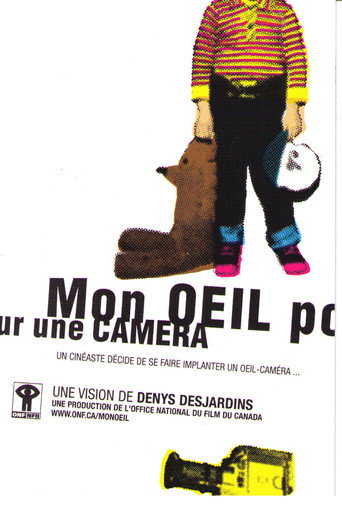
My Eye for a Camera
A filmmaker, fascinated by the power of the camera and obsessed with the theories of Russian film pioneer Dziga Vertov, decides to get a camera eye to replace the real eye he lost as a child. The visionary quest begins on the operating table, where a surgeon grafts a prototype ocular implant into his eye socket. Seeking a microscopic camera that could be incorporated into his artificial eye so he could secretly film whatever he sees, the filmmaker explores the futuristic technology that could make this possible, while revisiting chapters of his own past.
The Private Life of Cinema
A two-part in-depth exploration of the evolution of the private film industry, seen through the eyes of more than 50 industry professionals. Part One (1939-1979) : Artists and professionals from the social and commercial film sectors recount the struggle to build a film industry that is privately operated yet publicly funded. Part Two (1980-2010) : Executives, policymakers, and industry professionals trace the origins of the major funding institutions and discuss the unintended consequences of building a cultural industry around performance metrics, revenue generation, and private profit.
Production
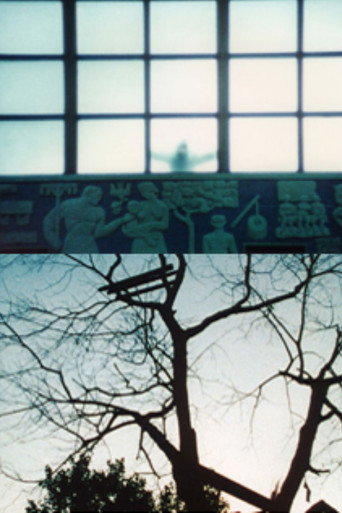
Le temps qu'il fait
Nestor, Lei, Pierrette, Mohamed, Hafida, Marius, Marc, Galina, Genady, Mike and Lala: through their presence, Le temps qu’il fait weaves a mosaic of stories in which dreams and disappointments, hopes and worries intertwine with the life that is before them. In counterpoint, there are these new landscapes of financial centers, abandoned industrial spaces and wasteland from which we hear the echo of speeches that call to take the train of the new economy. By their simple attachment to a profession which gives them a living, the men and women of the film put up resistance to these slogans. Little by little, a radical rupture is emerging between economic thought and the movement of life. A break that shapes the present time.
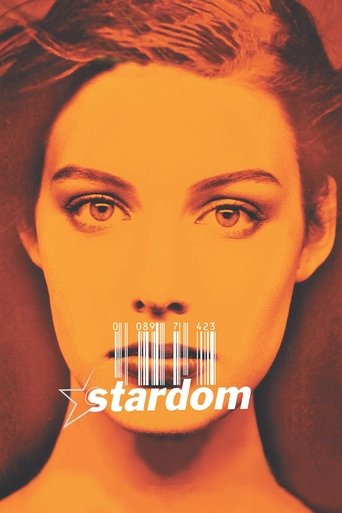
Stardom
A young girl is plucked from small-town obscurity and thrust into the spotlight of the glamorous world of super-models.
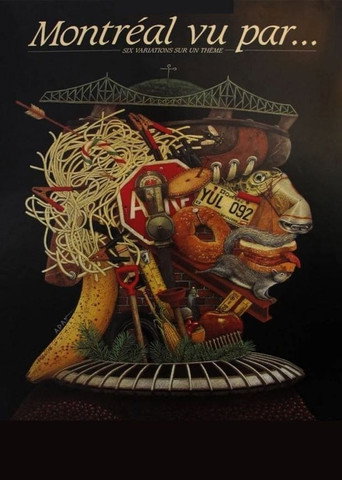
Montreal Stories
Six stories about Montreal. 1: A young housewife from Toronto samples the nightlife using basic French. 2: The tale of a painting of Montreal's first mayor, Jacques Viger. 3: During a hockey game, Madeleine tries to tell Roger she wants a divorce after forty years of marriage. 4: A visitor to a conference on pictographs arrives at the airport, where the female customs officer steals a momento from each person. 5: As she is being driven to the hospital in an ambulance after an auto accident, Sarah recalls her life. 6: At a diplomatic reception, an older woman reminisces about her grand love in Montreal.
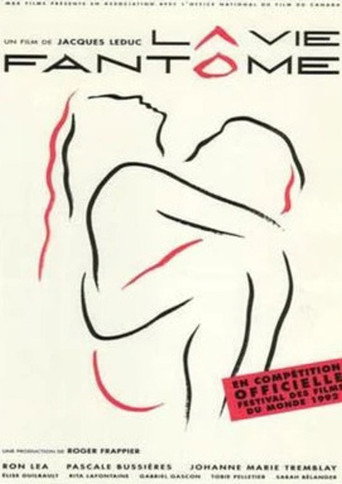
La vie fantôme
Pierre is in love with two women and has a stable relationship with both of them. His wife, all by herself, makes him feel whole. However, he has the identical feeling with his librarian mistress and cannot understand why this arrangement shouldn't be satisfactory for everyone concerned.
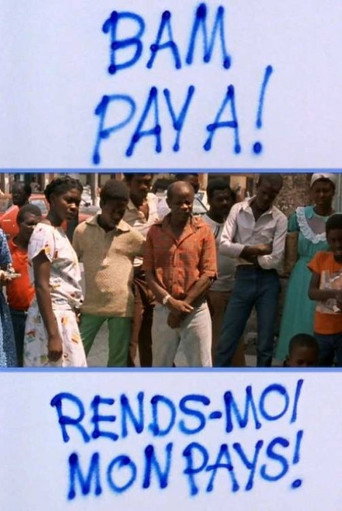
Bam Pay A! – Rends-moi mon pays!
In this feature documentary, a Haitian, exiled in Canada for twenty years, returns to his country after the departure of Jean-Claude Duvalier. Through his encounters with former friends, professors and colleagues, the face of this newfound Haiti gradually takes shape… Shot in Haiti after the fall of the Duvalier regime, this film, beyond a simple observation, shares with us the hopes of the Haitian people as well as their fears and uncertainties regarding this country that has yet to be built.
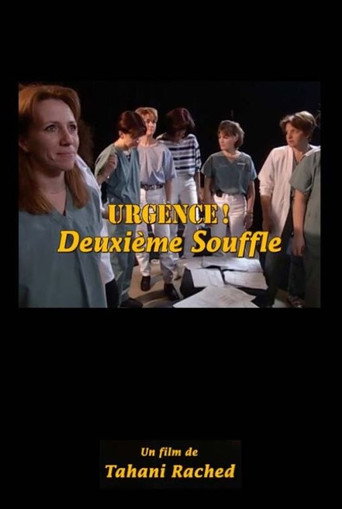
Emergency! A Critical Situation
Shot at the Pierre Boucher Hospital in Montreal, this film takes us into the emergency room to see how our healthcare system is holding up. What it reveals is a powerful indictment of management that sees only the bottom line while human lives are at stake.
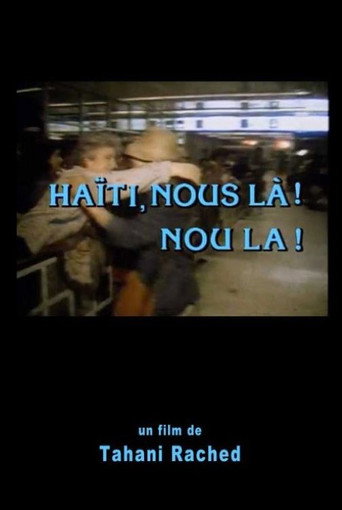
Haïti, Nous là! Nou La!
From Haiti, images and testimonies that describe the climate that reigned during the aborted elections of November 29, 1987. A powerful military police in the service of a despotic power terrorized an impoverished people that they wanted to keep submissive. The government had succeeded in ousting Duvalier. However, another dictatorship has taken over, and nothing has changed. However, both on the radio and in the streets, the voice of the Haitians was heard with strength and courage. But what if it was all a sham of democracy?
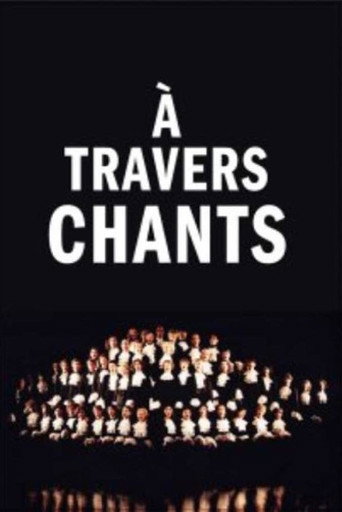
For a Song
Welcome to the magnificent yet unheralded world of choral music. A world inhabited by exceptional beings who have the capacity to experience joy from a single musical note. Individuals who partake in remarkable efforts to unveil that dream of beauty which preoccupies each and every one of them. You may notice them singing anywhere and everywhere: at the wheel, in the shower, even in the kitchen. But above all, they sing together, men and women of all ages and various backgrounds, transformed by the radiant glory of song, and united under the banner of L'Ensemble vocal d'Outremont. Music is at the centre of their universe and gives them the intense feeling of belonging to the human race. Especially as the big night approaches and the collective dream of perfect harmony is but a breath away.
100% Bio
Claude, a shy young filmmaker wants to make a biopic about a former television host from the 60's-70's Serge Laprade. He agrees to cooperate but when he views footage of himself from his early shows, he becomes bitter. He drops out of the project and disappears.
Gallery