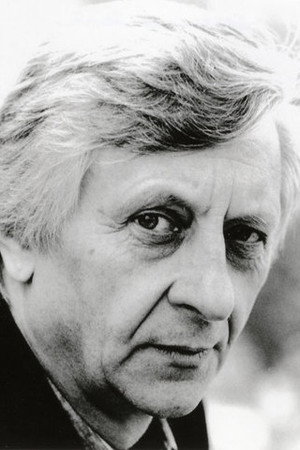
Jacques Godbout Movies, TV Shows, and Filmography
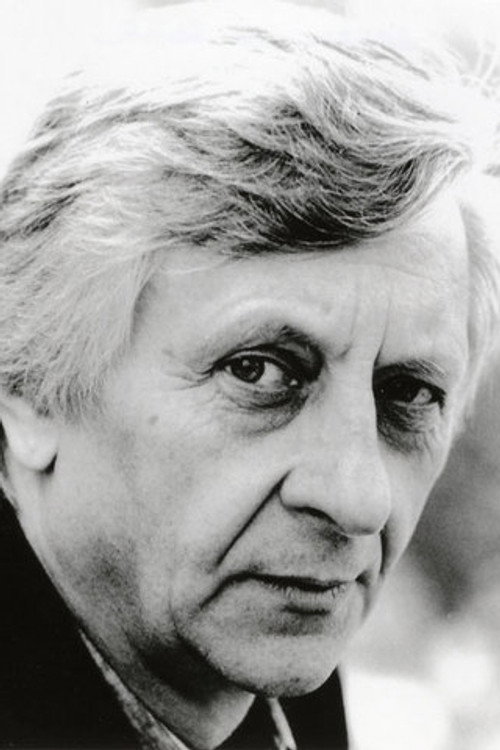
Jacques Godbout
Directing
Biography
Jacques Godbout, OC, CQ (born November 27, 1933) is a Canadian novelist, essayist, children's writer, journalist, filmmaker and poet. By his own admission a bit of a dabbler (touche-à-tout), Godbout has become one of the most important writers of his generation, with a major influence on post-1960 Quebec intellectual life. Born in Montreal, Quebec, after studies at Collège Jean-de-Brébeuf and the Université de Montréal, Godbout taught French in Ethiopia before joining the National Film Board of Canada (NFB) as producer and scriptwriter in 1958. He was active during Quebec's Quiet Revolution during which time he wrote a number of penetrating essays, the most important of which were collected in Le Réformiste (1975) and Le Murmure marchand (1984). Godbout was a co-founder of Liberté (1959), the Mouvement laïque de la langue française (1962) and the Union des écrivains Québécois (1977). Godbout's films include four full-length features and more than 15 documentaries. He has also written nine novels for adults and two for children. Godbout currently writes a monthly column in the Quebec newsmagazine L'actualité. Godbout lives in Outremont, a former city now in Montreal. He is the grand-nephew of former Quebec Premier Adélard Godbout. Godbout's novel Une histoire américaine (1986) was chosen for inclusion in the French version of Canada Reads, broadcast on Radio-Canada in 2004, where it was championed by trade-union activist and professor Gérald Larose. On June 30, 2016, Godbout was made an Officer of the Order of Canada by Governor General David Johnston for "his significant contributions to the literary arts and critical thinking for more than half a century." His other awards and recognition include: Chevalier of the National Order of Quebec; Ludger-Duvernay Prize (1973); Awarded the 2007 Prix Maurice Genevoix for La concierge du Panthéon; Nominated for a 1997 Governor General's Award for children's literature for Une leçon de chasse; Winner of the Quebec government's Prix Athanase-David in 1985; Prix Belgique-Canada (1978); Winner of the 1967 Governor General's Award for Fiction for Salut Galarneau. Source: Article "Jacques Godbout" from Wikipedia in English, licensed under CC-BY-SA 3.0.
Filmography Movies
Acting
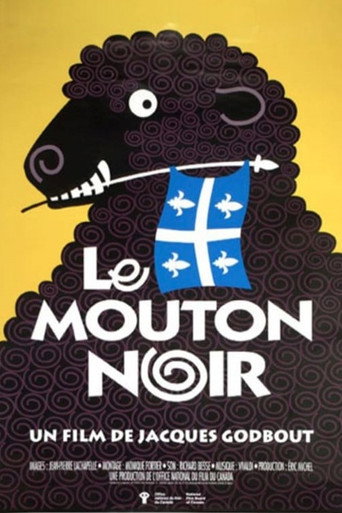
The Black Sheep
From coast to coast, from St. John's, Newfoundland to Vancouver, British Columbia, Jacques Godbout films a documentary chronicle of the political turnaround that was to follow the Meech Lake Accord. Following the Meech referendum, Quebec and Canada found themselves at an impasse after a long and ultimately fruitless negotiation, various social and political actors spoke out. Their comments, linked to film clips on the lives of important Canadian politicians (Sir Georges-Étienne Cartier, John A. Macdonald, Louis-Joseph Papineau...), draw parallels between the speeches of yesterday and those of the post-Meech era.
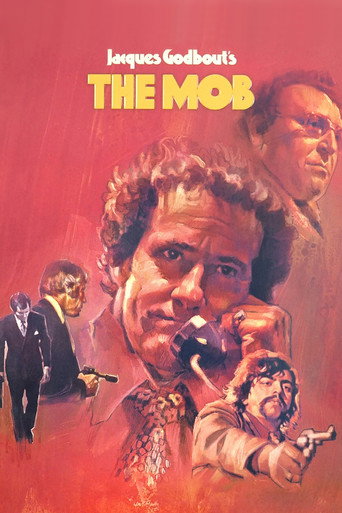
The Mob
Seasoned drug smuggler and thief François “Chico” Tremblay is tired of his modest lifestyle. Given the opportunity to earn $50,000 killing a prominent New York City gangster, he leaps at the opportunity, ignoring the warnings of Montreal’s leading mob boss, who has forbidden local criminals from taking the assignment. Upon his return, Chico discovers he is being pursued from all sides, prompting an unlikely response: he calls a local talk radio show and starts revealing the mafia’s most carefully guarded secrets. As his revelations get more shocking, so do the tactics of his adversaries, culminating in a devastating gut punch of a finale.
Cinéma, cinéma
An anthology of sequences from the best films that the National Film Board of Canada produced since its beginnings. Divided by themes and presented by a trio of actors-signers (including Carle's wife Chloé Sainte-Marie) who sings the same song in between the movie excerpts. This movie celebrated the anniversary of the National Film Board in 1985.
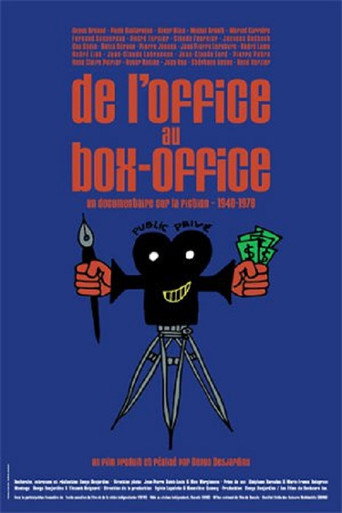
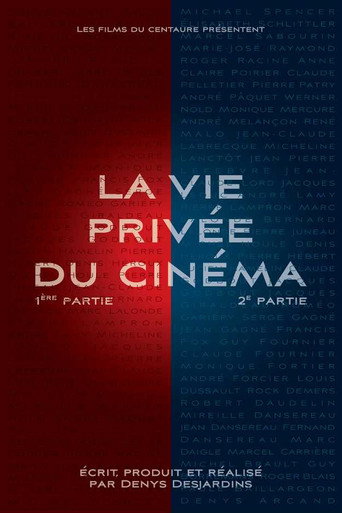
The Private Life of Cinema
A two-part in-depth exploration of the evolution of the private film industry, seen through the eyes of more than 50 industry professionals. Part One (1939-1979) : Artists and professionals from the social and commercial film sectors recount the struggle to build a film industry that is privately operated yet publicly funded. Part Two (1980-2010) : Executives, policymakers, and industry professionals trace the origins of the major funding institutions and discuss the unintended consequences of building a cultural industry around performance metrics, revenue generation, and private profit.
Production
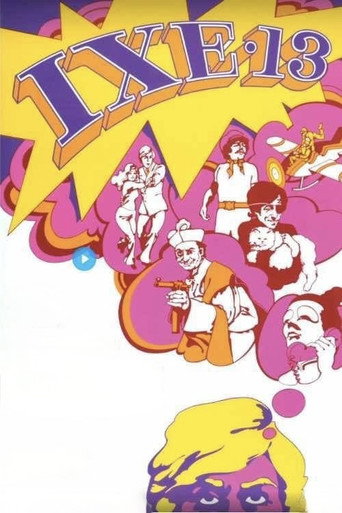
IXE-13
A first-rate French-Canadian spy must tangle with a female Chinese spy who is in love with him.
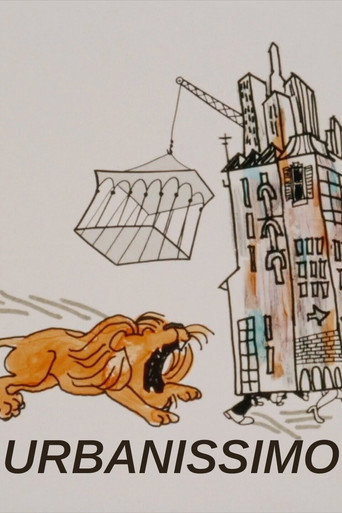
Urbanissimo
A comic allegory in which a runaway "city" on legs matches wits with a wily farmer. A farmer has an encounter with a runaway "city" (which devours its environs). He deserts his rural home for the imagined joys of urban life.
The Black Sheep
From coast to coast, from St. John's, Newfoundland to Vancouver, British Columbia, Jacques Godbout films a documentary chronicle of the political turnaround that was to follow the Meech Lake Accord. Following the Meech referendum, Quebec and Canada found themselves at an impasse after a long and ultimately fruitless negotiation, various social and political actors spoke out. Their comments, linked to film clips on the lives of important Canadian politicians (Sir Georges-Étienne Cartier, John A. Macdonald, Louis-Joseph Papineau...), draw parallels between the speeches of yesterday and those of the post-Meech era.
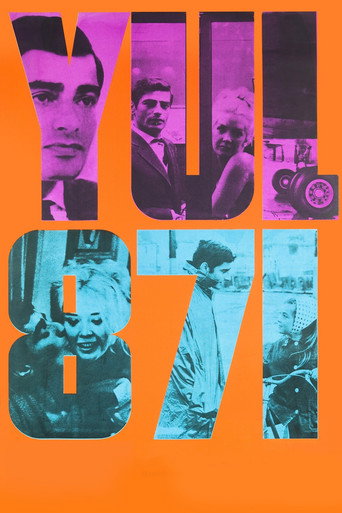
YUL 871
An engineer from Paris flies to Montreal, partly on business, partly in search of parents displaced by World War II, and partly because of the prevailing restlessness of the age.
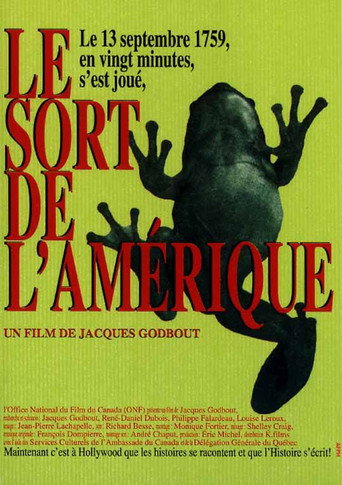
The Fate of America
Two well-known Quebec artists (filmmaker Jacques Godbout and playwright René-Daniel Dubois) look at the Battle of the Plains of Abraham. Whose version of this historic event should prevail? Is history best served by documentary or fiction? We also meet Baron Georges Savarin de Marestan and Andrew Wolfe-Burroughs, direct descendants of Montcalm and Wolfe, both of whom died in the battle that would give birth to Canada and to the province of Quebec.
IXE-13
A first-rate French-Canadian spy must tangle with a female Chinese spy who is in love with him.
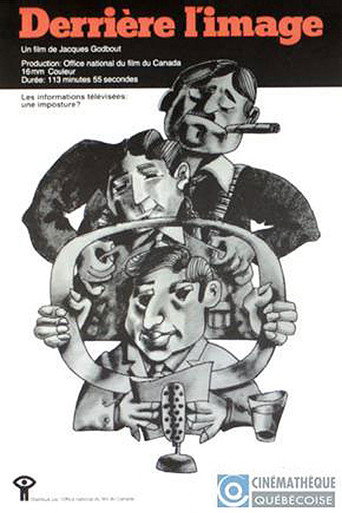
Derrière l'image
This feature-length documentary analyzes television newscasts and, as a result, takes a look at the news industry as a whole. By tackling five major themes – the script, the stars, the show, the actors and telecracy – it elucidates and demystifies certain aspects of television news, the bearer of daily news and guarantor of a certain image of reality.
Feu l'objectivité
Investigation into political journalism in Quebec. Mainly focusing on English-speaking journalists in the press gallery at the National Assembly and their perception of current events, Godbout argues that the sense of objectivity in journalism is above all a question of culture.
YUL 871
An engineer from Paris flies to Montreal, partly on business, partly in search of parents displaced by World War II, and partly because of the prevailing restlessness of the age.
September Five at Saint-Henri
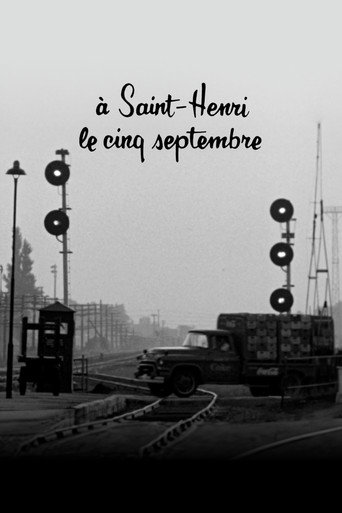
This short film is a series of vignettes of life in Saint-Henri, a Montreal working-class district, on the first day of school. From dawn to midnight, we take in the neighbourhood’s pulse: a mother fussing over children, a father's enforced idleness, teenage boys clowning, young lovers dallying - the unposed quality of daily life.
Gallery