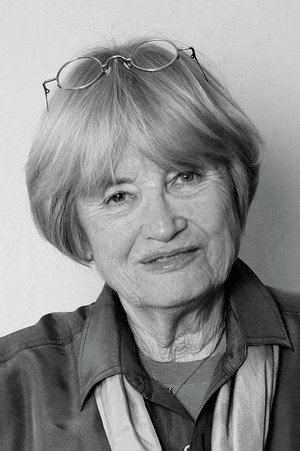
Jacqueline Veuve Movies, TV Shows, and Filmography
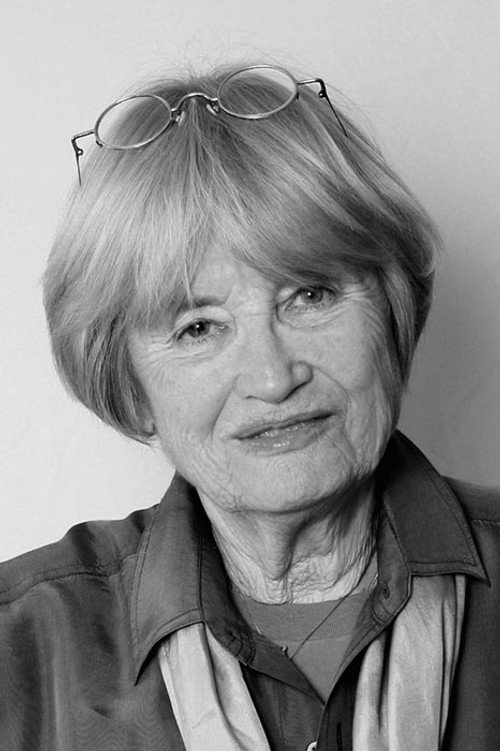
Jacqueline Veuve
Directing
Biography
Jacqueline Veuve (29 January 1930 – 18 April 2013) was a Swiss filmmaker known for "ethnographical cinema". She has been referred to as the "great lady of the Swiss documentary film." She received a Lifetime Achievement Award from the 2013 Swiss Film Prize. Jacqueline Reber was born in Payerne, Switzerland, in 1930 to Maurice Reber and Yvonne Reymond. After studying in Lausanne, she attended the School of Library and Information Science in Geneva (1952–1953) Veuve then went to Paris to work on her diploma thesis and she met the French filmmaker and ethnologist Jean Rouch in 1955 at the Museum of Man. She made her first short film Le Panier à viande in 1966 with Swiss director Yves Yersin. In the early 1970s she spent time at the Massachusetts Institute of Technology to work with British documentary filmmaker Richard Leacock and during her time there, she made two short films about the women's movement in the United States. According to Maire, her interest in ethnology was revealed through film. Jacqueline Veuve had a strong sense of attitude, of everything that has to be shown or left out so that the audience can understand. Examples of this are the film series on the “wood professions”, the “Métiers du bois” such as the films “Claude Lebet, luthier” (“Claude Lebet, violin maker”, 1988), “Armand Rouiller, fabricant de luges” (“Armand Rouiller, Schlittenmacher ”, 1987) or “Marcellin Babey, tourneur sur bois” (“Marcellin Babey, Drechsler”, 1989) or the “Chronique vigneronne”(1999) on viticulture and the “Chronique paysanne en Gruyère” (1990), the farmer's chronicle. At Jacqueline Veuve, complex alpine cheese becomes a completely transparent matter. And better still: a compelling story. Her masterful gift of description allows her to go on: She stages reality so much that tension arises while making the cheese. Or when cutting shingles in Valais. In 1974, Veuve founded her own film production company in Lausanne, Aquarius Films. Some of her films were commissioned and others were done on a freelance basis. Her first full-length documentary La Mort du grand-père ou Le Sommeil du juste (The death of the grandfather or: The sleep of the just) was shown at the Locarno Film Festival in 1978. Her last documentary premiered in 2012. Titled Vibrato, it was about the Friborg choir of the Collège St-Michel. Jacqueline Veuve made a total of 14 full-length films, including some feature films (Parti sans laisser d'address 1982; L'Évanouie 1992). Throughout her lifetime, she "shot more than 60 short and feature documentaries presented in festivals around the world and crowned with international awards." Jacqueline Veuve married Léopold Veuve in 1956 and had two children. Source: Article "Jacqueline Veuve" from Wikipedia in English, licensed under CC-BY-SA 3.0.
Filmography Movies
Acting
Chère Jacqueline
A Strange Love Affair
Film professor Michael falls in love with one of his students and is confronted with his pupil's father, with whom he had an affair over 15 years ago. This unexpected meeting abruptly overturns the lives of all the characters. When the tutor decides to undertake a planned trip to London, not with the son but with the father, he is once again forced to choose; this time between his wife and his friend.
Production
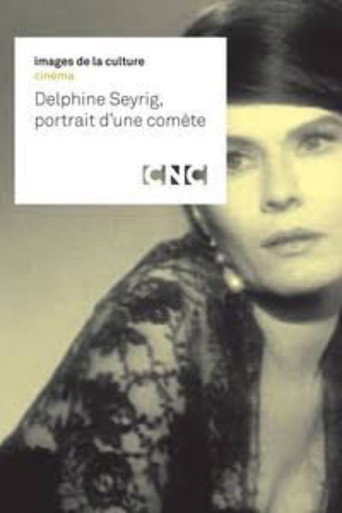
Delphine Seyrig, portrait d'une comète
Delphine Seyrig, an extraordinary woman and actress, died on October 15, 1990. From "Last Year at Marienbad" by Alain Resnais to "India Song" by Marguerite Duras, she played in 34 films for cinema, 13 films for television and 33 plays. Jacqueline Veuve, filmmaker and friend of Delphine Seyrig, wanted to break the silence that has fallen on her memory by making a documentary that traces with emotion and subjectivity the life of the mythical actress, the fierce feminist but also the simple friend.
Delphine Seyrig, portrait d'une comète
Delphine Seyrig, an extraordinary woman and actress, died on October 15, 1990. From "Last Year at Marienbad" by Alain Resnais to "India Song" by Marguerite Duras, she played in 34 films for cinema, 13 films for television and 33 plays. Jacqueline Veuve, filmmaker and friend of Delphine Seyrig, wanted to break the silence that has fallen on her memory by making a documentary that traces with emotion and subjectivity the life of the mythical actress, the fierce feminist but also the simple friend.
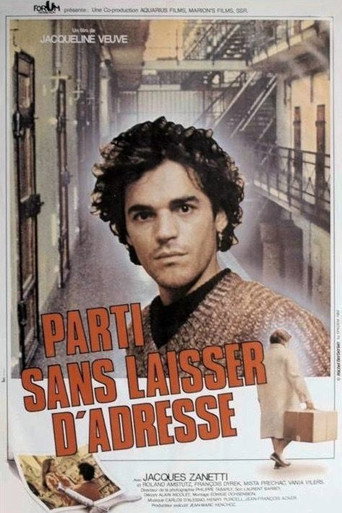
Parti sans laisser d'adresse
A young Swiss drug addict has been imprisoned for robbery, and must wait and wait for his upcoming trial, all the while isolated and without hope of parole - the police are convinced he is a dealer and not just a user. He hears from his son that his girlfriend has a new man, and begins to despair of ever coming to trial, or of having another relationship like the one he lost. This fiction film is said to be based on a true story.
L'homme des casernes
This film deals with the issue of mandatory military service in Switzerland. For four months, from February to May 1990, filmmaker Jacqueline Veuve and her team filmed a platoon engaged in basic training at Colombier, Switzerland.
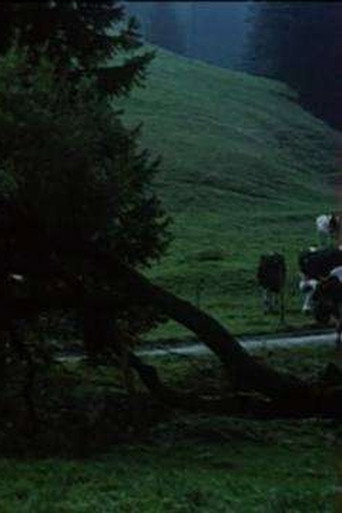
A Peasant Chronicle in Gruyère
The shooting of this peasant chronicle in the Gruyère region of Switzerland lasted a whole year, from July 1989 to July 1990. A year of work and festivities in the family of Conrad and Louise Bapst, their children and grandchildren who live in La Roche (canton of Fribourg). In summer, part of the family goes with the herd to the upper pastures, and will move six times in the next three months, as the grass for the cows grows in higher and higher places. At the farm below, the rest of the family mows the hay and the after crop, and tends the vegetable garden. Fall and winter bring new chores, along with feast-days, and the sale of cheeses to pay for rented pastures. We see the family participate in a vote for or against the Swiss Army, and at a meeting where mountain farmers discuss whether or not to join the European Union. The film displays the patient and human approach of an almost silent minority of Switzerland.
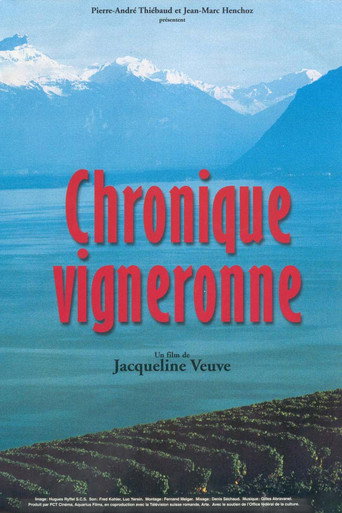
Chronique vigneronne
This documentary show the work, the worries and the joys of a family dedicated to viticulture, the Potterat, living in Lavaux. Three generations live together, keeping the old traditions
La petite dame du Capitole
Lucienne Schnegg is an energetic little woman. At eighty, she is still at the helm of the "Capitole" cinema. Hired as a secretary in 1949, she became the heiress and soul of the cinema. Cashier, housekeeper and director all in one, she tells us all about her cinema, Lausanne's oldest, largest and most beautiful.
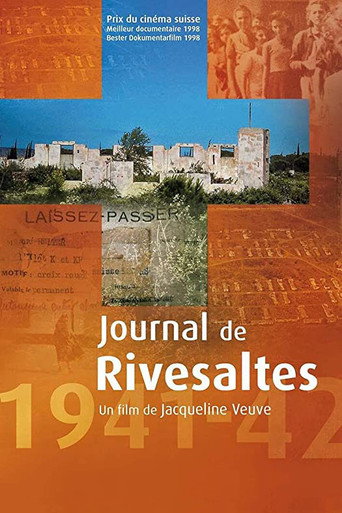
Journal de Rivesaltes 1941-42
From August to October 1942, over 2250 Jews were deported from the internment camp of Rivesaltes to Auschwitz by way of Drancy. Among them were 110 children. Friedel Bohny-Reiter, a nurse with the Swiss Aid to Children, worked in this camp in the South of France. Like many others in the formerly unoccupied zone, it was run by the French. Once a military camp, it had been converted in 1941 into a transit camp regrouping Jewish, Gypsy and Spanish people living in the area or who had fled to the free zone as refugees. Thanks to the young nurse from Basel, many children were probably saved from certain death. The film follows the nurse on a visit to that still intact site as well as through the pages of the journal she wrote in those dark days, published by Editions Zoë, Geneva in 1993.
L'homme des casernes
This film deals with the issue of mandatory military service in Switzerland. For four months, from February to May 1990, filmmaker Jacqueline Veuve and her team filmed a platoon engaged in basic training at Colombier, Switzerland.
Gallery