Jacqueline Porel Movies, TV Shows, and Filmography

Jacqueline Porel
Acting
Biography
No biography available.
Filmography Movies
Acting

The Truth About Bebe Donge
François Donge, a rich industrialist and womaniser, meets a girl nicknamed Bébé who he marries. Ten years later, poisoned by his wife and dying in hospital, he recalls his married life and understands how his wife who adored him suffered from his many affairs and indifference.
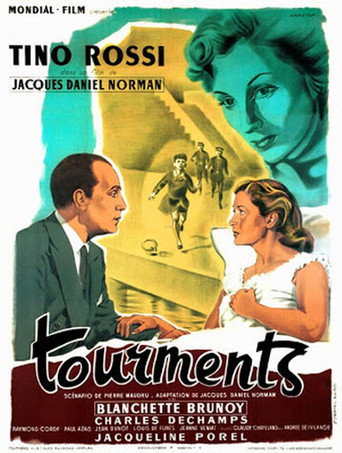
Tourments
Little Jean-Claude was adopted by former singer Jacques Duffot and his wife Anne-Marie. The child's mother, Simone, is determined to take him back, happily advised by the director of a private agency. They persuade Anne-Marie that Jacques is the legitimate father. Distraught, the young woman leaves home. Jacques resumes his singing career, but Jean-Claude refuses to accept the separation and fries him to death. The couple reconcile at his bedside, while Simone tiptoes away.

Youth in Revolt
"Altitude 3.200" asks the question and provides the premise of what would happen if a group of young people----poor, rich, discontented, bored--- were given an idyllic community in which to live. Call it a colony. Call it a village. Call it one-world. Mainly call it a futile exercise in changing human nature, mores, culture and attitudes at any altitude. For t'ain't no time before clashing personalities, petty jealousy, violence and---that old demon---love create havoc. And isn't much longer before they become re-united in the face of an avalanche that threatens to destroy them. They all return to whence they came, sadder and wiser.
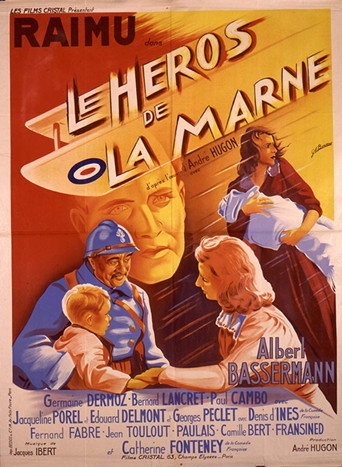
Heroes of the Marne
Bernard Lefrancois is a prosperous farmer on the River Marne, while his neighbor is impoverished. Lefrancois objects strongly to the romance between his son and the neighbor's daughter, but it continues in secret. WWI begins and the son becomes an aviator with the French army, and the unwed girl presents Lefrancois with an unexpected grandchild. The German army occupies the area, and the girl is serving France as a spy and securing information needed by the French to drive out the Germans. While his son is engaged in air-combat against the Germans, and the unwed mother of his grandchild is serving as a spy against their country's enemy, Lefrancois also joins the battle as a soldier.

Paris Romance
Georges Gauthier is an electrician who lives with his mother and his sister Madeleine. He is the son of a womanizing singer who made his mother miserable. For all that, Georges is attracted to show business all the more as he falls in love with Jeanne, the daughter of singer Lormel. Georges is spotted by Cartier, the manager of the Folies Concert and makes his debut as a singer under the assumed name of Jean Papillon.
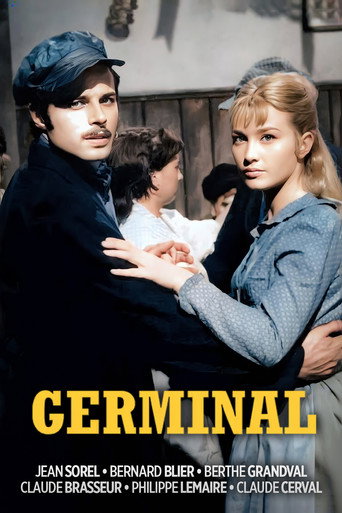
Germinal
Dismissed from the railroads in 1863 for his union activities, Etienne Lantier found a job at the Voreux coal mine. But work was hard, wages were low and safety left much to be desired. Lantier tried to organize the miners into a union. When mine manager Hennebeau refused to negotiate, the workers launched a general strike, which ended with the intervention of the troops.
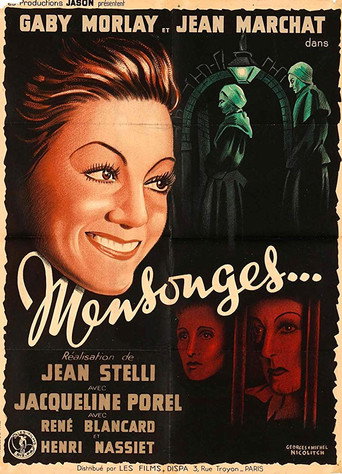
Mensonges
Marie Leroux, who is married to Charles, an honest, understanding country doctor, lives an uneventful, rather monotonous life.Her husband is a kind man but he does not give her any thrill or excitement. One day, Marie meets Olivier Dumas-Beaulieu, a handsome industrialist, who is in the process of leaving his fiancée Corinne, despite her being pregnant by him. It is easy for the confirmed womanizer he is, to seduce Marie, who very foolishly thinks she has found true love. Shortly afterward Charles is shot dead by Olivier while the two men were having a quarrel about Marie. The latter, who finds the corpse, believes her husband has committed suicide. Which is not the police's opinion and Marie is arrested and condemned to ten years in prison. Annihilated by such unfair treatment and, worse, by the separation from her beloved eight-year-old daughter, she still manages to survive and to serve her sentence.
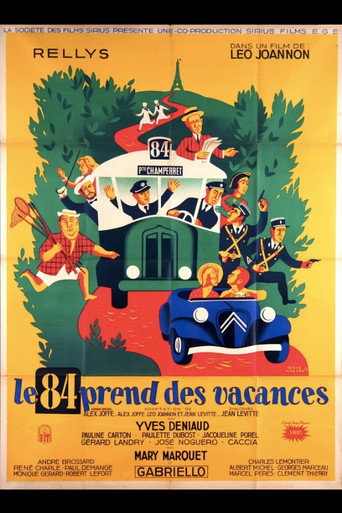
Le 84 prend des vacances
Gaston Bernod is a Parisian bus driver. Honest, upright and hard-working, he is held in high esteem by his superiors. Gaston has always pampered "his" bus, going as far as to equip it with a fuel-saving device of his invention. Very close to his vehicle, he may have somewhat neglected his wife Paulette, who lets herself got round by the smooth words of Pierrot. The gigolo has indeed managed to persuade her to follow him to the Mont Saint-Michel, "a wonderful nest for their burgeoning love" as he says. The trouble is that Gaston, while driving his dear 84, catches sight of the car, and suddenly aware of his misfortune, sees red. He immediately sets off in pursuit of the culprits, involving his load of helpless passengers in the chase.
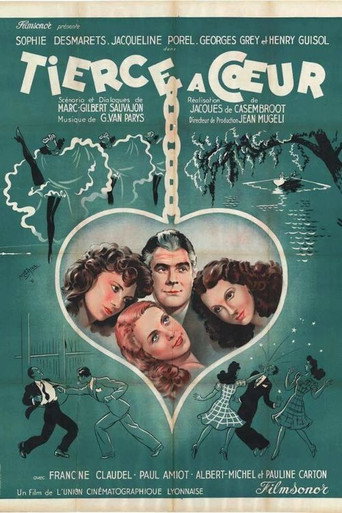
Third at Heart
Maitre de Latour Martin had been reported missing during the war. Peace returned, he finds his two wives. Guilty of bigamy, he shelters the ladies in his home and a third woman arrives whom a dowry hunter had married thanks to the papers lost by the lawyer. Life at four is stormy and Maitre Latour regrets his life as a soldier.

Les Surprises d’une nuit de noces
A singer wants to get rid of his mistress to marry a young admirer.
Production

Diva
Jules, a young Parisian postman, secretly records a concert performance given by the opera singer Cynthia Hawkins, whom he idolises. The following day, Jules runs into a woman who is being pursued by armed thugs. Before she is killed, the woman slips an audio cassette into his mail bag...

That Obscure Object of Desire
After dumping a bucket of water on a beautiful young woman from the window of a train car, wealthy Frenchman Mathieu, regales his fellow passengers with the story of the dysfunctional relationship between himself and the young woman in question, a fiery 19-year-old flamenco dancer named Conchita. What follows is a tale of cruelty, depravity and lies -- the very building blocks of love.
Gallery