Ivano De Matteo Movies, TV Shows, and Filmography

Ivano De Matteo
Directing
Biography
No biography available.
Filmography Movies
Acting
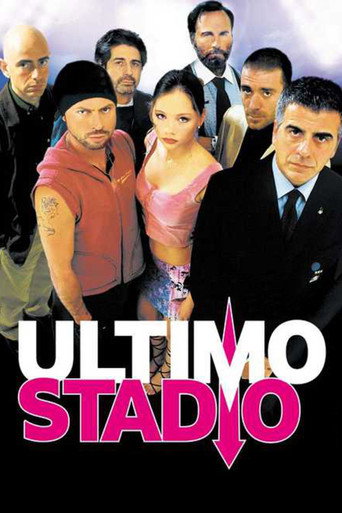
Ultimo stadio
The Champions League Final, on 31st May 2001, in Rome. A football match unites men that have nothing in common with each other. The stadium becomes a modern Greek theatre, where five dramas touch one another, only to fade away in a few minutes. The main characters are, Simone, Alice, Gabriele, Pietro and Achille, all different types of people, of different ages, all looking for a place to find some peace and quiet, a taste of happiness and love, as well as someone to trust in. At the last stage people laugh, but there is always a bitter note to their laughter. And their laughter is louder and more satisfying the greater their adversity. Indeed, in the end, there is always a reason to go on, a final stage from which to rise.
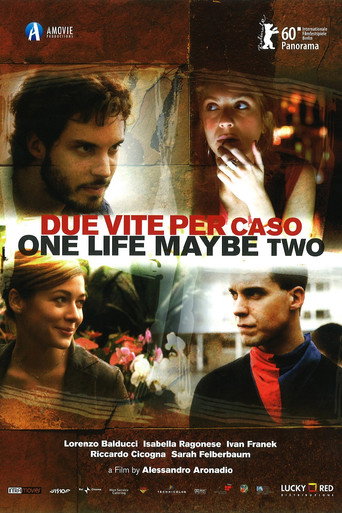
One Life, Maybe Two
You're 20 years old and life is full of endless possibilities. But, on a rainy evening, you bumps into another car and life hasn't been the same anymore. Even though you have everything something keeps on eating you up.

Light of My Eyes
Antonio is a fallen angel, a rootless chauffeur who relates only to the lonely heroes in the science fiction novels he grew up with. Only through a chance meeting with Maria, a woman struggling to hold onto her daughter and her business, does he discover a hope that's been in his detached existence.

Maximum Velocity (V-Max)
In search of purpose, 17-year-old Claudio helps easygoing mechanic Stefano build a car capable of winning a street race that could solve his financial problems, but gets himself involved with the latter's former girlfriend.

From My House in Da House: A History of Rome
"From my house in da house - A history of Rome" is a documentary that with a light tone and a fast pace tells the last thirty years of the center of Rome. From the splendor of the early 90s to the darkness of today, without ever falling into rhetoric. The leitmotif of the film is irony. Sometimes bitter, in the story of the many well-known characters that are meeting places, situations and unrepeatable encounters. All together they combine to form a mosaic that gives the current image of Rome. Wounded, stunned, but still able to recover and return to its eternal splendor.

All Against All

Rino Gaetano - Ma il cielo è sempre più blu
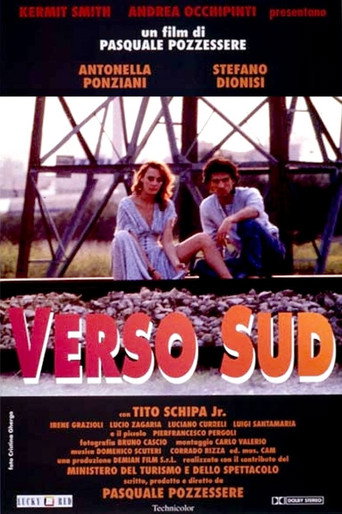
Verso sud
In Pasquale Pozzessere's debut, a woman just out of prison falls in love with a man who saw steaing form a collection box in a church. Some critics saw a dry style next to Pasolini's as the director shows the two desperate individuals effort to build a sort of precarious family. In the end you could almost feel there's still a slender thread of hope for them to hang on

Close Friends
Fifteen-year-old Sabrina has lived with her father since he split with her mother. As the film unfolds it gradually becomes clear that Sabrina is a victim of incest.

People of Rome
Rome 2003, the camera follows citizens of Rome. Night, in a flat, a woman prepares her husband's lunch. The man takes a bus, but the camera follow another bus ... a woman cleans the mayor's office... A man interviews passengers on a bus about immigration...... the owner of a bar is racist person... a survivor woman of Holocaust remembers the Ghetto deportation... deportation that is filmed by a director... Stefania Sandrelli plays with her grand daughter in a park a man tries to seduce the bus driver...gay night life... sunrise at Piazza Navona, a noble man and a tramp are sitting together. - - - Gente di Roma is a 2003 Italian comedy mockumentary film directed by Ettore Scola. It is close to Federico Fellini's Roma. The film is dedicated to Alberto Sordi, who Scola wanted to close the film, as a noble man, but he could not film him because he died. Scola's daughters helped to co-write the script. (From Wikipedia, the free encyclopedia)
Production

Beautiful People
Alfredo and Susanna are two well-off fifty-year-olds who lead a stimulating cultural life. He is an architect and she is a psychologist; they live in Rome but spend their weekends at their country home in Umbria, where they love to spend their days walking in the forests or relaxing poolside with a good book. One day, as she goes into town, Susanna sees a girl prostituting herself in the bushes on the side of the road and decides to save her from her unhappy existence, despite the enormous differences that separate their ways of life.
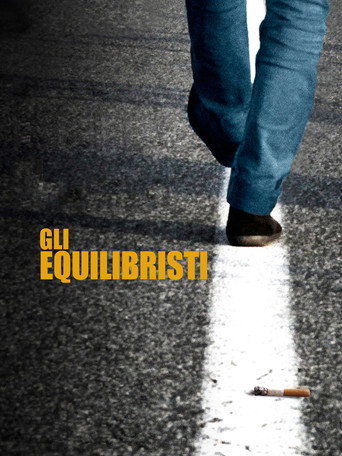
Balancing Act
Giulio suddenly finds himself having to change his life when his wife, after discovering his betrayal, asks for a separation and, suddenly, the reality around him is no longer the same. Forty years old and father of two children, Giulio is forced by circumstances to say goodbye to family and economic well-being and to study new solutions in order to stay afloat and not drown in a new poverty made of double rents and double bills to pay, solitary lunches in fourth-rate restaurants, children's wishes not to be ignored and creditors to hide from.
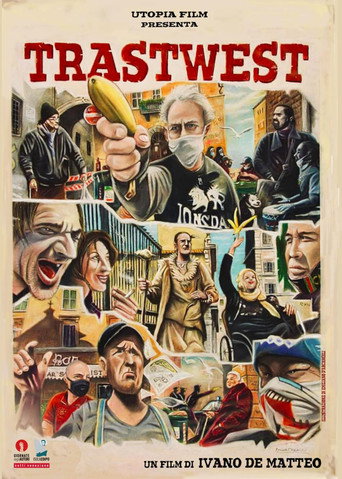
Trastwest
A man walks out of his house with two bananas hidden in his pockets, another one is practising thai chi in a deserted Rome. A man dressed in animal skins walks next to an electric wheelchair driven by an elegant old woman with platinum blond hair. Then a gypsy woman, card players, an acrobat, two strange lovers. A couple of nuns walk by while two curious characters play the harmonica. Their dogs sing and bark. Curious barmen come out of the San Calisto saloon. All waiting for the big duel. Seagulls circling like vultures. And then the two men meet. A glance, a shot, a siren. And the square returns to the red zone again, as if nothing had happened.
Codice a sbarre
A Donatello award nominated short feature about four former prison inmates who are incarcerated in a small plexiglass prison cell erected in full view of the public then interviewed afterwards about the experience.
Codice a sbarre
A Donatello award nominated short feature about four former prison inmates who are incarcerated in a small plexiglass prison cell erected in full view of the public then interviewed afterwards about the experience.
Ultimo stadio
The Champions League Final, on 31st May 2001, in Rome. A football match unites men that have nothing in common with each other. The stadium becomes a modern Greek theatre, where five dramas touch one another, only to fade away in a few minutes. The main characters are, Simone, Alice, Gabriele, Pietro and Achille, all different types of people, of different ages, all looking for a place to find some peace and quiet, a taste of happiness and love, as well as someone to trust in. At the last stage people laugh, but there is always a bitter note to their laughter. And their laughter is louder and more satisfying the greater their adversity. Indeed, in the end, there is always a reason to go on, a final stage from which to rise.
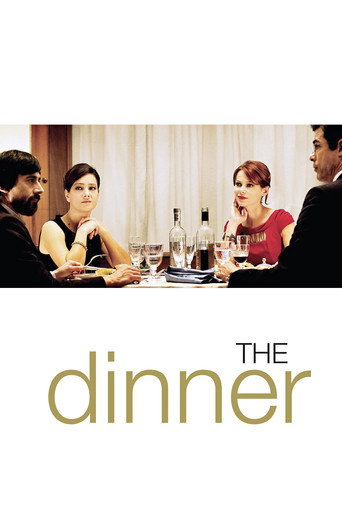
The Dinner
Story about two brothers and their wives, and the interactions between them and their two high school age children. When the kids get into serious trouble together, how will the parents relationships change with and among each other? Will the parents protect the kids or force them to face the consequences of their actions?
The Dinner
Story about two brothers and their wives, and the interactions between them and their two high school age children. When the kids get into serious trouble together, how will the parents relationships change with and among each other? Will the parents protect the kids or force them to face the consequences of their actions?
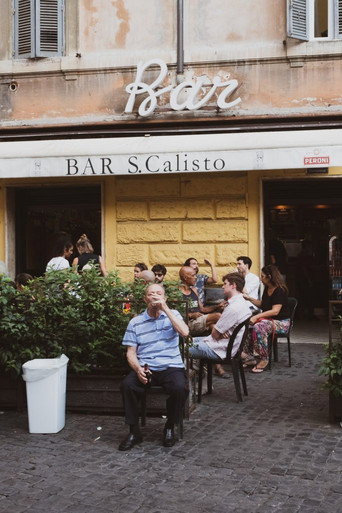
Barricata San Calisto
a documentary about the story and characters of the Bar San Calisto - a famous bar located in the neighbourhood of trastevere in Rome.
Balancing Act
Giulio suddenly finds himself having to change his life when his wife, after discovering his betrayal, asks for a separation and, suddenly, the reality around him is no longer the same. Forty years old and father of two children, Giulio is forced by circumstances to say goodbye to family and economic well-being and to study new solutions in order to stay afloat and not drown in a new poverty made of double rents and double bills to pay, solitary lunches in fourth-rate restaurants, children's wishes not to be ignored and creditors to hide from.
Gallery