Inge Keller Movies, TV Shows, and Filmography

Inge Keller
Acting
Biography
Inge Keller (December 15, 1923 – February 6, 2017) was a German stage and film actress whose career on stage and screen spanned seventy years. She was one of the most prominent performers in the former German Democratic Republic. Thomas Langhoff described her as "perhaps the most famous actress of the German Democratic Republic—a star." Deutschlandradio Kultur reporter Dieter Kranz called her "a theater legend". Internationally, Keller was known for her portrayal of the older Lilly Wust in the Golden Globe nominated Aimée & Jaguar. She won the Award for the Best Supporting Actress in the 36th International Antalya Golden Orange Film Festival for her participation in the film Lola and Billy the Kid. In 2006, Keller received the Order of Merit of Berlin from Mayor Klaus Wowereit.
Filmography Movies
Acting

Aimée & Jaguar
In 1943, while the Allies are bombing Berlin and the Gestapo is purging the capital of Jews, a dangerous love affair blossoms between two women – one a Jewish member of the underground, the other an exemplar of Nazi motherhood.

Weihnachtsgeschichten
The paths of many people cross before Christmas Eve. Each of them has their own special story to tell on this day... On the morning of December 24, the doctor at the children's clinic leaves the hospital with a happy heart. The parents of little Matthias have reconciled with each other. As a farewell gift, the porter gives her a chocolate Santa Claus, which is to be passed on many times that day: at one or two fleeting encounters, as a nice gesture for other people. Fate plays a bit of a servant Ruprecht and distributes his gifts. Two lonely hearts are in a hurry to escape the hustle and bustle of the festive season. An accident brings them together. In exchange for a bottle of champagne to mark the shock, the sweet chocolate man switches to Ilse's divorced husband, who is drawn back into the bosom of the family at the same time every year.

The Fiancee
The wrenching story of a woman sentenced in 1934 to ten years in prison for antifascist activities. The love between her and her fiancée enables her to survive the tribulations of her time in prison, where she is one of few political prisoners.
Woman Doctors
Lydia Kowalenko is fired from the pharmaceutical company where she has worked for many years because she refused to help cover up the use of a dangerous chemical. Her daughter Katja, however, has no scruples and risks an operation which is more beneficial to her own medical research than to the convalescence of a young patient. Then Katja's only son dies after a car accident. Was he too the victim of a career-minded doctor?

Carla
An idealistic teacher is shocked to discover her pupils are already cynical and opportunistic. Her colleague soon grows resentful when she uses new and challenging techniques to help her students overcome obstacles.
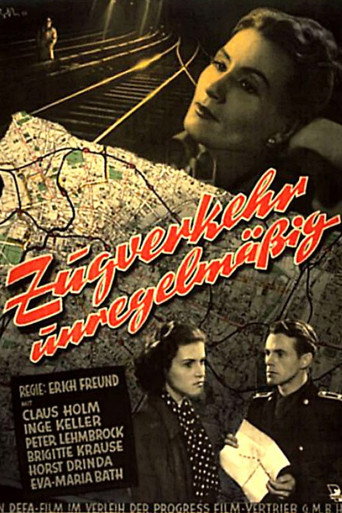
Zugverkehr unregelmäßig
After Jochen saves police officer Erich's life, the two men become close friends and Erich helps Jochen get a job working for Berlin's local train system. But Jochen falls into the hands of the beautiful West Berlin agent Ellen, who convinces him to participate in acts of sabotage against the trains. All of a sudden, Jochen is making a lot more money and even Erich's former girlfriend Inge becomes interested in him. But everything begins to unravel when Erich observes his friend's illegal activity on one of his nightly rounds.

Frau Venus und ihr Teufel
Hans Müller finds himself on a trip in Thüringen, accompanied by his loving female friend, Moritz. Hans doesn't understand much about trust, which constantly leads to problems between the two of them. During one of their fights, Lady Venus intervenes and sends the young man back to the Middle Ages - so he can learn the true meaning of love. Disguised as Tannhäuser, he has to stand his ground against a horde of minstrels. At a singing competition, he blunders, without the support of Moritz, who had also been thrown back into the 13th century. And with the help of Frau Venus, his adventure will surely turn out even worse...

On the Way to Lenin
A train travels through the vastness of Russia, a train with German prisoners of war returning home, and Viktor Kleist, a young German communist from an intellectual home in Munich, travels back home with them. During the journey, the stations on his way to Lenin wake up again.
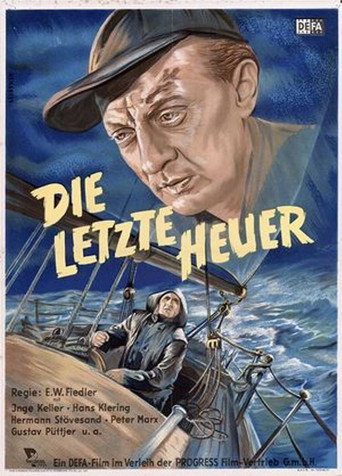
Die letzte Heuer
The ship stoker Heini Holler leaves Greece for health reasons and reports to the consulate of fascist Germany. The consul sends him back to Hamburg. He had previously reported him to the Gestapo there as politically suspicious. On his arrival, Holler is immediately arrested. His comrades kidnap the consul and demand an exchange for Heini, which is to take place in Marseille. The Gestapo agree to this as a pretense and secure the support of the French police to arrest the kidnappers. However, the solidarity of the sailors in Marseille is stronger and Heini is able to cure his lung disease in the Soviet Union.

Alles Samba
Art expert Katharina Diezmann is out of the blue, when one day the little Brazilian Marcia is standing at her door. Years ago Katharina had taken over a sponsorship for the eleven-year-old, but never expected that she would ever meet her. The little girl is in Berlin with her samba group over Christmas and has only one wish: finally to see real snow!
Gallery