Ihor Minayev Movies, TV Shows, and Filmography
Ihor Minayev
Directing
Biography
Ihor Minayev is a Ukrainian and French film director, screenwriter, and actor. He graduated from the Gerasimov Institute of Cinematography (VGIK) in Moscow and began his career in Ukraine. Minayev's notable works include First Floor (1990), The Flood (1994), and The Cacophony of the Donbas (2018), a documentary exploring the creation of the myth about the Donbas region. His films often delve into social and political themes, reflecting his engagement with contemporary issues.
Filmography Movies
Production

Moon Glades
Nina is a young woman of thirty years, who lives in St. Petersburg. She has to bury her mother in a winter day. The ceremony is an opportunity for her to meet her younger brother Andrei, who lives elsewhere.
Moon Glades
Nina is a young woman of thirty years, who lives in St. Petersburg. She has to bury her mother in a winter day. The ceremony is an opportunity for her to meet her younger brother Andrei, who lives elsewhere.
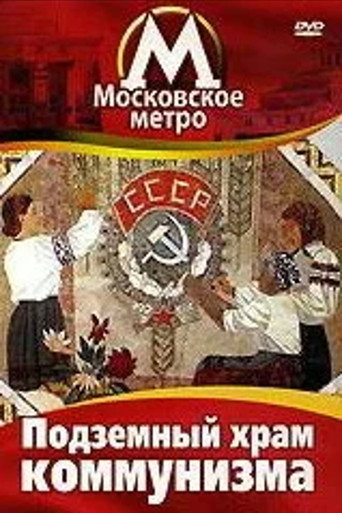
The Underground Temple of Communism
The population of Moscow doubled between 1917 and 1930, reaching almost 4 million people. The problem of public transport became particularly acute. The decision to begin construction of the Moscow Metro was made in June 1931 at a plenary session of the Central Committee of the All-Union Communist Party (Bolsheviks). The first shaft was laid on a test site on Rusakovskaya Street in 1931. The deadlines for the launch of the first phase were fantastic and unrealistic. The only means available was propaganda. The heroism of the workers was romanticized and praised in all the media. Twenty-one percent of the city's annual budget was spent on the construction of the metro. On May 15, 1935, the first train with passengers departed from Sokolniki station. The Moscow Metro began its work.
The Underground Temple of Communism
The population of Moscow doubled between 1917 and 1930, reaching almost 4 million people. The problem of public transport became particularly acute. The decision to begin construction of the Moscow Metro was made in June 1931 at a plenary session of the Central Committee of the All-Union Communist Party (Bolsheviks). The first shaft was laid on a test site on Rusakovskaya Street in 1931. The deadlines for the launch of the first phase were fantastic and unrealistic. The only means available was propaganda. The heroism of the workers was romanticized and praised in all the media. Twenty-one percent of the city's annual budget was spent on the construction of the metro. On May 15, 1935, the first train with passengers departed from Sokolniki station. The Moscow Metro began its work.
The Guest
On New Year's Eve, a small company gathered. An unexpected call interrupted the fun. Behind the door stood a neighbor whom the owners did not like. They turned off the light, pretending that there was nobody at home. After some time, shame seized everyone.

The Flood
This is 1920: Sophia and Trofim Ivanytch have been living on Vassilievski Island, which is part of Petrograd, for thirteen years. In their house, which looks like a ship wreck, the atmosphere is gloomy. Sophia cannot have children and she is aware that, because of that, she is likely to lose her husband. That is why, when their neighbor dies, she asks Trofim to take in Ganka, his orphaned thirteen-year-old daughter. Trofim agrees and their new life begins...
The Flood
This is 1920: Sophia and Trofim Ivanytch have been living on Vassilievski Island, which is part of Petrograd, for thirteen years. In their house, which looks like a ship wreck, the atmosphere is gloomy. Sophia cannot have children and she is aware that, because of that, she is likely to lose her husband. That is why, when their neighbor dies, she asks Trofim to take in Ganka, his orphaned thirteen-year-old daughter. Trofim agrees and their new life begins...

Far from Sunset Boulevard
The thirties, the heyday of Soviet film production. The story of the famed couple's glory — a filmmaker and actress, behind the external well-being of which were hidden strange contradictory relationships and a sense of fear that they carried through their whole lives. The prologue to this story is the 85th anniversary of Lidiya Polyakova, the formerly brightest star in Soviet cinema, who played the main role in all the films of her own husband, director Konstantin Dalmatov. Now in the courtyard there are other times, Dalmatov’s movies are called ideological agitation, and the director himself and his wife are hiding from the world in the country, trying not to let anyone in.
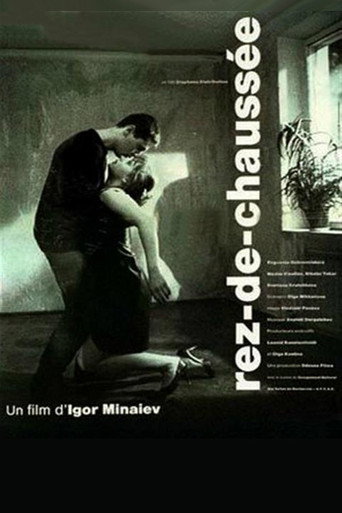
First Floor
Although he is only eighteen, twenty-year-old Nadia permits Sergei to move into her apartment and share her bed. However, his callowness swiftly bores her, and she is unable to hide her increasing disdain for him. Understandably, this is a matter of some distress for him. Her contempt is more difficult for him to bear than she suspects, and one day he is provoked to murder her.
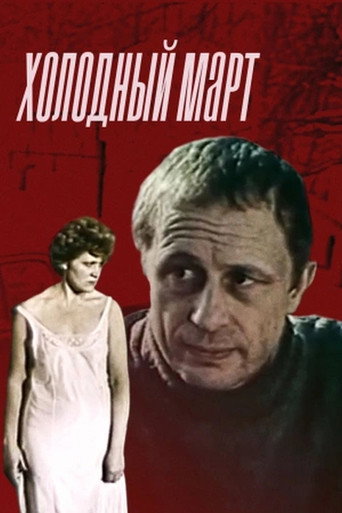
A Cold March
Mitia (Maxim Kisilev) is the new boy in a technical school who must adjust to his environment in this childhood drama. He goes through a series of initiations before his classmates are ready to accept him. Andrei Ivanovich (Andrei Tolubeev) is the stern but kindly instructor who looks out for Mitia. Mitia loses his girlfriend when her mother comes to take her home, and Andrei leaves the institution when his wife becomes gravely ill.