Acting
No biography available.
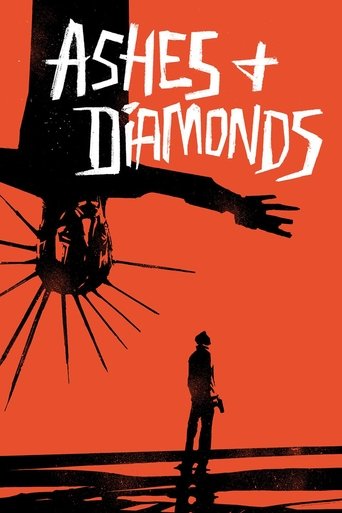
A young academy soldier, Maciek Chelmicki, is ordered to shoot the secretary of the KW PPR. A coincidence causes him to kill someone else. Meeting face to face with his victim, he gets a shock. He faces the necessity of repeating the assassination. He meets Krystyna, a girl working as a barmaid in the restaurant of the "Monopol" hotel. His affection for her makes him even more aware of the senselessness of killing at the end of the war. Loyalty to the oath he took, and thus the obligation to obey the order, tips the scales.
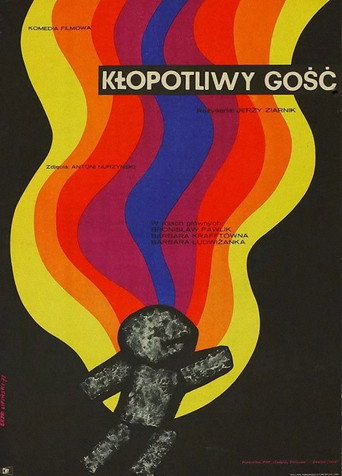
Strange human-shaped phenomenon appears in Piotrowski's new flat and he approaches all available institutions to help him get rid of it.
Film about the famous Battle of Vienna and the events surrounding it.
A mysterious magnetic spool found during a construction project is discovered to have originated from Venus. A rocket expedition to Venus is launched to discover the origin of the spool and the race that created it.
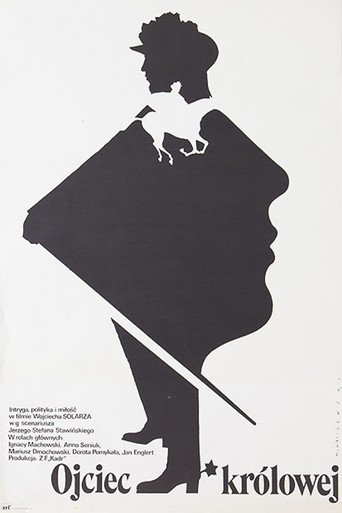
Chevalier de Charentes goes to Poland on a double mission.
Set in the Middle Ages the film tells the story of a wonder child, the little sculptor Wawrzek, who goes to work for a great master, Wit Stwosz. The story culminates in the unveiling of Stwosz's greatest masterpiece, the Altar of St. Mary's Church in Cracow.
Five short stories. (1) “Czas przybliża, czas oddala” – Edward recalls his unfulfilled love for Anna and, years later, writes to her sister Zofia, mistaking her for Anna. (2) “Krąg istnienia” – A girl falls for Wacek at an ice rink; pressured by family, she marries a soap manufacturer. (3) “Paryż 1945” – A Polish refugee soldier and an American woman share a fleeting wartime bond before she leaves at dawn. (4) “Stary profesor” – Two men seek an old professor to fulfill a dying prisoner’s last wish; Roger impersonates a former pupil. (5) “Nauczycielka” – Neglected wife Zofia accepts film tests, only to find the director seeks an ordinary woman.
Bearing traces of the old Anton Chekhov play The Wedding, The Contract is set during an "arranged" ceremony. The bride and groom barely know each other, but this matters not at all to their tradition-bound families. At the last minute, the bride balks. Only slightly nonplused, the groom's father, a status-seeking doctor, decides to go ahead with the expensive reception anyway. Polish director Krzysz Zanussi uses this scenario to stick it to capitalist corruption, and to society's destruction of the individual spirit. Leslie Caron, the one recognizable member of the cast, is outstanding as a wealthy, over-the-hill ballerina who happens to be a kleptomaniac.
The final stage of the great artist's life, a stage in which Witkacy decides to destroy himself. A growing sense of danger, the futility of all actions, and fear of what is to come accompany him constantly during his escape from Warsaw to the East at the outbreak of World War II. Everyday facts and events are intertwined in the film with reminiscences and images from his life, supported by the artist's inner monologue. The style of narration and the way of filming make the film a poignant study of the writer's inner disintegration. By emphasizing the painterly quality of the image and introducing dreamlike themes, Kluba captures on screen the characteristics of both Witkacy's playwriting and painting.
Two friends think that they've discovered a dangerous spy hiding in a mine shaft.