Acting
No biography available.
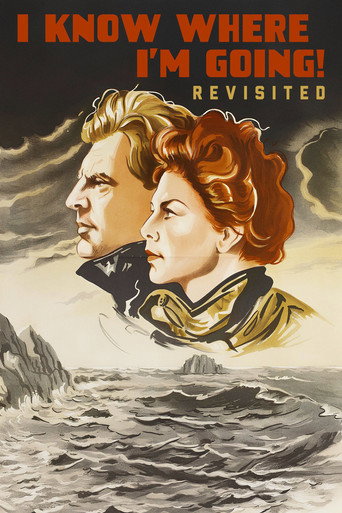
Nancy Franklin was so overwhelmed by the film 'I Know Where I'm Going!' (1945) that she traveled from New York to the Western Isles of Scotland to see the places where it was made and to find out more about the people who made it. This documentary retraces her steps on a subsequent visit.
Long treated with indifference by critics and historians, British silent cinema has only recently undergone the reevaluation it has long deserved, revealing it to be far richer than previously acknowledged. This documentary, featuring clips from a remarkable range of films, celebrates the early years of British filmmaking and spans from such pioneers as George Albert Smith and Cecil Hepworth to such later figures as Anthony Asquith, Maurice Elvey and, of course, Alfred Hitchcock.
A series of interviews about the film Peeping Tom (1960). It includes a rare interview with Karlheinz Böhm talking about his role and its subsequent effect on him.
A 1983 film for Channel Four’s Visions, featuring interviews about the impact of Godard of British filmmakers and critics.
A documentary on "The Life and Death of Colonel Blimp."
Documentary about the making of Powell and Pressburger's 1947 film "Black Narcissus."
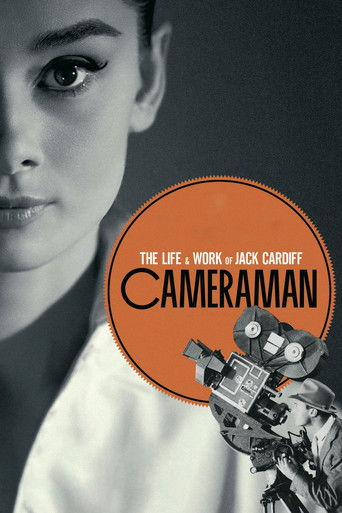
In 2001 Jack Cardiff (1914-2009) became the first director of photography in the history of the Academy Awards to win an Honorary Oscar. But the first time he clasped the famous statuette in his hand was a half-century earlier when his Technicolor camerawork was awarded for Powell and Pressburger's Black Narcissus. Beyond John Huston's The African Queen and King Vidor's War and Peace, the films of the British-Hungarian creative duo (The Red Shoes and A Matter of Life and Death too) guaranteed immortality for the renowned cameraman whose career spanned seventy years.
Until the 1970s, Italian cinema dominated the international scene, even competing with Hollywood. Then, in just a few years, came its rapid decline, the flight of our greatest producers, a crisis among the best writer-directors, the collapse of production. But what are the true causes and circumstances of this decline? In an attempt to provide an answer to this question, Di Me Cosa Ne Sai strives to depict this great cultural change. Begun as a loving examination of Italian cinema, the film transformed into a docu-drama that alternates between interviews with the great names of the past and fragments of cultural and political life of the last 30 years. It is a travel diary that shows Italy from north to south, through movie theatres; television-addicted kids; Berlusconi and Fellini; shopping centers; TV news editors; stories of impassioned film exhibitors and directors who fight for their films; and interviews with itinerant projectionists and great European directors.
Director Stephen Frears, film historian Ian Christie, and author and British film historian Richard Dacre discuss the unique qualities of The Man in the White Suit as well as the legacy of its director, Alexander Mackendrick.
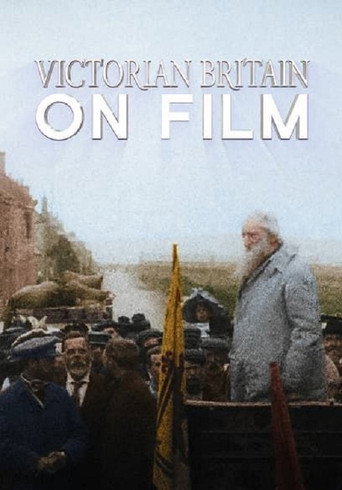
Offers audiences a unique window into a bygone era when a thrilling new invention, the motion picture camera, first captures a nation on film.
Bruce Banner, a genetics researcher with a tragic past, suffers massive radiation exposure in his laboratory that causes him to transform into a raging green monster when he gets angry.
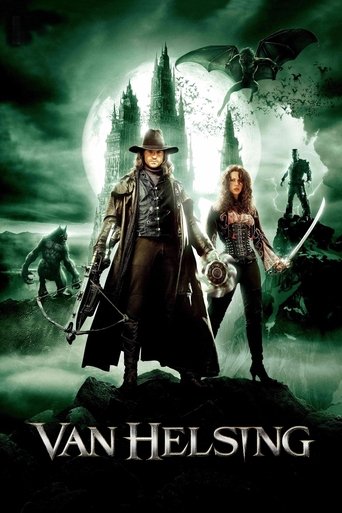
Famed monster slayer Gabriel Van Helsing is dispatched to Transylvania to assist the last of the Valerious bloodline in defeating Count Dracula. Anna Valerious reveals that Dracula has formed an unholy alliance with Dr. Frankenstein's monster and is hell-bent on exacting a centuries-old curse on her family.
World-famous and already notorious Soviet filmmaker Sergei Eisenstein spent 1931 in Mexico, after the rejection of his projects in Hollywood. But the epic film he planned and largely shot would never be completed. In 2012, film historian Ian Christie visited the hacienda where Eisenstein spent much of his time in Mexico, to ask what really went on there, and discover what’s happened since. This essay film, made in partnership with Japanese filmmaker Chiemi Shimada, looks beyond the apparent failure, to ask what contemporary audiences – and Eisenstein himself – could still learn from Que Viva Mexico!
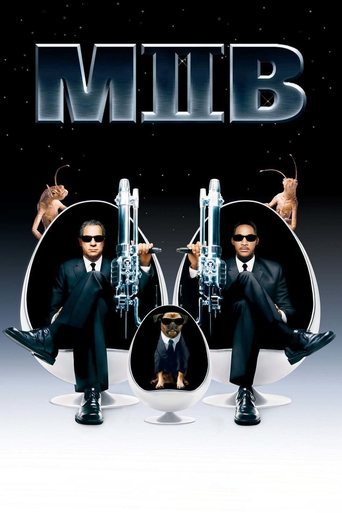
Kay and Jay reunite to provide our best, last and only line of defense against a sinister seductress who levels the toughest challenge yet to the MIB's untarnished mission statement – protecting Earth from the scum of the universe. It's been four years since the alien-seeking agents averted an intergalactic disaster of epic proportions. Now it's a race against the clock as Jay must convince Kay – who not only has absolutely no memory of his time spent with the MIB, but is also the only living person left with the expertise to save the galaxy – to reunite with the MIB before the earth submits to ultimate destruction.
This film essay is inspired by Leonid Trauberg's eponymous autobiographical text. It also sheds light on his public condemnation in 1949 as a leader of the "cosmopolitans," accused of "only causing harm to Soviet cinema," as well as his enthusiasm for silent slapstick comedies, the novels of P.G. Wodehouse and G.K. Chesterton, and his fascination with the lost FEKS film, The Adventures of Octobrine.