Hisham Bizri Movies, TV Shows, and Filmography
Hisham Bizri
Production
Biography
No biography available.
Filmography Movies
Production
Elektra
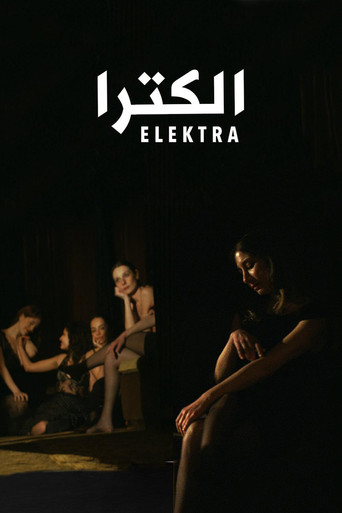
Set in the desolate wreckage of Beirut’s Piccadilly Theater after decades of war, the film recounts three days in the life of a writer and actors. As they seek to revive the ghostly theater with a production of Sophocles’ Elektra, the actors witness the vivid dreams of the writer who has to confront the contempt and lies of the two-faced actors and ultimately her own murder.
Elektra
Set in the desolate wreckage of Beirut’s Piccadilly Theater after decades of war, the film recounts three days in the life of a writer and actors. As they seek to revive the ghostly theater with a production of Sophocles’ Elektra, the actors witness the vivid dreams of the writer who has to confront the contempt and lies of the two-faced actors and ultimately her own murder.
Elektra
Set in the desolate wreckage of Beirut’s Piccadilly Theater after decades of war, the film recounts three days in the life of a writer and actors. As they seek to revive the ghostly theater with a production of Sophocles’ Elektra, the actors witness the vivid dreams of the writer who has to confront the contempt and lies of the two-faced actors and ultimately her own murder.
Elektra
Set in the desolate wreckage of Beirut’s Piccadilly Theater after decades of war, the film recounts three days in the life of a writer and actors. As they seek to revive the ghostly theater with a production of Sophocles’ Elektra, the actors witness the vivid dreams of the writer who has to confront the contempt and lies of the two-faced actors and ultimately her own murder.
Beneath the wide wide Heaven
Pier Paolo Pasolini, Marxist, Catholic, and gay, plays the role of the director as a conveyor of human experience in this experimental documentary film. The director is constantly watching, thinking, and feeling the world events around him as he films the Passion of Jesus as well as mundane and historic events, all in the hope that the film, once done, will be whole and sufficient to convey human suffering and decadence through interconnections. But on the director is the burden of showing through the art of cinema the human experience of transcendence.
Asmahan
Asmahan is a film poem about the famous Syrian singer of the same name. The film is made up of four parts: love, death, love, and death. Each part follows one of the two songs Asmahan sings in the film which are used as a structural motif throughout. Like her musical notations, every shot is connected to every other shot. Nearly every shot contains Asmahan (she is the only actor in the film who appears to be talking), which is meant to create an obsessive relationship with the image reminding us of the interplay of voyeurism and exhibitionism that makes the actor that we see on the screen dream like, especially when she also sees us. This dream logic suggests that there is a hidden life, which exists through pictures, lurking in even the most superficial and trite of B-films. It is this fragment-like wholeness that is in a sense the structure of the film. As in a dream, Asmahan's actions are accentuated through a number of strategies.
Asmahan
Asmahan is a film poem about the famous Syrian singer of the same name. The film is made up of four parts: love, death, love, and death. Each part follows one of the two songs Asmahan sings in the film which are used as a structural motif throughout. Like her musical notations, every shot is connected to every other shot. Nearly every shot contains Asmahan (she is the only actor in the film who appears to be talking), which is meant to create an obsessive relationship with the image reminding us of the interplay of voyeurism and exhibitionism that makes the actor that we see on the screen dream like, especially when she also sees us. This dream logic suggests that there is a hidden life, which exists through pictures, lurking in even the most superficial and trite of B-films. It is this fragment-like wholeness that is in a sense the structure of the film. As in a dream, Asmahan's actions are accentuated through a number of strategies.
Asmahan
Asmahan is a film poem about the famous Syrian singer of the same name. The film is made up of four parts: love, death, love, and death. Each part follows one of the two songs Asmahan sings in the film which are used as a structural motif throughout. Like her musical notations, every shot is connected to every other shot. Nearly every shot contains Asmahan (she is the only actor in the film who appears to be talking), which is meant to create an obsessive relationship with the image reminding us of the interplay of voyeurism and exhibitionism that makes the actor that we see on the screen dream like, especially when she also sees us. This dream logic suggests that there is a hidden life, which exists through pictures, lurking in even the most superficial and trite of B-films. It is this fragment-like wholeness that is in a sense the structure of the film. As in a dream, Asmahan's actions are accentuated through a number of strategies.
Asmahan
Asmahan is a film poem about the famous Syrian singer of the same name. The film is made up of four parts: love, death, love, and death. Each part follows one of the two songs Asmahan sings in the film which are used as a structural motif throughout. Like her musical notations, every shot is connected to every other shot. Nearly every shot contains Asmahan (she is the only actor in the film who appears to be talking), which is meant to create an obsessive relationship with the image reminding us of the interplay of voyeurism and exhibitionism that makes the actor that we see on the screen dream like, especially when she also sees us. This dream logic suggests that there is a hidden life, which exists through pictures, lurking in even the most superficial and trite of B-films. It is this fragment-like wholeness that is in a sense the structure of the film. As in a dream, Asmahan's actions are accentuated through a number of strategies.
A Film
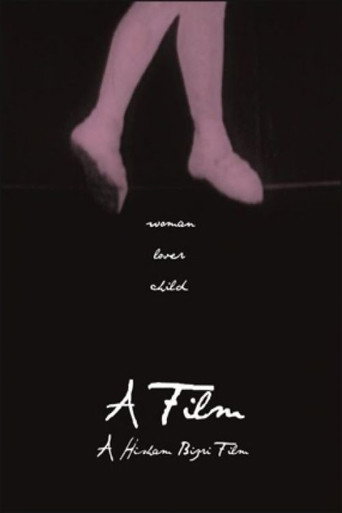
This is a film poem about love. A Lebanese-American filmmaker photographs a woman in Paris: as a trapeze artist, a model, a lover, and a child. The film attempts to capture that moment between wakefulness and dream. It carries within it melancholy and loneliness, sadness and joy, adulthood and childhood. It evolves out of the metaphor that life is a circular journey whose end is "to arrive at where we started / And know that place for the first time" (T.S. Eliot, Little Gidding).