Hiroyuki Oki Movies, TV Shows, and Filmography
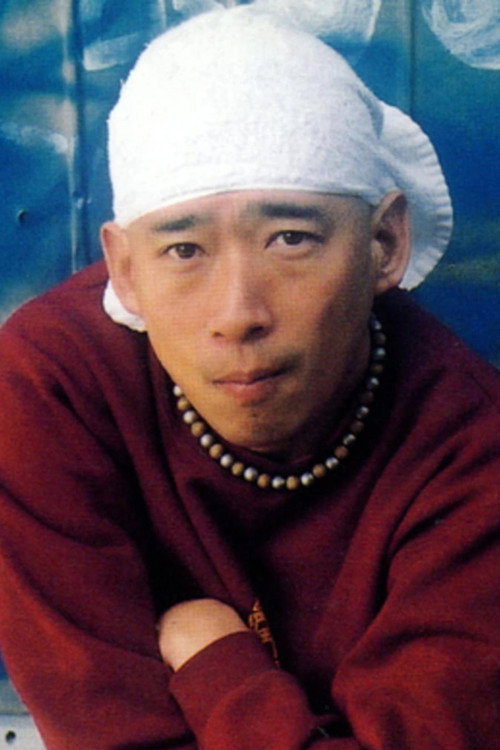
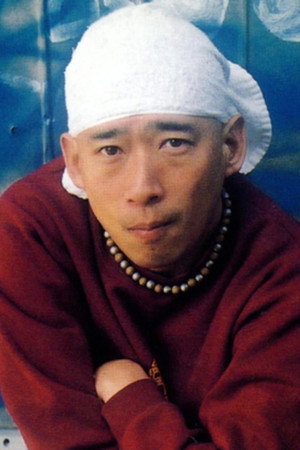
Hiroyuki Oki
Directing
Biography
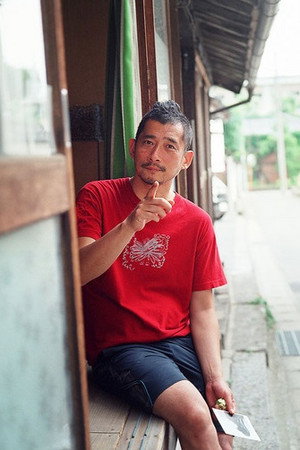
Born in Tokyo in 1964. Graduated from the Architectural Department of the Faculty of Engineering of Tokyo University in 1988. Studied film production at the Image Forum Institute of the Moving Image and was recognized for his 3-hour long thesis film "The Film of Buddy Matsumae" ("Matsumae-kun no eiga" 1989). His film "Swimming Prohibited" won the Special Juror's Prize at the 1990 Image Forum Festival. Moved to Kochi City in 1991, and in 1992 directed the Jurgen Brunning production "Tarch Trip" ("Tachi torippu" 1993). Directed his first 35mm fiction film "I Like You, I Like You Very Much" in 1994. In 1996 his "Heaven-6-Box", a production of the Kochi Musuem of Art, won the NETPAC Prize at the 1995 Berlin International Film Festival. Recently he has been involved in performing live music at screenings of his work. (www.yidff.jp)
Filmography Movies
Acting
The Letter
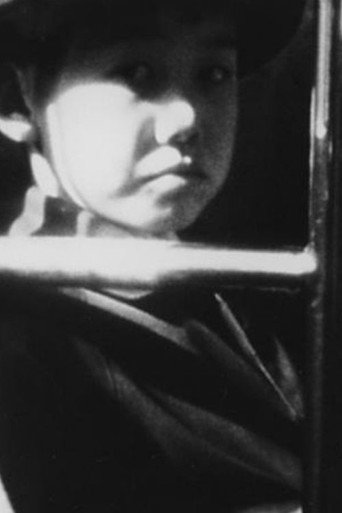
"I sobbed today..." This bizarre monologue is followed by a dialogue with a unique tempo. Then, fragments of daily life are written on the screen in an unhurried manner. When the dialogue and the screen are fused together, there is an exquisite sense of mismatch, and a warm and heart-warming world begins to unfold on the screen. The film is a humorous essay in the form of a letter to a lover, telling the story of an ordinary day, but with a descriptive power that is anything but ordinary.
Tarch Trip
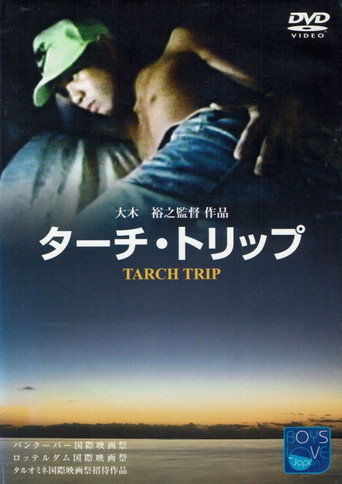
A film like an Impressionist painting; the kind of paintings to have titles like 'urban view from the artist's studio'. The film is largely set in the film-maker's home and the street in the provincial town of Aichi where he lives. Minor everyday incidents are observed poetically; the melancholy mood of the images is boosted by serene electronic music. There is no dialogue; the sound track only comprises streets sounds as well as the music. Loose, almost nonchalant impressions of the street or of cloudy skies are juxtaposed with posed, almost photographic mildly homo-erotic portraits of friends of the film-maker. Tarch Trip is made up of fragments of a cinematographic diary, which are however not edited chronologically. Two periods alternate. One is characterized rain and dark cloudy skies. The other is sunny and repeatedly accompanied by three friends
Tears of Ecstasy
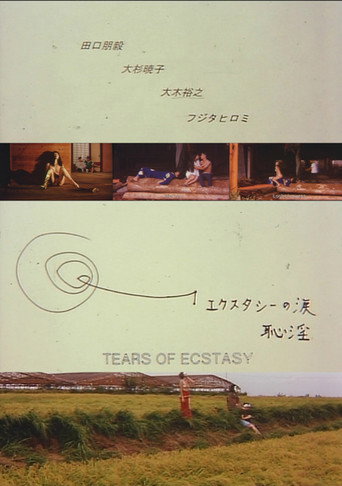
A conceptual pinku film by renowned experimental artist Hiroyuki Oki, which is conceived of 60 shots which all are 60 seconds long and represent an absurdist take on the narrative and stylistic schemes of erotic cinema.
Looking for an Angel
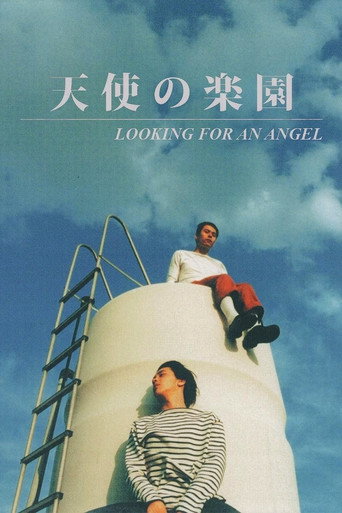
Takachi, a young porno star from a small town in Japan is found dead. His death provides the opportunity to show us his true emotions, and how his two best friends in Tokyo remember him. These two travel back to Takachi's town, Kochi, which Takachi himself had visited just prior to dying. In Kochi, all boys seem to be angels.
The Family Complete
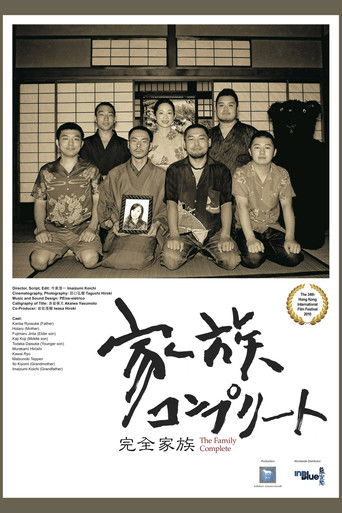
A highly contagious incest virus induces several generations of a Japanese family to have sex in all possible constellations and across gender boundaries – and with that man in a bear costume who suddenly appears? Only in Japan!
Swimming Prohibited
The film was made in a period of three weeks in the summer of 1989. It starts in a youth hostel somewhere in the mountains where Oki has a temporary job and continues in the outer suburbs of Osaka. A short silent film that Oki made in 1988 is included as a flashback in the film.
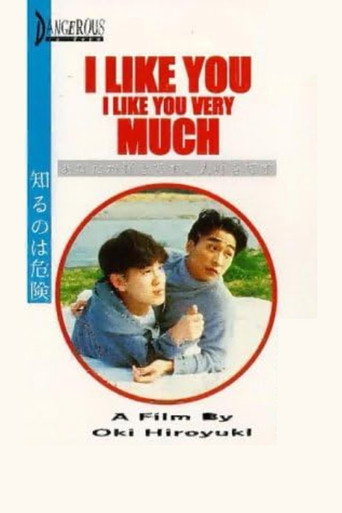
I Like You, I Like You Very Much
A tense love triangle unfolds as You struggles with his affair, questioning his identity and desires while caught between two men who change his life forever.
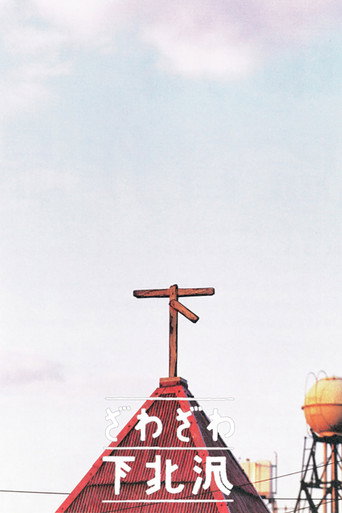
The Whispered City
Director Jun Ichikawa spins this affectionate portrait of the people who populate Shimokitazawa, a bohemian corner of Tokyo filled with small theater companies and smoky coffeehouses.
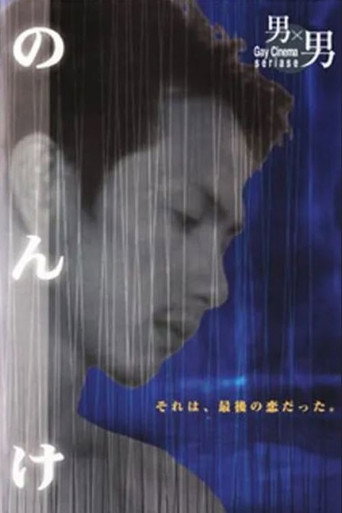
Nonke
The main character is a business man who is about to turn 30, is in the public eye, and is thinking of marrying a woman as an option. A straight art student appears in front of him, and he falls in love with him even though he knows it will end badly...
Production
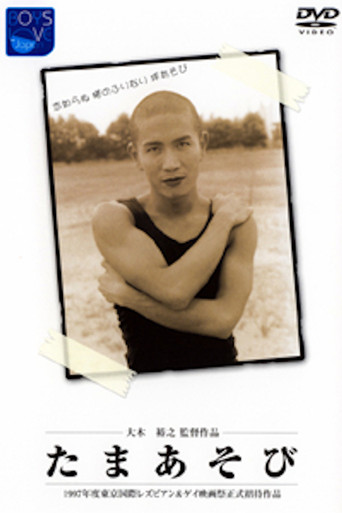
Tama asobi
A man named Shiki has been sent to a company in Matsuyama. Since Shiki was famous as a baseball club member at a previous company, there is a story about baseball clubs in the company. Ken, who was a player in high school, participated without being reluctant, supported by his lover Michiko.
Shujinkou
Short film by Hiroyuki Oki.
Yusho-Renaissance
The work of Japanese experimental filmmaker Hiroyuki Oki as been described as "queer ambient film," and this work brings his fascination with dream-like images and manipulation of time through editing to a new level. Yusho-Renaissance follows an artist and his companions on a trip to the forest, while a mysterious but beautiful woman follows; without a structural narrative, their journey becomes a lovely but surreal parade of images, altered through editing, filmed at multiple speeds or modified by video manipulation.
The Traveling Schoolroom
Oki Hiroyuki's First Film shot at a mountain lodge. "The film was simply a series of landscape shots, without a story." (Oki Hiroyuki).
Toshi Shi
This work by Hiroyuki Oki was originally conceived as an installation with four beamers projecting different video fragments in a particular order. Here, rhythmical multiscreen editing and poetic voiceover create a multidimensional elegiac space riddled with people, snow-covered city streets, and written notes.
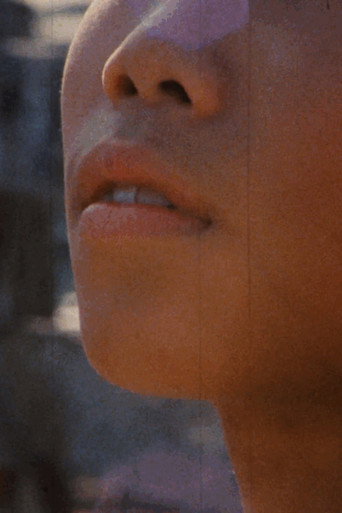
Landscape Catching
Hiroyuki Oki continues to develop his technical sophistication and his openness to new forms and themes, culminating in a sensuality that is apparent in this, one of his latest two films.
A Film of Buddy Matsumae
The establishment of Hiroyuki Ohki's Matsumae-Kun's film is an inversion of the relationship between reality and image, as opposed to a documentary, in which something is happening in reality and the filmmaker goes there to make images of it, or story film, in which the filmmaker goes there to make images of it because there is something most suitable for embodying his or her ideas. It can be said that this is the case. Herein lies the film's acute problematic nature.
Tarch Trip
A film like an Impressionist painting; the kind of paintings to have titles like 'urban view from the artist's studio'. The film is largely set in the film-maker's home and the street in the provincial town of Aichi where he lives. Minor everyday incidents are observed poetically; the melancholy mood of the images is boosted by serene electronic music. There is no dialogue; the sound track only comprises streets sounds as well as the music. Loose, almost nonchalant impressions of the street or of cloudy skies are juxtaposed with posed, almost photographic mildly homo-erotic portraits of friends of the film-maker. Tarch Trip is made up of fragments of a cinematographic diary, which are however not edited chronologically. Two periods alternate. One is characterized rain and dark cloudy skies. The other is sunny and repeatedly accompanied by three friends
Tarch Trip
A film like an Impressionist painting; the kind of paintings to have titles like 'urban view from the artist's studio'. The film is largely set in the film-maker's home and the street in the provincial town of Aichi where he lives. Minor everyday incidents are observed poetically; the melancholy mood of the images is boosted by serene electronic music. There is no dialogue; the sound track only comprises streets sounds as well as the music. Loose, almost nonchalant impressions of the street or of cloudy skies are juxtaposed with posed, almost photographic mildly homo-erotic portraits of friends of the film-maker. Tarch Trip is made up of fragments of a cinematographic diary, which are however not edited chronologically. Two periods alternate. One is characterized rain and dark cloudy skies. The other is sunny and repeatedly accompanied by three friends
Tarch Trip
A film like an Impressionist painting; the kind of paintings to have titles like 'urban view from the artist's studio'. The film is largely set in the film-maker's home and the street in the provincial town of Aichi where he lives. Minor everyday incidents are observed poetically; the melancholy mood of the images is boosted by serene electronic music. There is no dialogue; the sound track only comprises streets sounds as well as the music. Loose, almost nonchalant impressions of the street or of cloudy skies are juxtaposed with posed, almost photographic mildly homo-erotic portraits of friends of the film-maker. Tarch Trip is made up of fragments of a cinematographic diary, which are however not edited chronologically. Two periods alternate. One is characterized rain and dark cloudy skies. The other is sunny and repeatedly accompanied by three friends
Gallery