Writing
No biography available.
The bizarre story of a play's development at Munich's Kammerspiele theatre.
At an Austrian boys' boarding school in the early 1900s, shy, intelligent Törless observes the sadistic behavior of his fellow students, doing nothing to help a victimized classmate—until the torture goes too far. Adapted from Robert Musil's acclaimed novel, Young Törless launched the New German Cinema movement and garnered the 1966 Cannes Film Festival International Critics' Prize for first-time director Volker Schlöndorff.
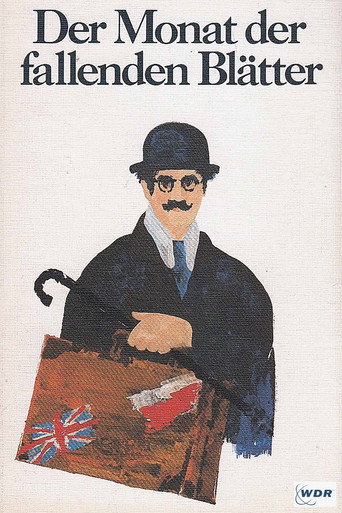
When British philosopher Harold Hilliard took off for Warsaw to lecture on the Dysteleological Surd, he had no idea that he would soon become embroiled in international espionage. During the trip he tried to open a suitcase he mistook for his own. When a fellow passenger, a Pole with stainless steel teeth, took umbrage, Hilliard put it down to bad manners, but when the same man saw him pick up the wrong coat in the plane, Hilliard realized that he was suspected of spying. The party at the airport to welcome Hilliard only convinced the Polish agent that the British Secret Service was now picking its men with extraordinary cleverness. Hilliard, whose works were little known in England, was warmed by unaccustomed praise but chilled by the apparent certainty of the counter espionage people that he was a British agent whose code name was Whale.
Denmark, by the end of the 19th century. Gov. Dihmer gives his resignation because of his illness. Two friends, a pastor and a physician, try to awaken his willpower and transcend a journey to Italy. Meanwhile, in the homeland, there are political breakthroughs that make little hope for new times.
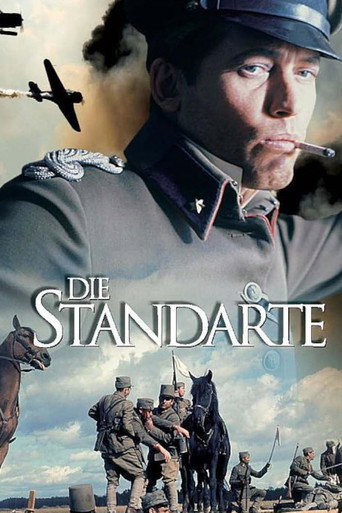
During the final days of the First World War, Officer Menis does his duty in defending the battle flag of the defeated Austro-Hungarian empire, while his fellow troops, a motley gang recruited from several different countries not loyal to the royal family, simply try to survive by any means possible.
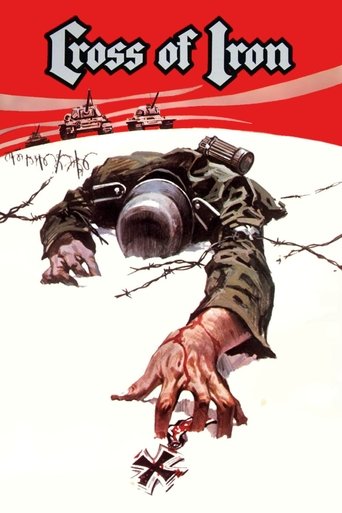
It is 1943, and the German army—ravaged and demoralised—is hastily retreating from the Russian front. In the midst of the madness, conflict brews between the aristocratic yet ultimately pusillanimous Captain Stransky and the courageous Corporal Steiner. Stransky is the only man who believes that the Third Reich is still vastly superior to the Russian army. However, within his pompous persona lies a quivering coward who longs for the Iron Cross so that he can return to Berlin a hero. Steiner, on the other hand is cynical, defiantly non-conformist and more concerned with the safety of his own men rather than the horde of military decorations offered to him by his superiors.