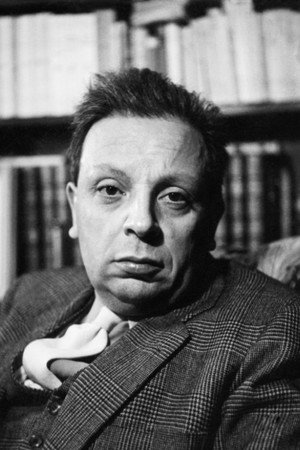
Henri Jeanson Movies, TV Shows, and Filmography
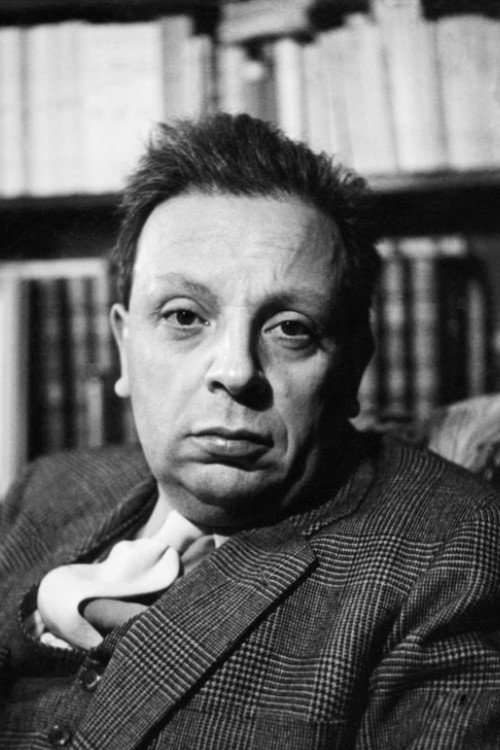
Henri Jeanson
Writing
Biography
Henri Jules Louis Jeanson (6 March 1900 in Paris – 6 November 1970 in Équemauville) was a French writer and journalist. He was a "satrap" in the "College of 'Pataphysics". Jeanson was born on 6 March 1900 in Paris. His father was a teacher. Before becoming a journalist, he had several casual jobs, including being depicted as a soldier on a good-luck card for a postcard seller, belying his future pacifism. In 1917, he started work for La Bataille, newspaper of the Confédération générale du travail. Noted for his strong writing, he was a journalist throughout the 1920s, with intervening stints as reporter, interviewer and film critic. He was distinguished by the potency of his style and a taste for polemic. Jeanson worked for several papers including the Journal du peuple, Hommes du Jour and the Canard enchaîné, where he defended complete pacifism. He resigned from the Canard enchaîné in 1937, in solidarity with Jean Galtier-Boissière. He was sentenced to 18 months in prison in July 1939, for publishing an article in Solidarité internationale antifasciste, a periodical founded in November 1938 by Louis Lecoin, in which he congratulated Herschel Grynszpan for his assassination of Ernst vom Rath, an official of the German embassy in Paris. He was arrested in November 1939, at which time he had already joined his regiment in Meaux, for articles which had appeared in March and August 1939, and for having signed Louis Lecoin's tract "Paix immédiate". On 20 December 1939, he was sentenced by a military tribunal to five years in prison for "calling for disobedience within the ranks". Jeanson was in prison for his pacifist writings, and this only a few days before the German army marched into Paris. His freedom was obtained by the lawyer and minister César Campinchi. He remained in Paris and in August 1940 was given the chief editorship of Aujourd'hui, an "independent" newspaper. The first issue went out on 10 September 1940. In November 1940, the German authorities pressured him to take a public position against the Jews and in favour of the politics of collaboration with the Vichy regime. Jeanson resigned and went back to prison. He was freed a few months later after the intervention of his friend Gaston Bergery, a neo-radical who had turned to the collaborationists through ultra-pacifism. From that point on he was banned from the press and the cinema, and worked secretly, writing film dialogues without putting his name to them. With Pierre Bénard, Jeanson participated in the development of secret pamphlets, and just missed being re-arrested in 1942. He continued to lie low until the liberation of France. His story is said to illustrate the contradictions and compromises of absolute pacifism: the willingness to seek an understanding with Germany to avoid war, transforming, after France's defeat, into a desire for proper coexistence, even offering to serve the Germans. The newspaper Aujourd'hui was far from being innocent in its hunting down those allegedly responsible for France's defeat, resorting to the "clean sweep of the broom" myth in its Anglophobia. The paper entered into resonance with Marshal Philippe Pétain's narrative, and took the direction of German propaganda. ... Source: Article "Henri Jeanson" from Wikipedia in English, licensed under CC-BY-SA 3.0.
Filmography Movies
Production
Don't Tempt the Devil
A lovely young nurse finds herself framed for the murder of a hospital patient who died after she administered an injection.
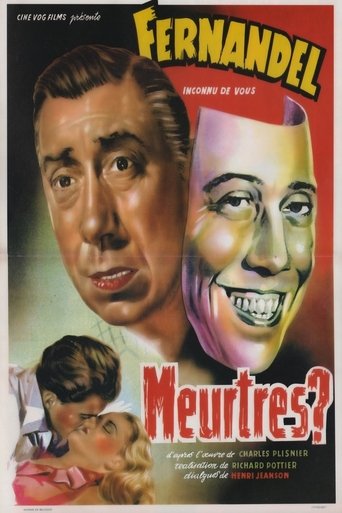
Three Sinners
A man assists his gravely ill wife to die and wants to face justice for this, but his brothers try everything to keep the family's name clean.
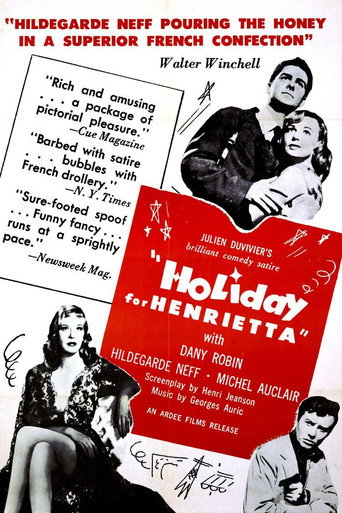
Holiday for Henrietta
Two scriptwriters argue about the fate of Henrietta, a charming and gamine shopgirl. One favors a comical path for their heroine, who is overcome with sentimental love for a young photographer on Bastille Day. The other has a more thrilling and dastardly fate in mind for her. Among the film's irresistible conceits is Hildegarde Neff as an oversexed circus bareback rider.
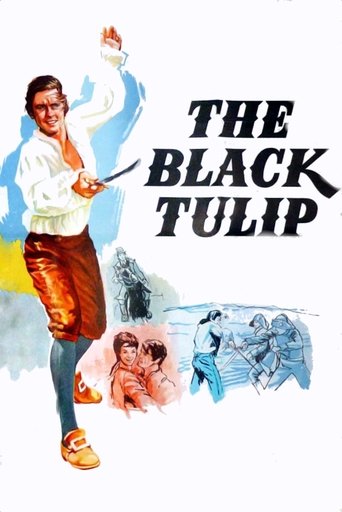
The Black Tulip
Aristocrat Guillaume de Saint Preux leads a double life as a masked bandit known as the Black Tulip. The Black Tulip only robs rich aristocrats, so the local peasants regard him as a hero. Baron La Mouche is convinced Guillaume is the Tulip. During a robbery, he scars the Tulip's face, and hopes to use this to expose Guillaume, but Guillaume is one step ahead.
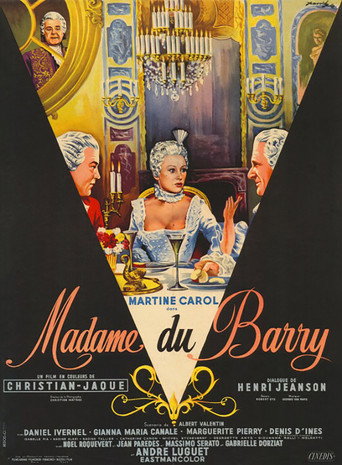
Madame du Barry
The daughter of a seamstress, Jeanne Bécu could hardly imagine she would later become one of the most influential women of the Kingdom of France...
Madame du Barry
The daughter of a seamstress, Jeanne Bécu could hardly imagine she would later become one of the most influential women of the Kingdom of France...
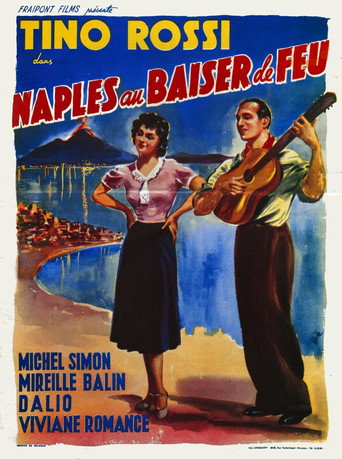
Naples Under the Kiss of Fire
Mario Esposito, who sings in a Neapolitan restaurant, is in love with Assunta, the niece of Teresa, the owner of the place. He shares his apartment with Michel, his best friend. This one has fallen under the spell of Lolita, a gorgeous adventuress he met at the cathedral where he officiates as the organist. But things go awry as, while Michel intercedes with Aunt Teresa for Assunta's hand in his favor, Mario in turn falls in love with Lolita. On the very day of his wedding with Assunta, Mario runs away with Lolita, thus betraying both his love and his friend. But it does not take long before the young singer realizes the big mistake he has made.
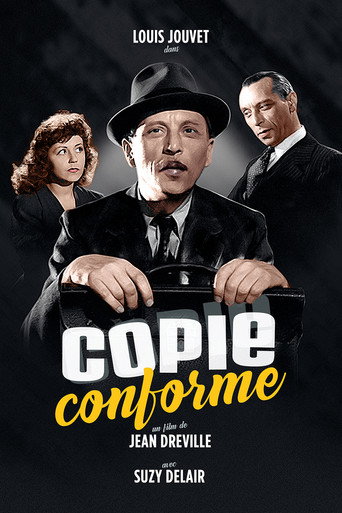
Carbon Copy
A smooth criminal, who turns to be Manuel Ismora, and his gang successfully and peacefully pull off con after heist. Elsewhere a timid office worker, Gabriel Dupon, is pressured by his boss...
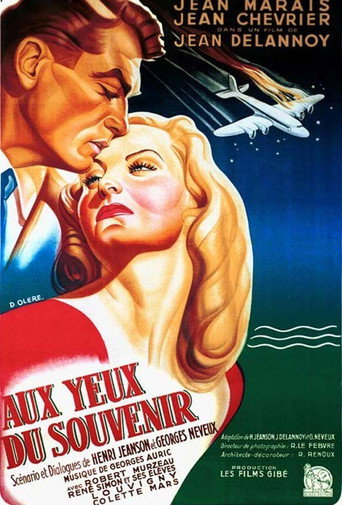
In the Eyes of Memory
Director Jean Delannoy's immediate followup to his brilliant Les Jeux sont Faits was the more conventional Aux Yeux du Souvenir (aka Souvenir and To the Eyes of Memory). The film is based on a true story, wherein an France airliner managed to survive a journey from Rio De Janeiro to Dakar with two of its engines incapacitated. To this already intensely dramatic situation has been added a romantic subplot involving Claire Magny (Michele Morgan) and Jacques Forester (Jean Marais). The love story adds very little to the film; fortunately, neither does it detract from the film's overall quality. As was the case with many French productions of the 1940s, Aux Yeux du Souvenir benefits immeasurably from the Wagnerian musical score by Georges Auric.
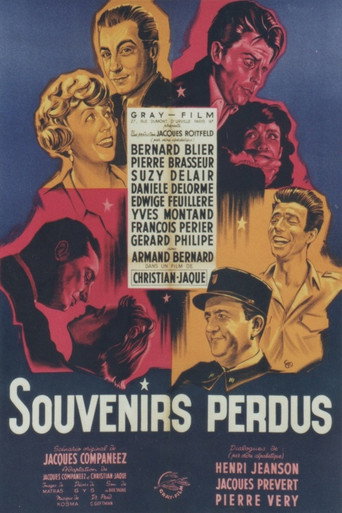
Lost Souvenirs
Suppose lost and found objects could talk... But they can! At least four of them... : -A statuette of Osiris remembers how two ex-lovers, a model and a good for nothing who claimed to be an Egyptologist, met again one Christmas Eve. -A violin has things to say about Raoul, a humble policeman who lost Solange, a widowed grocer he loved, to a god-dam seducing busker also named Raoul. -A scarf was witness to an eerie romance between a young madman and girl he had saved from suicide. -A funeral wreath lets us know how it caused a young woman to believe her lover dead. After having told their respective story, the objects return to their customary stillness.
Gallery