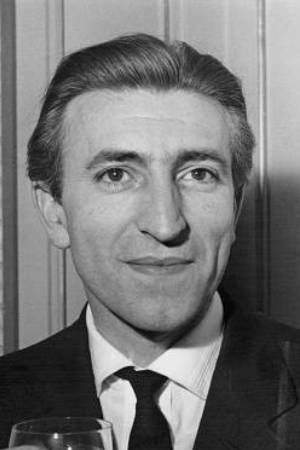
Henri Colpi Movies, TV Shows, and Filmography
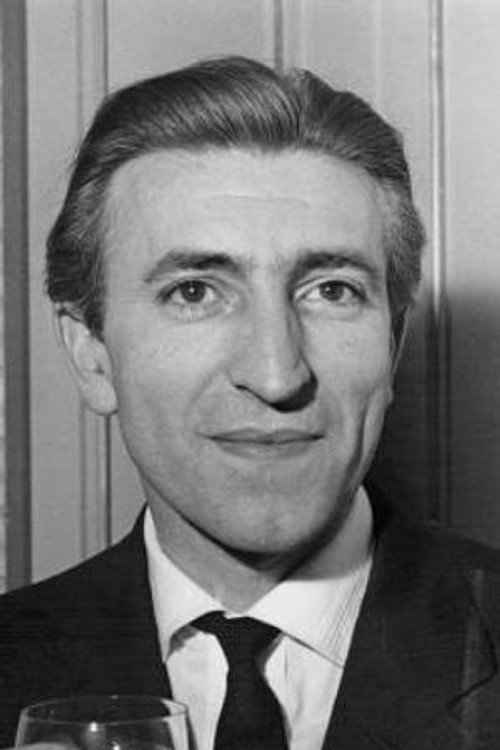
Henri Colpi
Directing
Biography
Henri Colpi (French: [kɔlpi]; 15 July 1921 – 14 January 2006) was a French film editor and film director. Colpi graduated from the IDHEC in 1947. During 1950 to 1960, he edited films for such notable French New Wave directors as Agnès Varda and Georges Franju. Colpi directed the 1961 film Une aussi longue absence, which is well known for sharing the Palme d'Or at the 1961 Cannes Film Festival with Viridiana, directed by Luis Buñuel. Une aussi longue absence was written by Marguerite Duras, featured Alida Valli in a major role, and included music by Georges Delerue. It also won the Louis Delluc Prize in 1960. His second feature Codine was also screening in competition at the 1963 Cannes Film Festival, where Colpi won the prize for Best Screenplay. Colpi is also noted as a film editor with about 20 credits, including Alain Resnais' films Hiroshima mon amour (1959) and L'Année dernière à Marienbad (1961). He edited André Antoine's forgotten film L'Hirondelle et la Mésange (The Swallow and the Titmouse) to a 79-minute feature that premiered in 1984. Antoine initially shot six hours of footage. In addition to directing, editing, acting, sound recording, and a variety of functions in the post-War years, he was featured in a French television series, L'Histoire du cinéma français par ceux qui l'ont fait (The History of French Cinema By Those Who Made It) in 1974, and he continued to work into the 1990s.
Filmography Movies
Acting
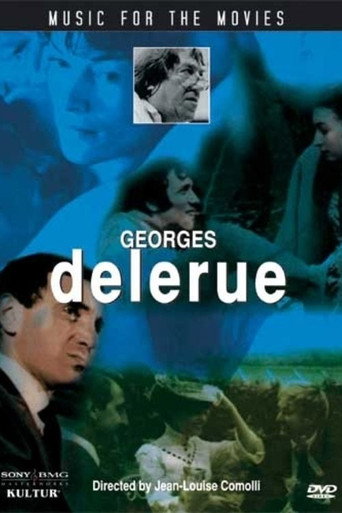
Music for the Movies: Georges Delerue
Documentary covering the career of French composer Georges Delerue, famous for film scores for such films as Platoon, Contempt, Shoot the Piano Player, and Jules and Jim.
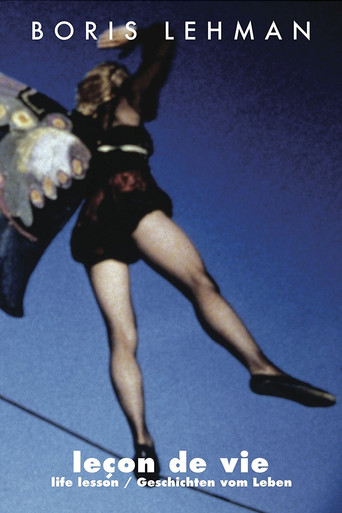
Life Lesson
To attain knowledge, man and woman had to be willing to give up their innocence," says Boris Lehman. Life Lesson is a poetic and philosophic reflection on the theme of paradise lost. Some fifty persons illustrate the planet's convulsions and the world's vacillations. Trying to communicate, to commune with the invisible, they cry out, sing out, give out messages, each in their own way, in their own state of solitude. These are like multiple echoes that resemble waves in the water or stars in the sky. " Behind these images and sounds that have been stifled by today's society, Lehman hunts for noises, cries, songs, messages that go astray. He says that if we look at the invisible we may hear the words. He invites us to look beyond the appearances of social life and to vibrate in tune with life's polyphony that is all around us."
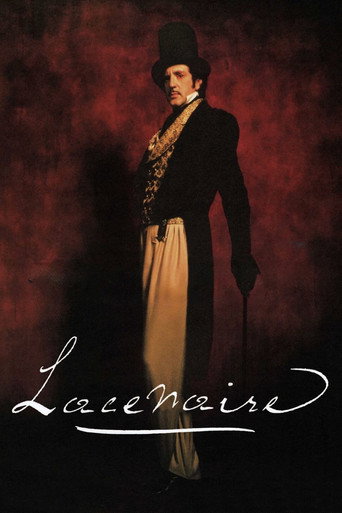
The Elegant Criminal
On 9 January 1836, Pierre Lacenaire goes to the guillotine, a murderer and a thief. He gives Allard, a police inspector, his life story, written while awaiting execution. He also asks Allard to care for Hermine, a lass to whom he has been guardian for more than ten years. In flashbacks, from the prison as Lacenaire writes, from Allard's study as he and Hermine read, and from other readers' memory after the book is published, we see Lacenaire's childhood as he stands up to bullies, including priests, his youthful thieving, his first murder, his brief army career, his seduction of a princess, and his affair with Avril, a young man who dies beside him.
Production
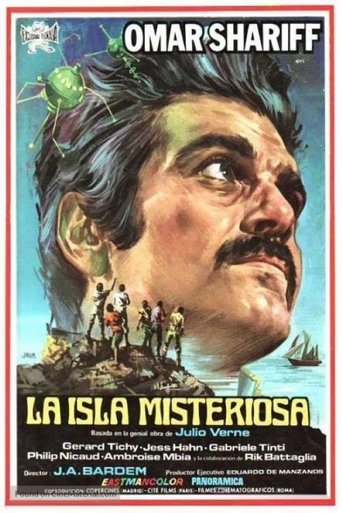
The Mysterious Island
1865, The American Civil War: Five POW manage to escape by balloon from Fort Richmond. Caught in a storm and with the balloon damaged they find themselves 'shipwrecked' on a volcanic desert island somewhere in the Pacific. Just before crash landing their leader, the brilliant engineer Cyrus Smith falls to his apparent death in the raging waters, but later turns up completely unharmed and with no memory of how he was saved. His fellow castaways are: the famous journalist Gedeon Spilett, the salty sailor Bonaventure Pencroff, the orphaned boy Harbert Brown and the black servant of Smith, Nab. The dog Top also joined them in the escape.
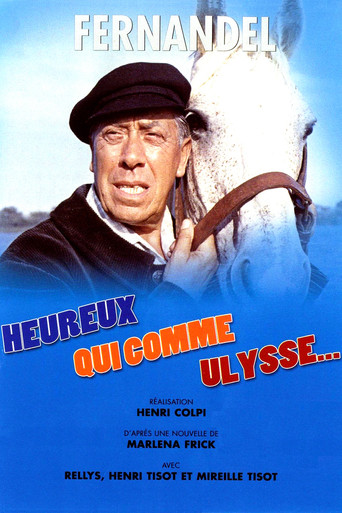
Happy He Who Like Ulysses
For 25 years now, under the Provence sun, Antonin, a farmhand, has shared his work and everyday life with a horse named Ulysse. What a shock when Pascal, the farmer, tells him he has decided to sell Ulysse to a picador for being too old. Not only will he be separated from his faithful companion, but he is well aware too that the arenas of Arles mean death for Ulysse. Being unable to stand such injustice, Antonin runs away from the farm in the company of Ulysse. Together, they go through the Lubéron, the Baux de Provence, the Alpilles, the Crau and the Vaccarès. Yet, their journey is no pleasure cruise, specially when it comes to crossing National Road 7. After a visit to Marcellin, an old friend of his, Antonin sets off again with Ulysse, this time towards the Rhône River.
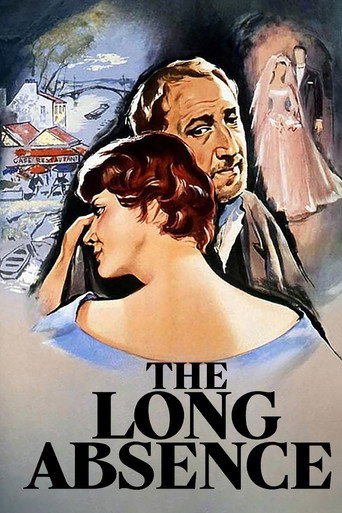
The Long Absence
Therese, a café owner, mourns the mysterious disappearance of her husband sixteen years earlier. A tramp arrives in the town and she believes him to be her husband. But he is suffering from amnesia and she tries to bring back his memory of earlier times.
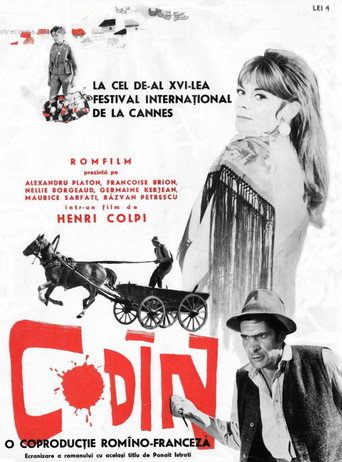
Codine
An ex-convict struggles to survive by brute force alone in a turn-of-the-century slum in Bucharest. Codine is the thug who served 10 years for murdering a friend. He returns home to his miserly mother, whose penny-pinching ways infuriate her son. A young boy looks up to Codine, and through the man's eyes he sees the economic and social injustices from an adult perspective. When Codine kills another man who violated his trust, his mother becomes more unhinged and paranoid. Thinking her son will steal her hoarded money, she plots to kill her only son. The impressionable child watches in horror and amazement at the cruel machinations of the adult work that surrounds him.
Paris la belle
A look at Paris in 1928 in black and white and then color sequences filmed in the same places in 1959.
Codine
An ex-convict struggles to survive by brute force alone in a turn-of-the-century slum in Bucharest. Codine is the thug who served 10 years for murdering a friend. He returns home to his miserly mother, whose penny-pinching ways infuriate her son. A young boy looks up to Codine, and through the man's eyes he sees the economic and social injustices from an adult perspective. When Codine kills another man who violated his trust, his mother becomes more unhinged and paranoid. Thinking her son will steal her hoarded money, she plots to kill her only son. The impressionable child watches in horror and amazement at the cruel machinations of the adult work that surrounds him.
Chères vieilles choses
Georges Delerue (composer). Commentary written by Boris Vian (under his pseudonym Michel Arras) and spoken by Jacques Mauclair. Jacques Rivette: …Chères vieilles choses, de Raymond Vogel, film imparfait, zigzagant, inégal, mais qui, dans les marges d'un essai sans imprévu sur le monde des collectionneurs, sait esquisser en mineur une sorte de phénoménologie amusante du décor et de la possession. (Arts n° 646) (auto-translation:) Jacques Rivette: ...Chères vieilles choses, by Raymond Vogel, an imperfect, zigzagging, uneven film, which, in the margins of an unexpected essay on the world of collectors, sketches out a kind of amusing phenomenology of decoration and possession. (Arts n° 646)

Bilitis
A coming of age story centering on the exploits of a young girl during summer vacation.
The Mysterious Island
1865, The American Civil War: Five POW manage to escape by balloon from Fort Richmond. Caught in a storm and with the balloon damaged they find themselves 'shipwrecked' on a volcanic desert island somewhere in the Pacific. Just before crash landing their leader, the brilliant engineer Cyrus Smith falls to his apparent death in the raging waters, but later turns up completely unharmed and with no memory of how he was saved. His fellow castaways are: the famous journalist Gedeon Spilett, the salty sailor Bonaventure Pencroff, the orphaned boy Harbert Brown and the black servant of Smith, Nab. The dog Top also joined them in the escape.
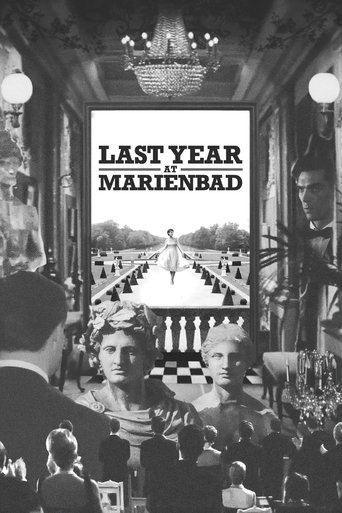
Last Year at Marienbad
At a weekend gathering, a man tells a woman that they had spent time there together a year prior. But, the woman has no recollection whatsoever and is convinced that he is simply fabricating the encounter. The more he speaks about their activities the previous year however, the more compelling he becomes. The question remains however – did they meet previously or not?
Gallery