Acting
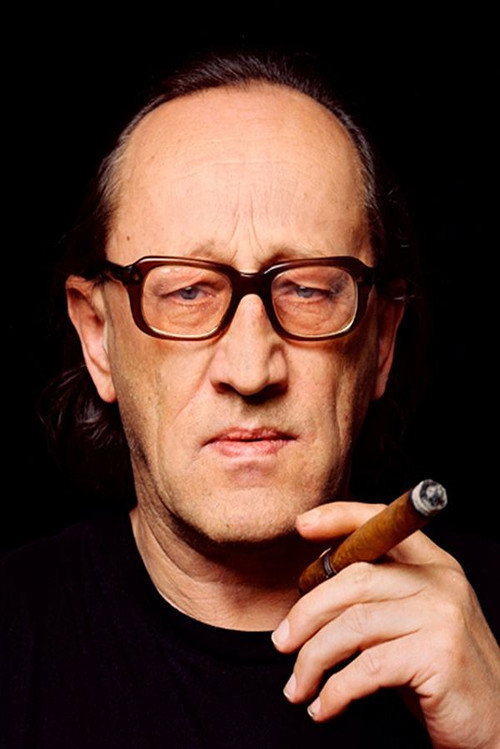
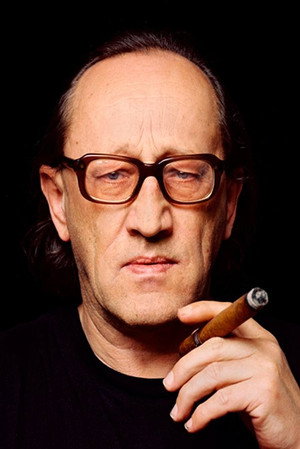
Heiner Müller was a German dramatist, poet, writer, essayist and theatre director. His "enigmatic, fragmentary pieces" are a significant contribution to postmodern drama and postdramatic theatre.
Documentary filmmaker Troller criss-crosses post-reunified “Transgermania” for a year, probing German identity through festivals (Carnival, Oktoberfest), films, small towns and big cities. He attends a Black–Bavarian wedding at an “animal fair,” chats with chimney sweeps, students, artists and elites (from Grass to Müller), and asks uneasy questions about unity, memory and the future - all from his outsider’s lens.
This film not only illuminates Heiner Müller's life and works, it is more about questioning the "Sphinx" of the East and its saying about the loss of utopias and examining whether Heiner Müller's texts, as he himself said, were messages in a bottle for the future or not.
On the run from her criminal Italian husband, a young French woman meets a German lover in West Berlin who offers her shelter but who also gets entangled in her threatened life ever deeper.
Quoting from historian Tacitus' Annals, Alexander Kluge and Heiner Müller delve into the Roman Iron Age, talk about the modern style of Tacitus' prose, and debate borderline cases of legally sanctioned injustice. After Müller reads a passage about Tiberius' death (37 AD) and his successor Caligula Caesar, Kluge and Müller discuss Tacitus' conception of "history's highest function" as a teacher of virtues and admonisher of "evil words and deeds".
This portrait of Heiner Müller on the occasion of his 60th birthday is devoted for the most part to having Müller recount events and memories from the first quarter of his life, starting with his birth on January 9, 1929 and closing with his immediate postwar experiences in the mid-1940's. This part memoire, part biographical sketch of his early life includes descriptions of his parents’ background and employment activities, the arrest and incarceration of his father in a concentration camp in 1933, Müller’s recollections of school life in Nazi Germany, Müller’s brief detention in an American POW camp at the end of the war and, upon release, his adventurous return to his home in the Soviet Zone in eastern Germany. These snapshots of his first 16 years also include anecdotes about Peter the Great and Andrei Platonov’s “Sluices of Epiphany” as well a meditation on a scene from Shakespeare’s Titus Andronicus.
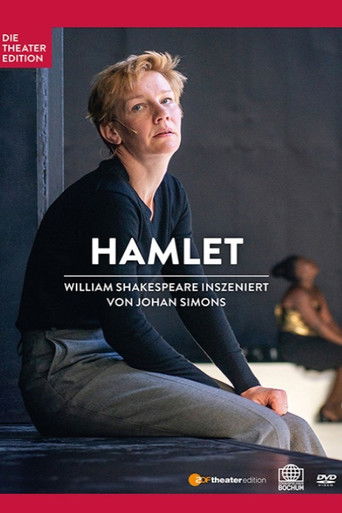
In 1989, Heiner Müller staged an unabridged seven-and-a-half hour Hamlet, because in the process of German reunification "a leave-taking from the Hamlet principle in favor of the market economy" was taking place. In this interview, he elaborates on the parallels between the play and contemporary reality in terms of the plot and the characters (for example, Günter Schabowski as well as the problematic role of Fortinbras).
In this interview Müller and Kluge explore the East German’s memories of the final days of the war. The session is introduced by a clip from the Russian film maker Sergei Parajanov’s 1961 film entitled The Ukranian Rhapsody. Here a soldier of the Red Army is writing a letter to his fiancee Oskana on the home front, describing to her his imagined vision of listening to Beethoven’s Moonlight Sonata in the middle of battle. “In the past I rarely listened to Beethoven,” he says, “if he had composed only the Moonlight Sonata, the war would have had to stop in front of it too.” The scene then is interrupted by the arrival of German tanks.
"The metaphor is cleverer than the author" (Lichtenberg), a "screen," an "instrument for bundling" (Müller), because "everything changes so much" (Gertrude Stein) - Müller explicates these functions of figurative language with reference to the use of metaphors in Shakespeare. This use of metaphor corresponds to the acceleration of the Elizabethan age (the second half of the sixteenth century), the consolidation of which compels Shakespeare to use an allegorizing language in his last plays.
Movie scenes, montages of images and text, as well as conversations between Alexander Kluge, playwright Heiner Müller and classicist Wilfried Stroh provide a multifaceted insight in the far-away world of Ancient Rome. The conversation with Müller revolves around Tacitus' representation of the Roman Empire around 112 AD. First, Müller reads passages from the historicist's annals that describe Tiberius' tragic death (37 AD). Kluge and Müller discuss the text's aesthetic qualities. Müller is interested in Tacitus for the aesthetic pleasures rather than out of historical curiosity. He describes Tacitus' style as "transition from chronicle to literature," which manifests in his "elliptical," sometimes laconic narration.
At the time of the conversation Heiner Müller was the president of the Academy of Arts - East. At the beginning he describes his daily routine to Kluge. He is an unwilling president who has to lead an academy - which will soon be absorbed into a "European Artists Society" - at a time of upheaval. As he is describing the only functional and innovative part of the academy, the "Music Section" that trains master's students, he starts talking about how he almost became a master's student of Brecht. In retrospect he is glad that he missed this chance and escaped Brecht's powerful influence, which took away the individual creative space of his collaborators. Müller describes how he got by with various jobs during his application period and afterwards in 1951: book reviewer, translator of Stalinist songs. When Kluge asks about the basic concept of an academy, the discussion returns to its starting point: Müller claims that the academy is a space that is free from the state.
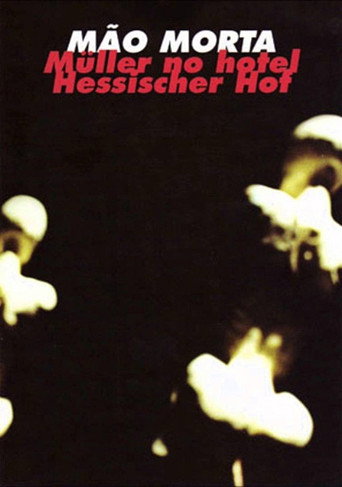
Documentary on Mão Morta's three sole concerts.
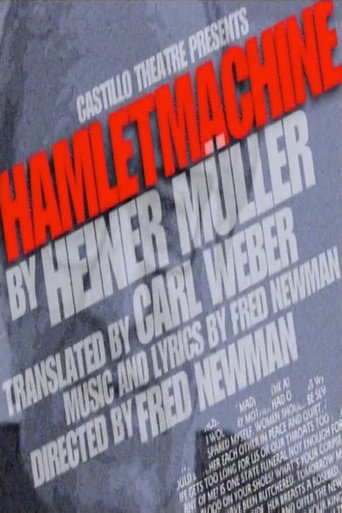
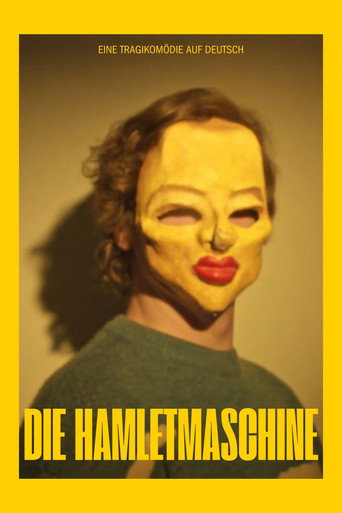
A filmed Musical adaption of Heiner Müller's 1977 play HAMLETMACHINE preformed at The Castillo Theater in 2002.
Hamlet and Ophelia reckon with their doomed narratives. Adapted from the 1977 East German Heiner Müller play of the same name.
A series of poems.