Hans Knötzsch Movies, TV Shows, and Filmography
Hans Knötzsch
Directing
Biography
No biography available.
Filmography Movies
Acting

Carnations in Aspic
A commercial artist with a lisp chooses silence, unexpectedly propelling his career. His perceived innovation leads to rapid advancement in an ad agency. Mueller-Stahl shines in this biting critique of East German workplace culture.

Ernst Thälmann
This elaborate two-part television film features a section from the life of communist worker leader Ernst Thälmann. It begins with the bloody riots on May 1, 1929 in Berlin, in which police officers shot at demonstrating workers, and ends with February 7, 1933, when Thälmann appeared as a speaker at the illegal meeting of the Central Committee of the Communist Party of Germany in goat neck. This period was marked by the struggle of the Communists against the ever stronger National Socialists and the rise of Adolf Hitler.
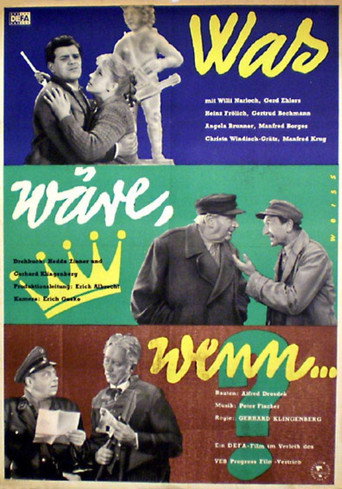
What Would Happen If...?
In the late 1950s, the collectivization of agriculture is in full swing in the East German village of Willshagen on the German-German border. Those in charge have to face many obstacles, especially from a large-scale farmer who is unwilling to join the co-op. All of a sudden, mysterious men in a fancy car appear in the village and show an interest in the rundown manor house. Gossip spreads quickly, and some villagers think there will be a re-parceling of properties and a land swap with West Germany. They assume everything will go back to how it used to be and even expect the count to return to his manor. In preparation, the situation in the village escalates at a fevered pitch.

Außenseiter
Paul Schulte takes a spa stay on the Baltic Sea to have his heart condition treated. His wife Barbara accompanies him and finds interest in the valuable art objects in a nearby church. Together with her accomplice and lover Klaus Grunow, she plans to break into the church. But Paul Schulte sees through his wife's plans and tries to dissuade her. One morning, Paul Schulte is found dead.
Der Dieb von San Marengo
In San Marengo, master thief Cesare Giovanini’s heists leave local merchants profiting from hefty insurance claims. When captured, he’s granted luxury prison comforts, and even nightly “private visits”, in exchange for continuing his work under police supervision. Bored, Cesare escapes, only to be recaptured with an unexpected offer: a lucrative board position instead of bars.
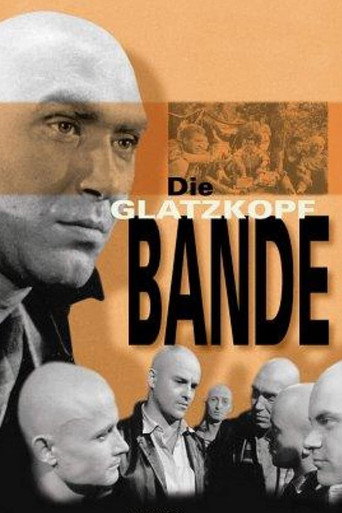
The Baldheaded Gang
August 1961. The former Foreign Legionnaire, King, has collected a gang of hooligans, with whom he creates mischief in the GDR. After some careless work on a construction site, an event during which two people lose their lives, they move to a campsite on the Baltic Sea. With sputtering mopeds, loud radios, and occasional outbursts, the gang makes the vacationers' lives living hell. Unfortunately for them, Lieutenant Czernik discovers the connection between them and the accident at the construction site. To stop them from fleeing to West Berlin, Lieutenant Czernik and the police need to arrest them, one at a time, with King as the last.
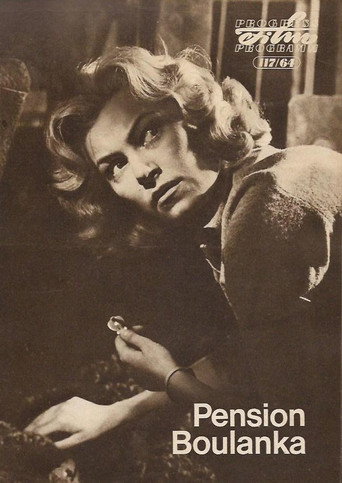
Pension Boulanka
A murder has been committed in "Pension Boulanka", a famous guesthouse for artists and circus people. Captain Bruckner is heading the investigating team.

Treffpunkt Genf
The East German scientist Professor Gerlach has made a significant discovery with his research into how a new, even stronger pesticide can be protected against ineffectiveness through hydrolysis. This fact has not gone unnoticed by other interested nations. At the International Congress of Chemists in Geneva, a power struggle broke out between agents of the BND and the CIA over a preparation that had been smuggled into Switzerland without the knowledge of Dr. Werner, Gerlach's GDR representative and assistant, and which the enemies hoped would shed light on the composition of the invention.

Guten Tag, lieber Tag
Engineer Strebel′s apprentices think of nothing else but music and dancing, although they should really concentrate on their marks. Consequently, Strebel is anything but delighted with his pupil. To top it all, a TV show becomes interested in a performance by Strebel′s apprentices. To calm down their teacher, Jutta Fröhlich, who has already cast an eye on Strebel, makes him an offer: When they better their marks, Strebel would permit them to make a performance on television.

Fire Below Deck
Otto Scheidel (Manfred Krug) has been captain of the Elbe steamer Jenissei for over twenty years, but his ship, the last of its kind, is going to be converted into a floating restaurant. Otto, whose his strong attachment to the ship has already cost him his relationship with his girlfriend Caramba (Renate Krößner), refuses to take another job and instead joins a railway construction brigade.
Production

Altes Herz geht auf die Reise
Professor Gotthold Kittguß leads a secluded life, which is primarily determined by his books. His housekeeper, the widow Müller, takes care of all the practicalities of life. One day, a strange boy appears at his house to deliver a call for help from his 17-year-old godchild Rosemarie, who is the daughter of a deceased pastor friend and lives with the Schliekers, her so-called foster parents, in the small village of Usadel. The Schliekers manage Rosemarie's inheritance, but are anxious to take possession of the farm. They treat Rosemarie like their maid and allow her to live in undignified conditions. After a moment's hesitation, Professor Kittguß sets off for Usadel to help his godchild. But he doesn't receive a warm welcome there and is even locked up in a cellar. Rosemarie frees him and takes him to a secret hiding place in a nearby fisherman's hut.

Pinselheinrich
The television play by Werner Bernhardy depicts episodes from the life of Heinrich Zille as well as his much-praised "Milljöh". It tells of Zille's dismissal from the Berlin Photographic Society, of Kommerzienrat Hübel and his wife, of Zille's unreal, loyal friend Gustav Nogler, in whose role the experiences, attitudes and characteristics of many people from those years were incorporated, and of many other Berlin characters.
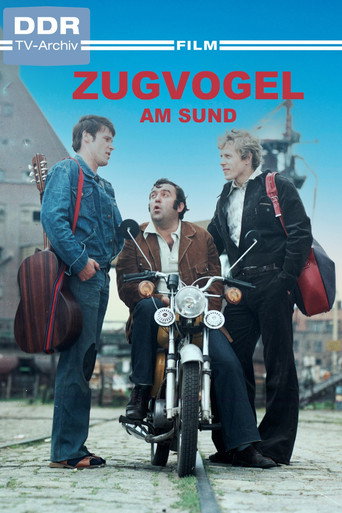
Zugvogel am Sund
Ekke and Karsten are newcomers to the shipyard. Paddy claims to have heard it on Rügen radio. But the two did not fall on their heads, even if they still fear that their accommodation, the "Fritz Heckert" accommodation ship, could be - as it is called - a "working-class monastery". Not only do they find out from Paddy that such worries are unfounded, they experience it for themselves.
Altes Herz geht auf die Reise
Professor Gotthold Kittguß leads a secluded life, which is primarily determined by his books. His housekeeper, the widow Müller, takes care of all the practicalities of life. One day, a strange boy appears at his house to deliver a call for help from his 17-year-old godchild Rosemarie, who is the daughter of a deceased pastor friend and lives with the Schliekers, her so-called foster parents, in the small village of Usadel. The Schliekers manage Rosemarie's inheritance, but are anxious to take possession of the farm. They treat Rosemarie like their maid and allow her to live in undignified conditions. After a moment's hesitation, Professor Kittguß sets off for Usadel to help his godchild. But he doesn't receive a warm welcome there and is even locked up in a cellar. Rosemarie frees him and takes him to a secret hiding place in a nearby fisherman's hut.

Hallo, Taxi!
The story of a philanderer behind the wheel of a cab, who gets into a series of hilarious but also adventurous situations, was based on the actual experiences of Berlin cab drivers. It is an entertaining portrayal of how the main protagonist, Eddy, is to be cleverly dissuaded from his dashing bachelor life. Gaby and her grandpa come up with a few ideas. This is necessary, because Eddy may be a proper cab driver, but in his private life he knows no rules when it comes to winning over pretty girls.
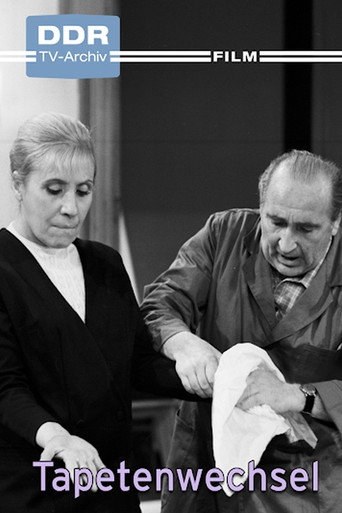
Tapetenwechsel
Marcel Schlurfke is not exactly the heartthrob that friends Elke and Gitte are looking for. So they think about how to get rid of this annoying admirer. The best way is to put him in a position where he makes a fool of himself. This is what happens to the aforementioned Marcel, who suffers a total shipwreck with his "cooking skills". And after this failure, Marcel can only place himself in the care of his father Wollermann.Elke's father is a very desirable man in certain respects: in his spare time, he likes to wallpaper and transform worn-out rooms into pretty rooms. For Elke herself, however, this is a problem, because her father repeatedly takes possession of her (desired) admirers and promotes her to "honorary helper" in wallpapering matters. Only Marcel Schlurfke proves his touchingly helpless clumsiness in these assignments too.
Zugvogel am Sund
Ekke and Karsten are newcomers to the shipyard. Paddy claims to have heard it on Rügen radio. But the two did not fall on their heads, even if they still fear that their accommodation, the "Fritz Heckert" accommodation ship, could be - as it is called - a "working-class monastery". Not only do they find out from Paddy that such worries are unfounded, they experience it for themselves.

Amor holt sich nasse Füße
A young woman does everything she can to catch the eye of her chosen one. In the end, she even goes into the water - wearing a diving suit. A cheerful underwater love story for GDR television, which also casually promotes the diving section of the pre-military Society for Sport and Technology in the GDR.