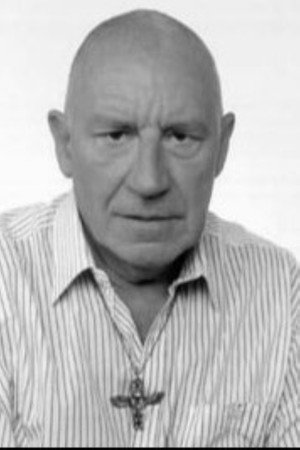
Hans-Joachim Recknitz Movies, TV Shows, and Filmography

Hans-Joachim Recknitz
Acting
Biography
Jack Recknitz (born Hans-Joachim Recknitz; 1931-2013) was a German and Polish actor. Born 25 May 1931 in Baden-Baden to a family of actors: Hans-Joachim Zinke senior and Katharina Recknitz. Early in his youth he started working for the Leipzig Radio as a speaker and news anchor, as well as appearing in various theatres in the German Democratic Republic. In 1953 he graduated from Schauspielschule in Mannheim and passed his actors' exams as an extramural student. He appeared on stage in Annaberg, Parchim, Bautzen and Karl-Marx-Stadt (modern Chemnitz). In 1965 he moved to Poland, where he appeared in over 80 feature films, mostly in the roles of foreigners: Germans, Britons or Americans. While in Poland he was sometimes credited as Jacek Recknitz. Between 1966 and 1968 he also worked at the Polish Radio. In addition to his film work, in 1967 he became a permanent member of the Jewish Theatre in Warsaw, where he remained until 1980. Perhaps his greatest acting success was the role of unnamed "foreign journalist", based on the real-life experiences of Julien Bryan, in the 1978 film ...Gdziekolwiek jesteś Panie Prezydencie (Wherever you may be, Mr. President) by Andrzej Trzos-Rastawiecki.[1] For this role he received the Special Prize at the Polish Film Festival in Gdynia. Late in his life he moved back to his native Baden-Baden in Germany, where he died on 13 January 2013. Description above from the Wikipedia article Jack Recknitz, licensed under CC-BY-SA, full list of contributors on Wikipedia
Filmography Movies
Acting
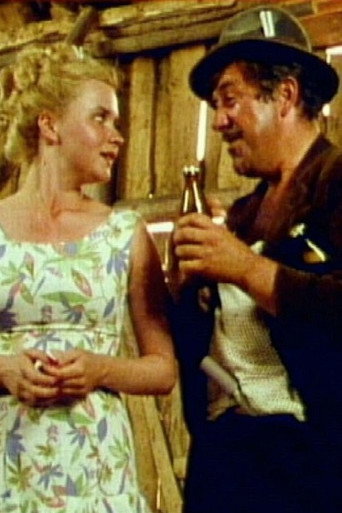
Ostatnie takie trio
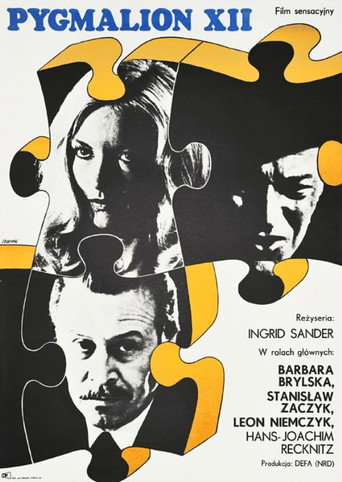
Pygmalion XII
In Frankfurt am Main, a red sports car crashes into a wall and bursts into flames along with the driver. Erika Bongert, the owner, was not in the car and is not questioned by the police. Her boyfriend is CIA agent Jack Treets, who is able to keep her out of everything. He is soon in trouble himself, as Erika puts him under pressure ... Another car races across a road, this time on the transit highway to West Berlin. Erika Bongert dies as a result. The Ministry for State Security soon realizes that the American secret service is involved.
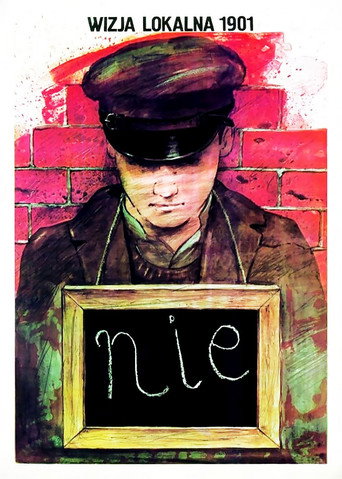
Wizja lokalna 1901
More documentary in its approach than dramatized history, this is a compelling story about a 1901 children's strike in Wrzesnia near the Polish border with Prussia. Poland was partitioned at this time, and a rigidly patriotic Prussian teacher in Wrzesnia follows the dictates of the Germans in parliament and insists that the children be taught their religion classes in German. When the children refuse to take part in the classes, they are supported by the local priest, but that does not save them from being beaten. They are also kept after school and tormented in other ways as well. Newspapers, parents, and the nation as a whole get involved, transforming a simple children's strike into a national incident.
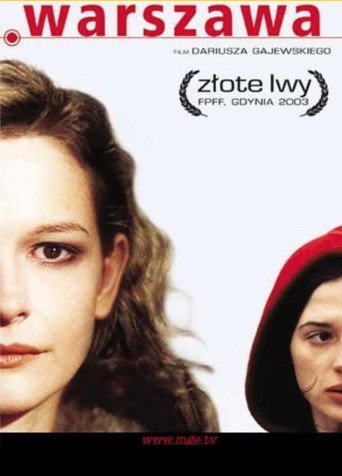
Warszawa
On an ordinary winter's day, various people from outside Warsaw come to the Polish capital city for different reasons. They all have something to deal with, and their paths eventually intertwine.
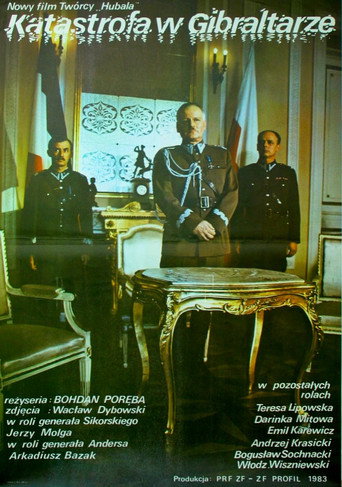
Katastrofa w Gibraltarze
A fictionalized documentary about the life of General Władysław Sikorski from the beginning of World War II until his tragic death in a plane crash. The action begins with the evacuation of the Polish government and general staff to Romania, showing their further fate in France and then in London.
Skarb trzech łotrów
An old man's death leads to a high-profile police investigation, who connect the crime with the search for lost corsair treasure.
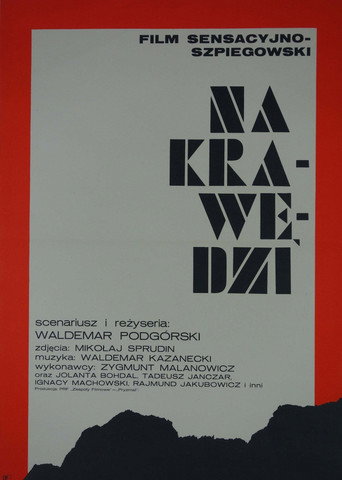
Na krawędzi
A Polish counterintelligence officer infiltrates a spy network in Munich.

Aria for an Athlete
Set at the turn of the century it presents a story of a famous Polish athlete, Zbyszko Cyganiewicz. It begins in a small town where a traveling circus attracts a shy boy into a phony wrestling game to please the crowds. The youth, however, takes his strength seriously, eventually defeating a name wrestler in a fair match. Angered circus manager fires him; he leaves happily due to two wrestler brothers who were harassing him. The wrestler goes on to fame, performing in the world's top arenas, and one day is serenaded by a tenor from the crowd. Fame brings him women and admirers but he is uncompromising on his profession. He has his revenge on one of his tormentors defeating him in the ring. One day, attending a game in a tuxedo, he is challenged by another of the brothers and drawn into a brutal game, in course of which he kills his opponent. Thus his career ends.
Różaniec z granatów
Fall 1944. A wounded Polish officer, Ryszard, is brought to the Allied field hospital. He notices another soldier on the table - also a Pole - a rosary made of pomegranate seeds. Józef, overjoyed at the arrival of his countryman, tells the story of the rosary.
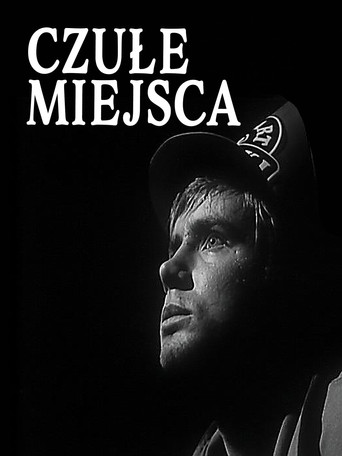
Tender Spots
The year is 1998 and the world is in an ecological cataclysm: there is shortage of water, environment is polluted and being outside brings high risks. The main character is a tv technician, Jan, an individualist, who is harassed by the conformists. Jan loves Ewa, a ballet student, who in turn is in a liaison with Allan, a successful and powerful man.
Gallery