Acting
No biography available.
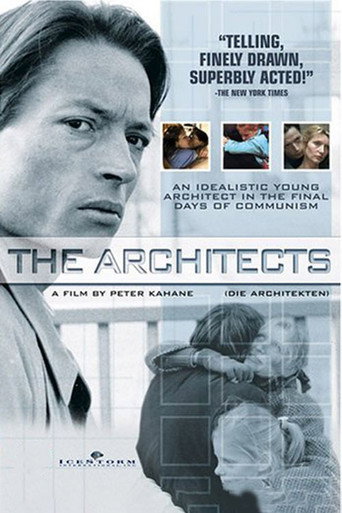
The architect Daniel Brenner is in his late thirties when he receives his first challenging and lucrative commission: to design a cultural center for a satellite town in East-Berlin. He accepts the offer under the condition that he gets to choose who he works with. This way, he reunites with former colleagues and friends - most of them architects or students of architecture who have since chosen a different profession due to personal restraint or economic confinement. Together, they develop a concept which they hope will be more appealing to the public than the conventional and dull constructions common to the German Democratic Republic. However, their ambitious plans are once and again foiled by their conservative supervisors. As frustration grows, Daniel has trouble keeping his career in balance with his family-life: his wife Wanda wants to leave for West-Germany.
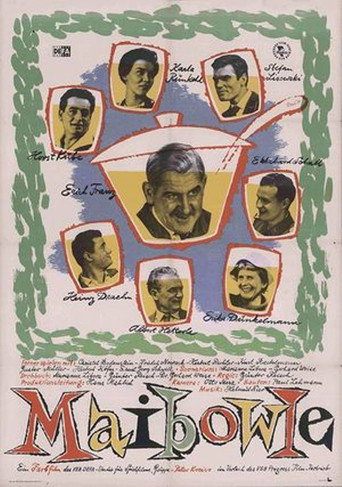
It is the 65th birthday of Wilhelm Lehmann, foreman of a chemical company. All members of the large family are expected. Preparations are also being made in the company: Wilhelm is to be awarded the »Labor banner« and, as every year, the sons are responsible for the may bowl. But instead of family members, telegrams with rejections flutter into the house.
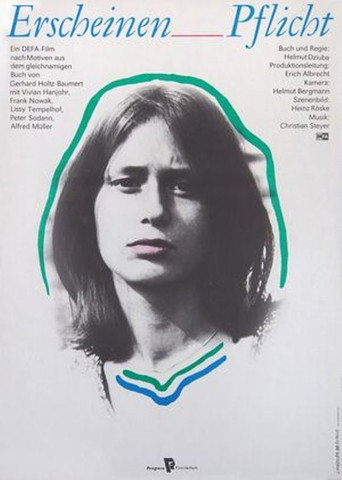
Elizabeth is an open-minded young person - curious and unbiased. She is sixteen, goes to secondary school and things are really going well, not least because her father, a Party member, occupies a privileged position. But then the father suddenly dies. Elizabeth feels lonely and abandoned, all the more so because her brother has long since severed all ties with his father.
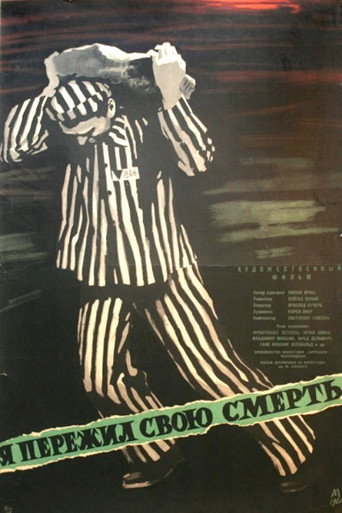
Telling the prisoners of a death camp. Boxer Tony Majer, who got into a concentration camp for a fight with the Gestapo, remembers the murderous work in quarries, on the cruel torture of the Nazis and prison solidarity that helped him survive.
Major Leska, who has proven himself as a troop officer in a tank battalion in complicated maneuvers, is to become an instructor. He sees this as a challenge and is looking forward to the new task. But then the decision is made in favor of his friend Hans Helbig, who has just graduated from the military academy with distinction and was once Leska's subordinate. The conflict that erupts between Leska and Hans puts a strain on their working relationship and puts their friendship to the test. They have to prove themselves during an important maneuver.
In 1596, the Dutchman Willem Barents sets sail on a long voyage with two ships to find a north-eastern sea route to China for the Amsterdam merchants. Ice masses and storms force the prudent navigator Barents to separate from Rijp, the captain of the second ship, so that he can organize a rescue operation in Holland. Trapped in the polar winter, Barents and his crew hope for help...
Schtonk! is a farce of the actual events of 1983, when Germany's Stern magazine published, with great fanfare, 60 volumes of the alleged diaries of Adolf Hitler – which two weeks later turned out to be entirely fake. Fritz Knobel (based on real-life forger Konrad Kujau) supports himself by faking and selling Nazi memorabilia. When Knobel writes and sells a volume of Hitler's (nonexistent) diaries, he thinks it's just another job. When sleazy journalist Hermann Willié learns of the diaries, however, he quickly realizes their potential value... and Knobel is quickly in over his head. As the pressure builds and Knobel is forced to deliver more and more volumes of the fake diaries, he finds himself acting increasingly like the man whose life he is rewriting. The film is a romping and hilarious satire, poking fun not only at the events and characters involved in the hoax (who are only thinly disguised in the film), but at the discomfort Germany has with its difficult past.