Hans Emons Movies, TV Shows, and Filmography
Hans Emons
Acting
Biography
No biography available.
Filmography Movies
Acting
Emilia Galotti
Emilia Galotti is an adaptation of the German drama of the same name written by Gotthold Eprahim Lessing.
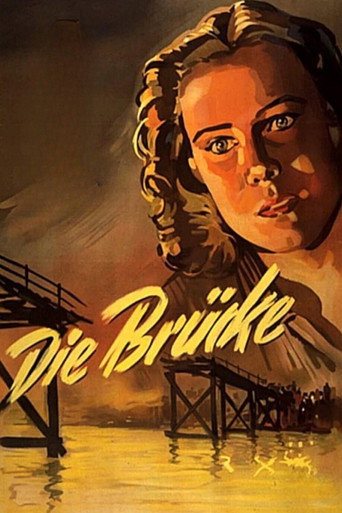
The Bridge
This is the directorial debut of Artur Pohl and tells the story of war refugees as they try to settle in a small town in Germany.
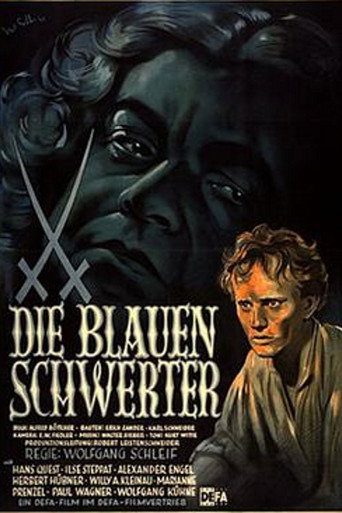
The Blue Swords
The story of Johann Friedrich Böttger, an apothecary’s apprentice and alchemist’s assistant. Fleeing from the Prussian King, he goes to Saxony, where King Frederick August the Strong takes him to a fortress and demands that he create gold. Böttger is equipped with everything he would need for the task, but he has known for a while that actual gold production is a myth and instead experiments with porcelain—white porcelain, as the Chinese are said to possess. In 1709, he finally succeeds in surprising the King with the "white gold," the first white porcelain made in Europe, he hopes for freedom.
… und wenn’s nur einer wär’ …
The young actress Bettina has angered the director of a West Berlin camp for troubled youth with a song that celebrates the adventurous lives of these "wayward youths." Hein Denecke invites her to get to know the real lives of these young people.
Grube Morgenrot
During the global economic crisis, "Morgenrot" mine is due to be closed due to unprofitable results. With the use of a machine forbidden for security reasons, the mates try to work more effectively and thus save their jobs. A serious accident happens.
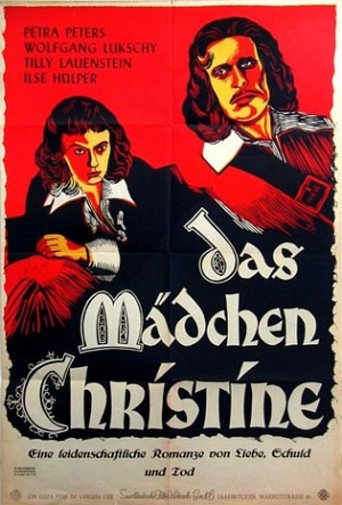
Das Mädchen Christine
During the Thirty Years' War, Christine, an orphan, falls in love with the colonel Count Merian. In order to always be with him, she puts on men's clothes, becomes a troop boy and later even a cornet - only the sutler knows her secret. Little by little, Christine realizes that the man she loves has been brutalized by the war and is no longer capable of true feelings. When she gives herself to him instead of a peasant maid, she is horrified by his brutality. She shoots him in a duel. She is sentenced to death as a cornet, but acquitted as a woman.
Sommerwege
In the late summer of 1958, party secretary Ernst Wollni is sent from Berlin to the village of Schwarzwalde to help set up an agricultural cooperative. In the village he meets his childhood friend Fritz Grimmberger again. Their friendship is put to the test as Grimmberger opposes collectivization. Nevertheless, Wollni manages to motivate the villagers and get the LPG going. Grimmberger, however, ruins himself by going it alone. When his daughter Helga also wants to leave him and study in the city, he realizes his mistake. Grimmberger and Wollni reconcile at the village festival.
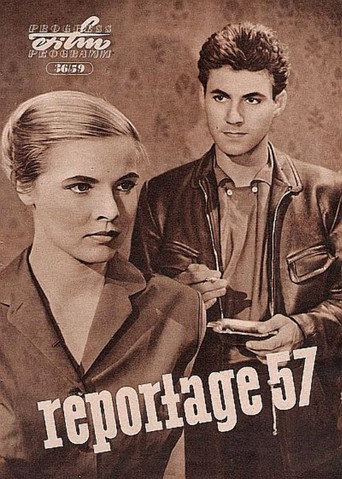
Reportage 57
The film centers on the story of newlyweds Inga and Heinz. Heinz works in the western sector of Berlin. A gang of crooks involved in various shady dealings tries to draw Heinz into their dark affairs. However, after accidentally learning about the "activities" of his "friends," Heinz informs the police about the impending crime. The gang is arrested.
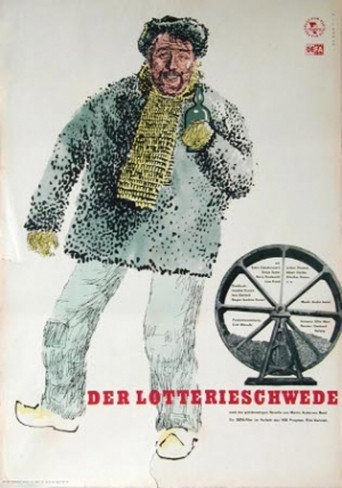
Der Lotterieschwede
Bornholm island in 1880, where quarry worker Johan Jönsson lives a miserable life with his wife and children. He hopes to escape his poverty by winning a lottery ticket. But it doesn't bring him any luck. Instead of spending his little money on a doctor to have his sick child treated, he extends the lottery ticket. The child dies and Johan, plagued by remorse, turns to alcohol. After he has gambled away everything, the lottery ticket brings someone else the main prize. Johan commits suicide, but his son Per has realized that gambling is not the way to change the miserable existence of the workers.
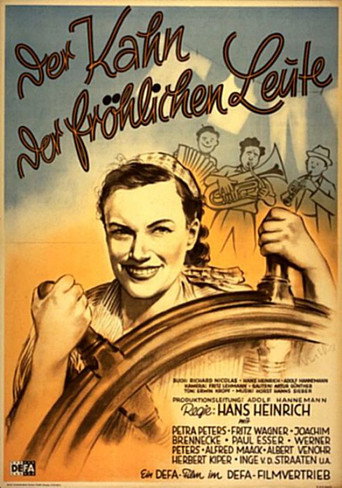
The Barge of Happy People
The girl Marianne inherited a motorboat called “Eintracht” from her parents and struggled to get her to drive it with her uncle. There is a row with the new engineer Michel the evening after the first trip. He leaves - out of jealousy. Instead of him, Marianne takes three funny musicians with her who are looking for work. The trip to Hamburg on the Elbe initially ends on a sandbank, from which another barge, the "Petrel", frees them. Michel has now been hired there. After a few complications and pointless fights, because Marianne has long been in love with Michel, there is the well-deserved happy ending.