Camera
No biography available.
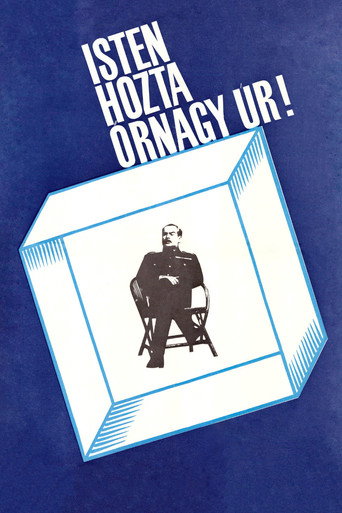
The Toth family resides in Northern Hungary. The couple has a daughter and a son, the latter a member of the armed forces. When his weary major is ordered to take a vacation, the son talks him into a visit to his family home. Comedy ensues when the Toths go overboard trying to make things pleasant for the visiting major in hopes of an easier life for their son the soldier.
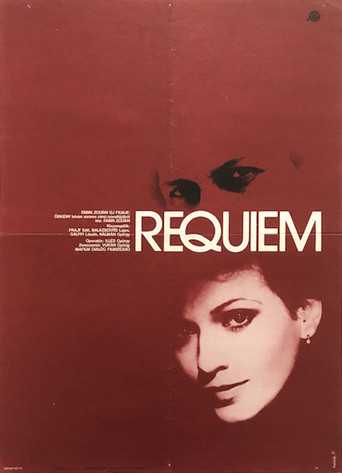
When a young boy comes in to see a doctor abourt a red mark on his face, the doctor's wife welcomes him into the consulting room instead. As they talk, she offers him something to eat and then notes that his manner of eating is just like that of her previous husband, who died in prison many years earlier. It turns out that the young man had been his cell mate for a year, and he tells her the story of how her husband died. She then remembers (in flashbacks) how she had helped her first husband rid himself of his sexual repression, and how she had promised him she would marry her current husband if she were widowed. It seems her doctor-husband was a man who could remain untouched through any political climate, and was much admired by her first husband. Now that her memories have been awakened by the young man's account, she ignores the repeated phone calls of her current husband and decides to rid this young man of his own sexual repressions.
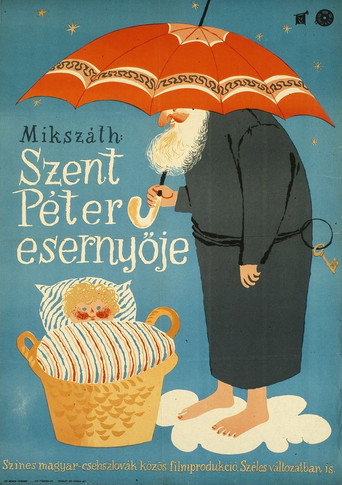
A comedy about a lost inheritance, love and a red umbrella, which, according to a local legend, belonged to St. Peter himself.
This lavishly spectacular film focuses on the character of Lőrinc Parcen Nagy from the 1200-page Tibor Déry novel interwoven with numerous autobiographical elements. Lőrinc Parcen Nagy is the offspring of an upper middle class family, whose life is marked by two violent deaths: the suicide of his father and the slaughter of an innocent worker. He breaks with his family and his mother in disgust; she is of weak character, a person who abandoned her own husband. He is also unable to discover the right tone with his colleagues and his lover who is an illegal party worker.
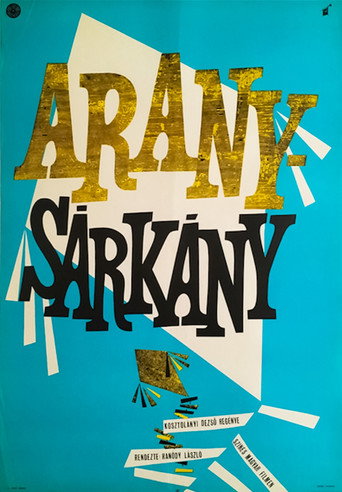
The film is put at the beginning of the century in Sárszeg, following the humiliation and collapse of a high-school teacher.
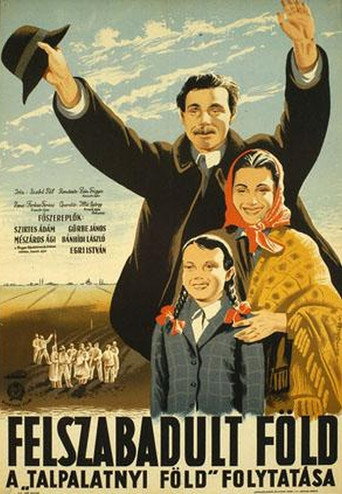
A group of landless Hungarian peasants accept work as migrant-laborers on a farm in northern Germany where the wages are good, and the wives and family are allowed to accompany them. Though it is in the midst of World War II, they are relatively well-off. However, they glimpse the treatment accorded to POWs and others who are not so gently treated, and at the conclusion of the year's harvest, they choose to return to Hungary and are quickly swept up in the tides of war. This film is part of a series of films by award-winning, well-respected director Zoltan Fabri who devoted much time and effort chronicling the struggle against fascism.
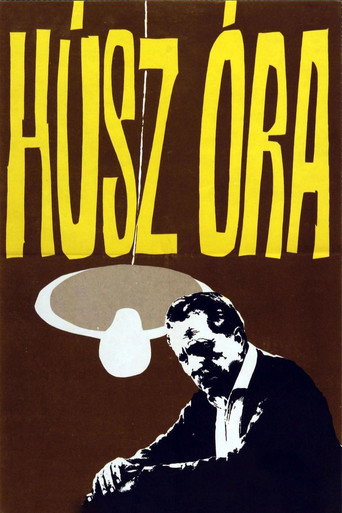
A crusading newspaper reporter covers the Soviet invasion of Hungary in 1956. Initially critical of the communists, the feature later espouses the virtues of the social changes implemented since the invasion. The title refers to the period of time the reporter spent interviewing witnesses to the invasion.
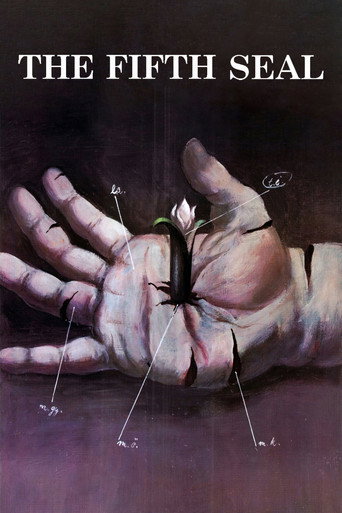
In 1944 Budapest, one of a group of four friends poses a hypothetical moral question to the others, an act that will unexpectedly alter their lives forever.
One of the earliest works of the outstanding Hungarian director Miklós Jancso was filmed by him in collaboration with Dezho Koza and Gyula Meszáros as a documentary short film dedicated to the propaganda of building socialism in Hungary.
Jóska has become a Communist in the Csillag prison in Szeged. In the meantime, Gábor successfully talks people in Jóska's native village out of joining the German-led Hungarian army.