Gints Bērziņš Movies, TV Shows, and Filmography
Gints Bērziņš
Camera
Biography
No biography available.
Filmography Movies
Production
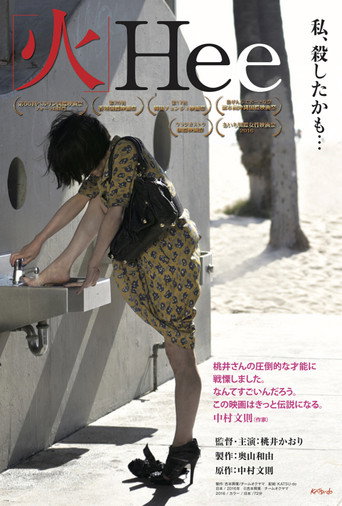
Hee
Years after she related to him the story of her parents’ death in a fire, for which – rightly or wrongly – she feels responsible, Japanese psychiatrist Dr. Sanada meets his former patient Azusa once again. Back then, she lambasted him for being wrong for the job. Back then, he let slip that she isn’t actually crazy. Now she’s a prostitute living in precarious circumstances in Los Angeles and is accused of murder, with her memories once again moving inexorably towards a fire. Sanada assesses her in the presence of an investigator who appears not to understand Japanese. Is Azusa now mentally ill for real? Was she back then? And why does the description of her tormentors upset him so?
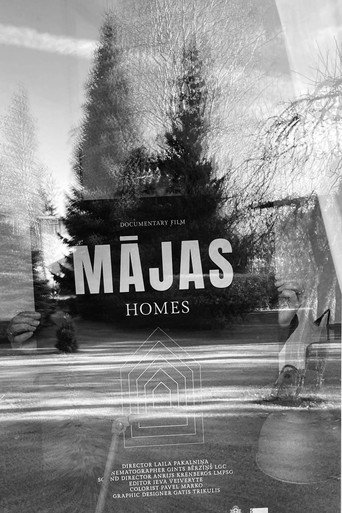
Homes
The camera stands in a house, the lens pointing through the window, outdoors, where the occupants of the home are standing. They respond patiently to the camera operator’s directions: a small step to the left, a little bit forward, no, back just a bit, yes, that’s perfect. Dozens of people pose in this way for a full minute. There’s a man who lives alone, a large family, an older woman on a trampoline. Some are entirely at ease, others more self-conscious. Rabbits, dogs, and cats are allowed to join these portraits, too. All of them are captured within the natural frame of the windows, along with the lace or floral curtains.
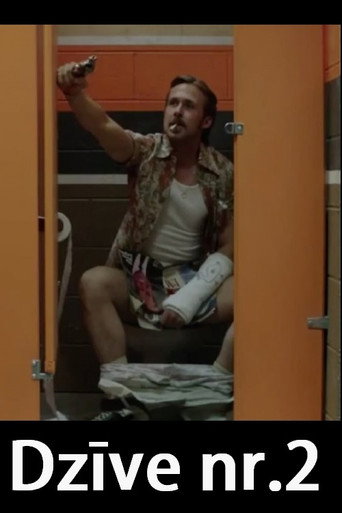
Latavio, or Life Nr. 2
An omnibus film consisting of ten parts, each directed by a different young director from the Latvian Academy of Culture. The unifying element of the ten shorts is the place where they take place - the airport. A lot can happen there - including a strike by a comet, a malicious attempt to break havoc by passengers, or an exploration of the old airport guard's house where not a lot has changed since the collapse of the Soviet Union. The film consists of the following parts: A Mishap (Nediena) by Arta Biseniece, Blurp (Šļurp) by Aija Bley, Alien Sky (Svešās debesis) by Viesturs Kairišs, 5 Versions (5 versijas) by Dzintars Krūmiņš, Comet (Komēta) by Māra Liniņa, Cleptomania (Kleptomānija) by Andis Mizišs, Alfredo's Poetry (Alfredo dzeja) by Igors Varenieks, Little Hand (Mazā roka) by Ilze Vidauska, Comet 2 (Komēta 2) by Anna Viduleja, and Life No. 2 (Dzīve nr.2) by Kristīne Želve.
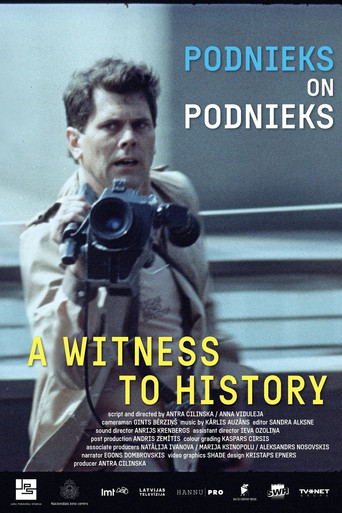
Podnieks On Podnieks. A Witness To History
A film about the outstanding Latvian film director Juris Podnieks, who during his lifetime gained the fame of a fighter for justice and an "eye-opener". Podnieks has created testimonies about the most important events of the twentieth century in the post-Soviet territory. He always saw a bigger picture, it was not just Latvia what interested him. His ability to cover such a wide spectrum of themes - wars, lost freedom of his own country, the Soviet regime and its collapse, young people, artists. But most importantly, he was always focusing on the human soul. Juris creates an emotional bond between the author and his characters, the characters and the viewer - he was talking to each individual. Perhaps this is why his films made such an effect on the viewer. Juris Podnieks has clearly been able to influence millions of viewers with his films. Juris himself died in the summer of 1992 in a diving accident. Did he manage to fulfill his mission in this life?
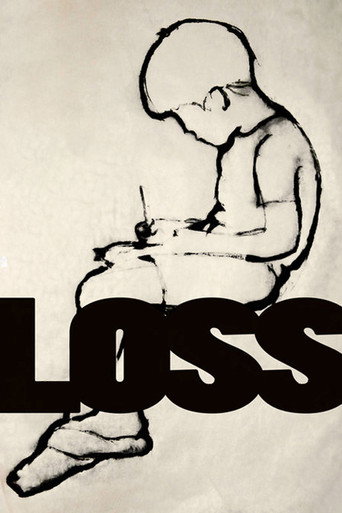
Loss
A mentally ill young woman Valda convinces herself that a boy growing up in an orphanage is her child. Following the footsteps of a thousands Lithuanians, she immigrates to Ireland to earn money to save him. "Loss" portrays the beauty and tragedy of the human heart.
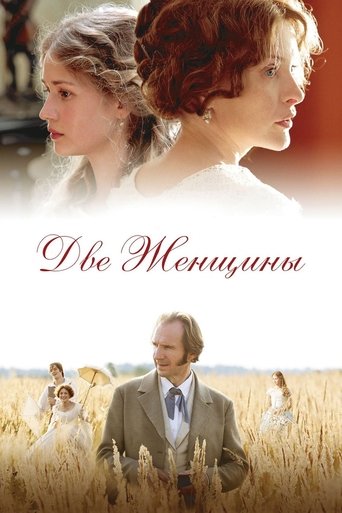
Two Women
A headstrong young woman is married to land baron. Her feelings for her son's tutor becomes a complex web of unrequited love.

The Chronicles of Melanie
The 14th of June 1941, Soviet-occupied Latvia. Without warning, the authorities break into the house of Melanie and her husband Alexander, and force them to leave everything behind. Together with more than 15 000 Latvians, Melanie and her son get deported to Siberia. In her fight against cold, famine and cruelty, she only gains new strength through the letters she writes to Alexander, full of hope for a free Latvia and a better tomorrow.
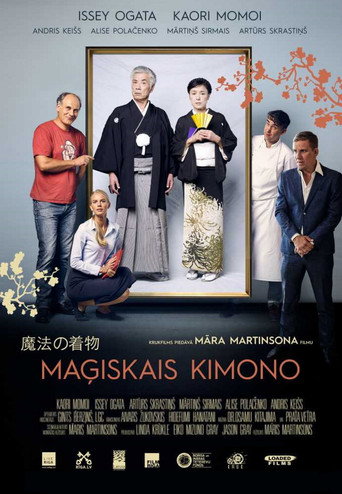
Magic Kimono
The story of middle-aged Japanese woman Keiko, who has been living in a shell for decades due to a family tragedy in Kobe. The modest act of eating and the sensations it gives us provided Keiko a lifeline to survive. Unwillingly, she joins a group of Japanese women traveling to Northern Europe to participate in a kimono show in the fairytale-like art nouveau world of Riga. During her performance, Keiko suddenly comes face to face with her husband, who disappeared twenty years ago and now wants to read-dress their relationship and who Keiko has become.
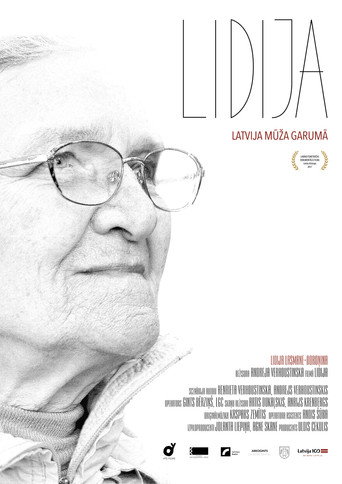
Lidija
A person’s face and eyes preserve experience better than any document or recorded memoir. Particularly if a person has experienced as much as the well-known dissident Lidija Lasmane-Doroņina. Actually, she does not even think of herself as a dissident. She received her three terms in prisons and labour camps – fourteen years in all – as punishment not for underground struggle but for daring to remain true to her principles, convictions and faith. The ideals Lidija obtained as a child – the idyllic image of Latvia as an independent country, strong family values and faith in God as a moral measuring stick for any action. Her eyes are bright even today, at the age of 91, and they look at this world full of life.
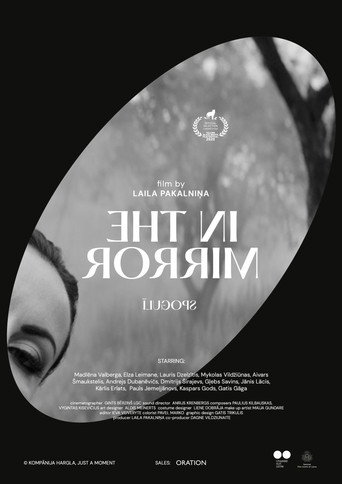
In the Mirror
A CrossFit trainer becomes the father of a baby girl, Snow White. Snow White’s mother dies, and her father marries a young woman obsessed with CrossFit and herself. She works out all the time in order to be the best. And she really is the best – she can do 50 burpees. In the meantime, little Snow White plays and grows up in the CrossFit gym. Time passes, and one day it turns out – while the Stepmother can do 50 burpees, Snow White can already do 53 burpees...