Gerd Klotzek Movies, TV Shows, and Filmography
Gerd Klotzek
Acting
Biography
No biography available.
Filmography Movies
Acting

Alter schützt vor Liebe nicht
Otto is turning 65 and a big celebration with relatives and friends is coming up. What does life bring? A comfortable retirement, looking after his beloved grandchildren, lamenting the aches and pains of old age. None of that. Otto falls in love with Klara and the two of them are looking for a place to live together. What is in itself a matter of course comes up against many barriers. A turbulent time begins for the two newly in love...

Künstler, König und Modell
Johann Gottfried Schadow is only in his early twenties when he is put in charge of the royal sculptor's workshop in Prussia's capital Berlin. He is supported in this position above all by the fair ladies.

Give Me a Smile
For the first time since her husband's death, Ute visits their former FKK-club. Curiously she enters this familiar place and immediately receives a warm welcome. However, she painfully has to realise that in the eyes of her old friends she primarily has become the widow. Unintentionally she finds herself involved in a group game in which you have to make your teammates laugh by saying one simple sentence.
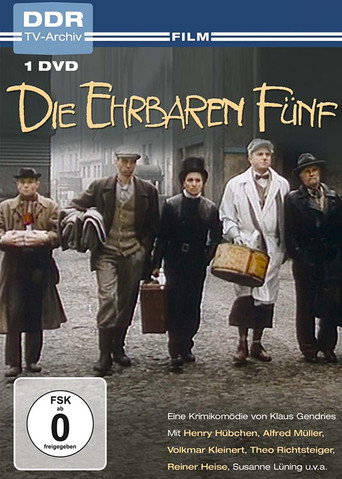
Die ehrbaren Fünf
In a small Saxon town after the Second World War, the former chimney sweep Toni tries to survive on the black market and meets the pusher Ginfizz. Together they initially trade in flour before embarking on a riskier plan: they are to rescue machines from Soviet expropriation for the mill owner Hartmann by transporting them in hidden trucks. In the process, they become entangled in various adventures, from rescuing orphans to transporting pigs, while being constantly pursued by the young policewoman Gisela, who wavers between her professional duty and her attraction to Toni. After Ginfizz is caught and the others remain temporarily free, they help to get the mill up and running again to avert a food shortage.
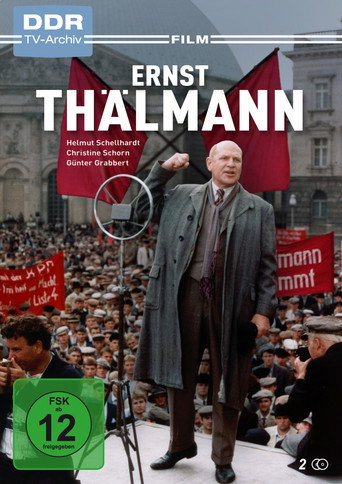
Ernst Thälmann
This elaborate two-part television film features a section from the life of communist worker leader Ernst Thälmann. It begins with the bloody riots on May 1, 1929 in Berlin, in which police officers shot at demonstrating workers, and ends with February 7, 1933, when Thälmann appeared as a speaker at the illegal meeting of the Central Committee of the Communist Party of Germany in goat neck. This period was marked by the struggle of the Communists against the ever stronger National Socialists and the rise of Adolf Hitler.
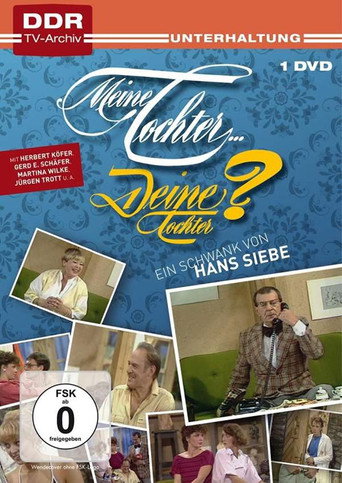

Die Ironie des Lebens
The 67-year-old Edgar is the most successful elderly comedian in Germany. Every evening on stage, he makes fun of everything that concerns older people: failed relationships, ungrateful children, a declining libido, rapidly deteriorating health, general uselessness and imminent death. But as soon as the show is over, what's left is a man who is really lonely and tries to fill his empty evenings with groupies and alcohol. When, after 25 years, he meets his ex-wife Eva again, who is terminally ill with cancer, the two begin to fall in love again against all odds and Eva decides to accompany Edgar on his comedy tour through Germany and Austria...
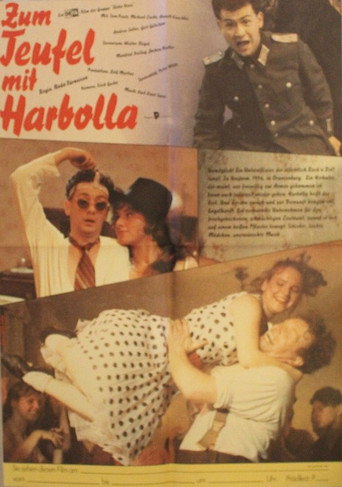
Zum Teufel mit Harbolla
Even the military academy can't stop kind-hearted officer Gottfried Engelhardt from seeing the world through rose-colored glasses. Everything in the young GDR is blooming: Engelhardt's career, the socialist state, the black market, and maybe even a chance at love.
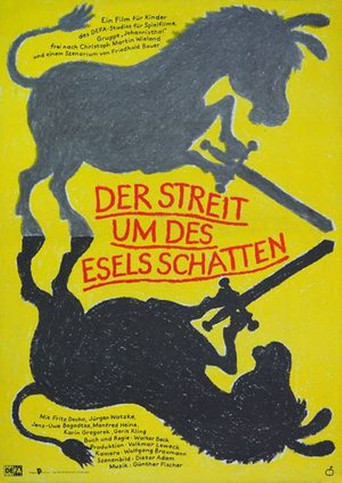
Der Streit um des Esels Schatten
The philosopher Democritus has a toothache, so a dentist from ancient Abdera sets off for his house. En route, he gets into a fight with a donkey driver. This conflict eventually causes all of Abdera to go crazy. Just when the city is seconds away from having a civil war, Democritus' apprentice shows up to ease the city's tensions with a gift.

The Girl in the Lift
Frank, a tenth grade student, falls in love with his classmate Regine. His father is a well-connected plant manager in the GDR; Regine's mother is a single parent with four children. Regine wants to become a kindergarten teacher, but her grades are poor and she is not allowed to apply for technical college. Frank champions her and seeks an open discussion about these rigid regulations. But his criticism is nipped in the bud.