Georges Schoucair Movies, TV Shows, and Filmography
Georges Schoucair
Production
Biography
No biography available.
Filmography Movies

Production

Costa Brava, Lebanon
Members of a family quit the polluted, rubbish-strewn city of Beirut for an idyllic mountain home. However, their dreams of a utopian existence are shattered by the construction of a landfill on the boundary of their land.

Stable Unstable
In an apartment building in Beirut, on the last day of the year, seven characters start their day by visiting their psychologist as part of the weekly ritual. On that couch in their psychologist's office, they face themselves and their loved ones in trying to define what is most important to them. Each of them, from the patients to the residents of the building, has a different story to share, inner secrets and hidden wishes. All keep to themselves, except for the porter Abou Karim, who extends his presence and allows himself to interfere in the lives of others and in their destinies.
The Last Man
Each morning Beirut awakens to a new murder seemingly committed by a serial killer, with victims found emptied of their blood. At the same time a doctor, Khalil, begins to experience strange symptoms that destabilise him and transform his life. A connection slowly emerges that seems to link Khalil to these victims. Salhab’s body of films have come to narrate the state of Lebanon – and Beirut in particular – during and after the civil war, and this film is no exception.

Memory Box
Maia, a single mother, lives in Montreal with her teenage daughter, Alex. On Christmas Eve, they receive an unexpected delivery: notebooks, tapes, and photos Maia, from 13 to 18 years old, sent from Beirut to her best friend who left for Paris to escape the civil war. Maia refuses to open the box or confront its memories, but Alex secretly begins diving into it. Between fantasy and reality, Alex enters the world of her mother’s tumultuous, passionate adolescence during the Lebanese civil war, unlocking mysteries of a hidden past.
Impossible Exchange
A conversation between two strangers: one is ashore and the other is on the sea. The conversation’s depth coincides with the height of the railing. Their interdependence is apparent and described in different speeds. The filmmaker’s thoughts become apparent. The ship’s departure accelerates the conversation. Finally, the ship sets sail.

The Sea Ahead
A young woman makes her way back home to her parents’ house in the middle of the night leaving a bad experience behind. Haunting pressures to fit back into the family dynamics as well as revealing details of her life abroad weigh heavy on her. Feeling cornered, her anxieties resurface, leading her to find solace in another part of her Beirut life that she had forsaken. A life that is for her as familiar and foreign now as it ever was.

Letters from War
In 1971, António Lobo Antunes' life is brutally interrupted when he is drafted into the Portuguese Army to serve as a doctor in one of the worst zones of the Colonial War – the East of Angola. Away from everything dear he writes letters to his wife while he is immersed in an increasingly violent setting. While he moves between several military posts he falls in love for Africa and matures politically. At his side, an entire generation struggles and despairs for the return home. In the uncertainty of war events, only the letters can make him survive.

Nobody's Watching
Nico is a famous actor in Argentina, but in New York, nobody takes notice. He needs to juggle bartending, babysitting and odd jobs to keep himself afloat. But when old friends from Buenos Aires come to visit, he needs to juggle the image of his old life with the reality of the struggling actor in New York City.

Soy Nero
The border fence between Mexico and the United States is part of their lives; Mexican youths use it as a volleyball net on the beach, holding their own kind of international matches with their opposite numbers on the other side. When Nero scales the metres-high metal bars we suspect that he has done this often before: because nothing is going to divert him from his dream of becoming a US citizen. He follows the traces of his older brother which lead him to Los Angeles and the mansions of the rich and famous where he gazes incredulously at this very different lifestyle with its pools and double garages that he soon hopes will be his. His only chance of quickly acquiring a green card, however, is by volunteering for military service. Before he knows it, Nero finds himself in the desert landscape of the war zones of the Middle East, fighting for his citizenship with a machine gun in his hand.
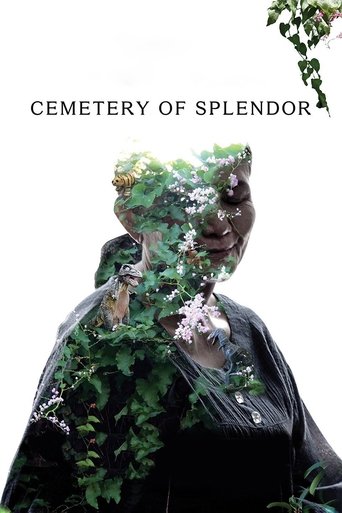
Cemetery of Splendor
In a hospital, ten soldiers are being treated for a mysterious sleeping sickness. In a story in which dreams can be experienced by others, and in which goddesses can sit casually with mortals, a nurse learns the reason why the patients will never be cured, and forms a telepathic bond with one of them.