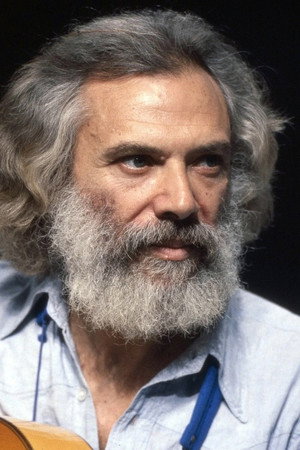
Georges Moustaki Movies, TV Shows, and Filmography
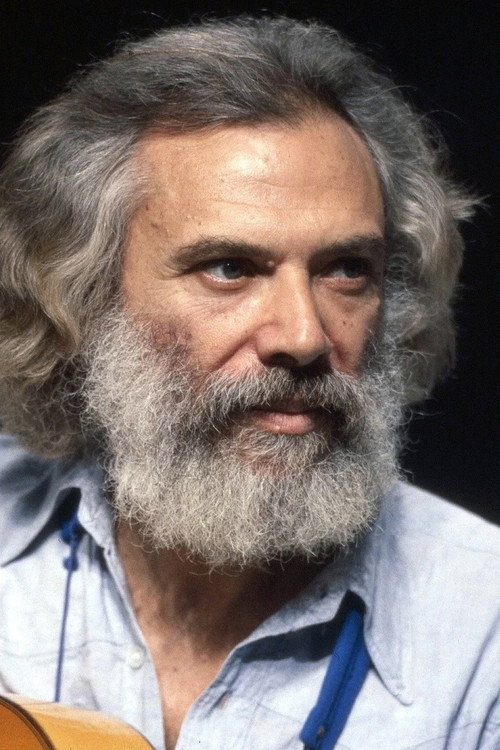
Georges Moustaki
Acting
Biography
Georges Moustaki (born Giuseppe Mustacchi; 3 May 1934 – 23 May 2013) was an Egyptian-French singer-songwriter of Jewish Italo-Greek origin, best known for the poetic rhythm and simplicity of the romantic songs he composed and often sang. Moustaki gave France some of its best-loved music by writing about 300 songs for some of the most popular singers in that country, such as Édith Piaf, Dalida, Françoise Hardy, Yves Montand, Barbara, Brigitte Fontaine, Herbert Pagani, France Gall, Cindy Daniel, Juliette Gréco, Pia Colombo, and Tino Rossi, as well as for himself. Georges Moustaki was born Giuseppe Mustacchi in Alexandria, Egypt, on 3 May 1934. His parents, Sarah and Nessim Mustacchi, were Francophile, Greek Jews from the ancient Romaniote Jewish community. Originally from the Greek island of Corfu, they moved to Egypt, where young Giuseppe was born and first learned French. They owned the Cité du Livre − one of the finest book shops in the Middle East – in the cosmopolitan city of Alexandria, where many ethnic communities lived together. Moustaki's father spoke five languages whereas his mother spoke six. The young Giuseppe and his two older sisters spoke Italian at home and Arabic in the streets. The parents placed Giuseppe and his sisters in a French school where they learned to speak French. At the age of 17, after a summer holiday in Paris, Moustaki obtained his father's permission to move there, working as a door-to-door salesman of poetry books. He began playing the piano and singing in nightclubs in Paris, where he met some of the era's best-known performers. His career took off after the young singer-songwriter Georges Brassens took Moustaki under his wing. Brassens introduced him to artists and intellectuals who spent much of their time around Saint-Germain-des-Prés. Out of gratitude, Moustaki adopted the first name of the only musician he called "master". Moustaki said that his taste for music came from hearing various French singers – Édith Piaf, Charles Trenet, Henri Salvador, Georges Ulmer, Yves Montand, Georges Guétary and Luis Mariano – sing. Moustaki was introduced to Édith Piaf in the late 1950s by a friend whose praise of the young songwriter was so flattering that Piaf, then at the peak of her fame, requested somewhat sarcastically to hear him sing his best works. "I picked up a guitar and I was lamentable. But something must have touched her. She asked me to go and see her perform that same evening at the Olympia music hall and to show her later the songs I had just massacred." He soon began writing songs for Piaf, the most famous of which, Milord, about a lower-class girl who falls in love with an upper-class British traveller, reached number one in Germany in 1960 and number 24 in the British charts the same year. It has since been performed by numerous artists, including Bobby Darin and Cher. Piaf was captivated by Moustaki's music, as well as his great charm. Piaf liked how his musical compositions were flavored with jazz and styles that went beyond France's borders. Moustaki and Piaf became lovers and embarked on what the newspaper Libération described as a year of "devastating, mad love", with the newspapers following "the 'scandal' of the 'gigolo' and his dame day after day". ... Source: Article "Georges Moustaki" from Wikipedia in English, licensed under CC-BY-SA.
Filmography Movies
Acting

The Revolution on Two Horses
It's the dawn of April 25, 1974, when Marco, a 25-year old Italian and his Portuguese friend Victor leave Paris on a yellow Citroen 2CV. The goal of their trip is Lisbon, which on that night was freed from Europe's longest dictatorship. The two are joined by Claire, Victor's former girlfriend and University classmate, who wants to take a break from her everyday life, leaving behind her husband and baby son, to form again, even for a few days, the traveling trio with her friends.
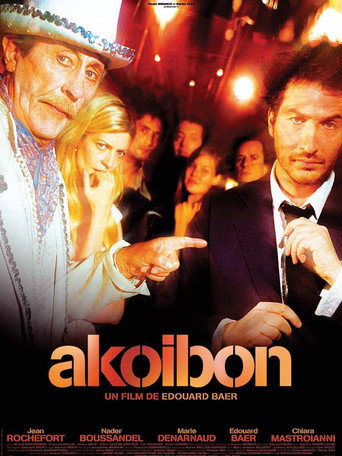
Akoibon
A disparate group of people meet at a hotel on a gorgeous and isolated Mediterranean island. Meanwhile, a woman schemes to get even with its owner.

Europe Express
The film is set in Europe and depicts the love between a Japanese photographer and a princess from one of the European countries.
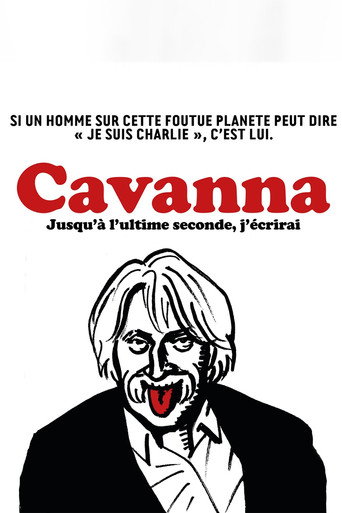
Cavanna, jusqu'à l'ultime seconde j'écrirai
The life and career of French novelist and journalist François Cavanna, his leading role in the invention of satirical press in France and foundation of 'Hara Kiri' and 'Charlie hedbo' newspapers.
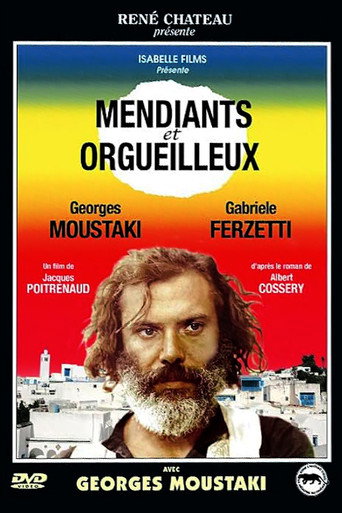
Beggars and Proud Ones
Hadjis, a philosophy professor in his thirties, put his spiritual concepts into practice when he left Europe to settle in a working-class district of Tunis, where he lived in destitution. Together with two followers of his philosophy, a medical student and a poet, they form a close-knit, wise cenacle. Unfortunately, Hadjis strangles a prostitute while on a hashish binge. The police put an officer in charge of the investigation, and he soon tracked down the murderer. But, converted by the three friends to their philosophy, he ends his investigation and leaves the police to join them.
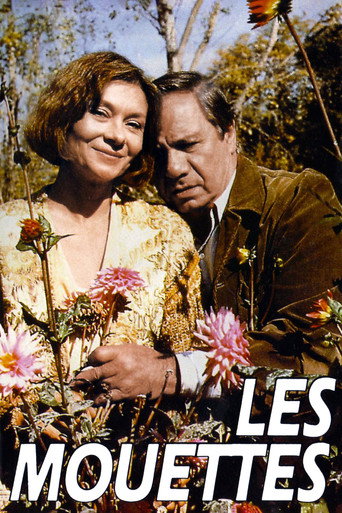
The Cocottes
A small village lies peacefully nestled in the hills beneath the Provence sun... until the arrival of an odd group of vacationers. Who are these gorgeous young women from the big city strolling on the village square under the watchful eye of a chaperone as beautiful as she is authoritarian? Scandal arises when it’s learned these dreamy creatures are none other than the employees of a Marseille brothel come to enjoy the good clean air of the country. All hell breaks loose as the villagers take a stand for or against the presence of these "ladies of pleasure". The mayor is called on to relay women of the moral rules of the region to the women. But the fact remains, they can’t be forced to leave: while they have no intention of plying their trade, no law exists to bring their country retreat to a premature end. Different mentalities are revealed, passions unbridled, love kindled... and doesn’t love always solve everything in the end?

Autour de la guitare, Olympia 2000
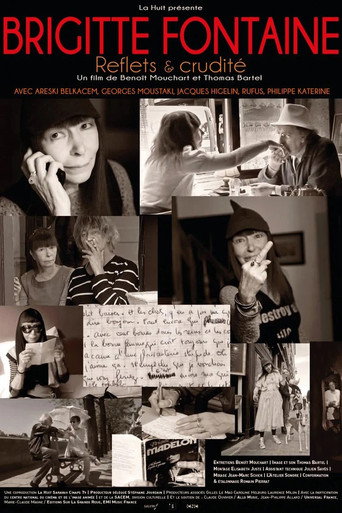
Brigitte Fontaine : Reflets et crudité
Joseph Mustacchi dit Georges Moustaki
For many, Georges Moustaki is "Le Métèque." He is also, and above all, the author of legendary songs for Edith Piaf, Milord, Reggiani, Sarah, La Solitude, Barbara, J'm'en balance..., Montand, Henri Salvador, Dalida, Colette Renard, and more. This film reveals how his songs have accompanied the key events in our history since 1968. It takes us to Egypt, to Alexandria, his hometown, and Paris with Henri Salvador, Serge Reggiani, Théodorakis, Paco Ibanez, Albert Cossery, Gérôme Charyn, Alexandre Fassianos, and Jorge Amado. A portrait at the crossroads of all the known and unknown paths in the life of Georges Moustaki, tenderly blending music, history, writing, friendships, and memories.
Production
Le Métèque
Finistère. Two young deaf free divers on vacation have been wandering the region for a few days. They don't have much and travel light. They spend the nights mainly on beaches. The hoped-for adventure has so far failed to materialize and connecting with other people is also proving more difficult than expected. They can’t seem to find access. When, during the daily underwater hunt, deep in a kelp forest, the sky over Zinédine suddenly darkens, he emerges, driven by curiosity. There he discovers a drifting sailing ship. The two guide the boat back to shore and shortly thereafter meet Jade, the owner of the boat. She invites them to continue their journey by ship. At last the boys seem to be able to experience what they could not before, but the sudden death of the sailor replaces the newly gained feeling of ease with fear of being accused of murder, and of having been betrayed by fate.
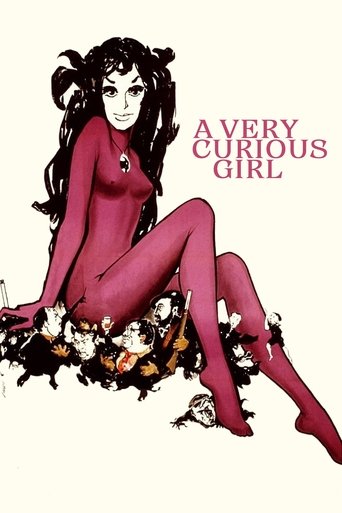
A Very Curious Girl
Treated as an outcast and exploited by the villagers of a small town, a young woman liberates herself through sex, which she uses as a tool of economic gain and an instrument of revenge against those who have wronged her.
Beggars and Proud Ones
Hadjis, a philosophy professor in his thirties, put his spiritual concepts into practice when he left Europe to settle in a working-class district of Tunis, where he lived in destitution. Together with two followers of his philosophy, a medical student and a poet, they form a close-knit, wise cenacle. Unfortunately, Hadjis strangles a prostitute while on a hashish binge. The police put an officer in charge of the investigation, and he soon tracked down the murderer. But, converted by the three friends to their philosophy, he ends his investigation and leaves the police to join them.
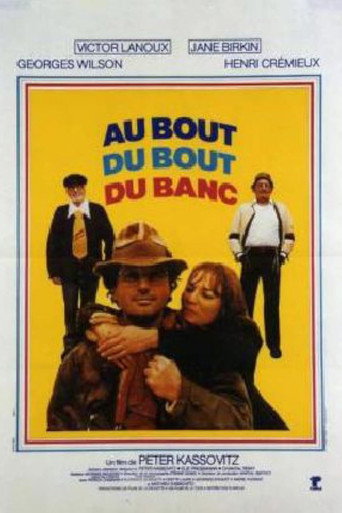
Make Room for Tomorrow
Four generations of Oppenheim men gather in Paris for Isaac's 90th birthday. He's "Romeo," still a lady's man, waiting to hear from a woman to whom he has proposed, threatening suicide if she says no. They gather at Isaac's grandson's, Ben, who lives with Peggy and their son Mathias who's 10. Joining them, from Israel, is Isaac's son Elie. Against a backdrop of Elie's attempts to call his ex-wife, Ben and Peggy's marital difficulties, Mathias's budding sexuality, everyone's love of chess and practical jokes, Ben's house (shifting dangerously on its foundation), and the twentieth-century struggles of the Jews, the film explores their relationships and Isaac's aging.
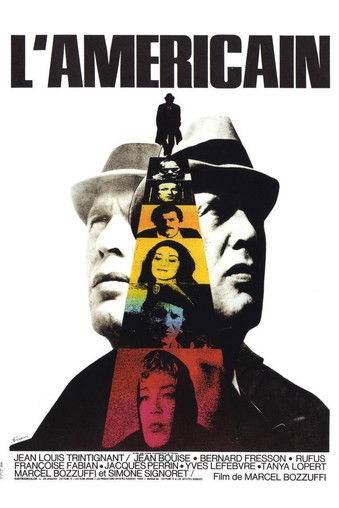
The American
A man returns to Rouen, after fifteen years in the United States, and feels like a stranger among old friends.
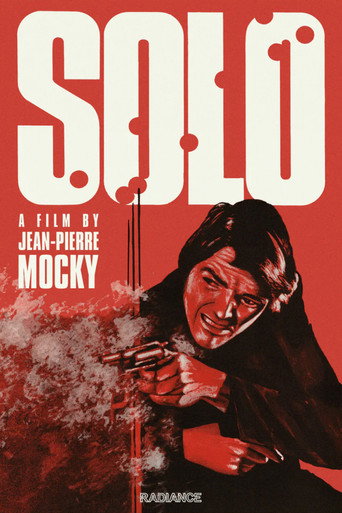
Solo
During an orgy, Some old and wealthy notables are being murdered by a small group of leftist young revolutionaries. Very soon the police are tracking down Virgile Cabral, the leader of the group. Meanwhile, Virgile's brother and only relative, Vincent, a violinist (and a thief), comes back to Paris. They have not seen each other for three years. Vincent does not believe in the revolution. He only tries to live as he wishes to live. But by looking for his hunted down brother, he has no other choice than to be involved in a fight that is not his.
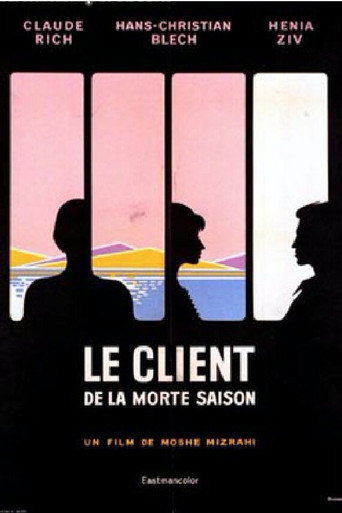
The Customer of the Off Season
An ex-SS officer and his gorgeous wife find a refuge living in Eilat. A mysterious stranger appears from their past.
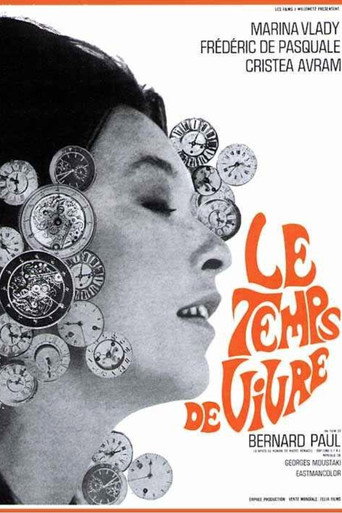
Time to Live
Mary and Louis have been married for 10 years and have 2 children. Louis is a construction worker who, to support his wife and children in a comfort, works more and more. Mary asks Louis to spend more time with his family, but he replies that it is impossible. Marie makes the acquaintance of a former teacher of her son, he seems seduced by Marie who invites her over several times in the company of his children, his home ... The couple become unglued a little more when Louis meets a young prostitute. Can the couple manage to get through this?
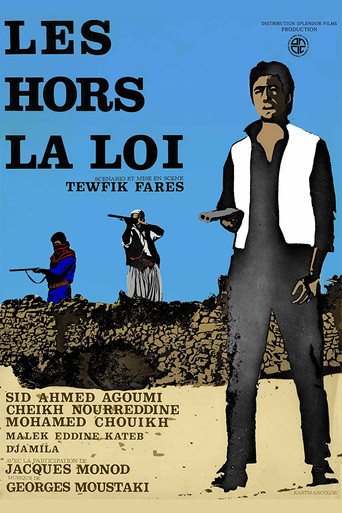
The Outlaws
In prison in colonial Algeria, shortly after the end of the Second World War, three indigenous cellmates make out. Once free, they attack the authority represented by the triad of the boss, the gendarme and the administrator. “Living the colonial condition,” confided Tewfik Farès, “is something! It’s not sociologically or historically speaking. It’s life. And I think that’s all there in it. [...] For a hundred and thirty years, we wait. We hold back. We push back. We hope. At the same time, on different occasions, there are skirmishes, unrest.
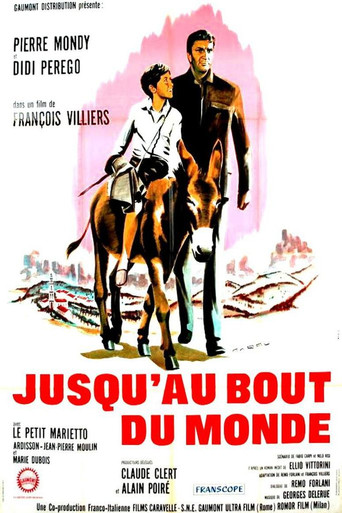
Till the End of the World
This brave, lonely man who arrives in Corsica, in a poor village, has no idea that he will have to take in this 9-year-old child whose mother has just died and of whom he is undoubtedly the father. His only hope is to find a place for the child, a place where he can get rid of his mother, a place where the child can stay, grow up, eat his fill and become a man. In this long race on foot through the mountains or by hitchhiking, they successively reject all the solutions that are offered, for the taste of freedom, which is more deeply rooted in them than that of security. This common feeling gradually brings them closer together, and after many incidents, they decide to face life and its uncertain future together.
Gallery