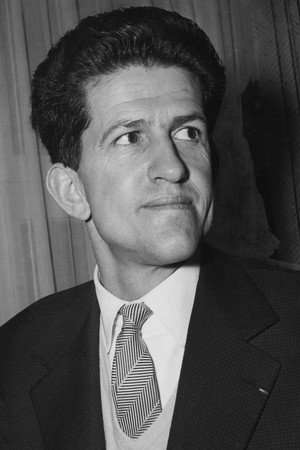
Gaston Rébuffat Movies, TV Shows, and Filmography
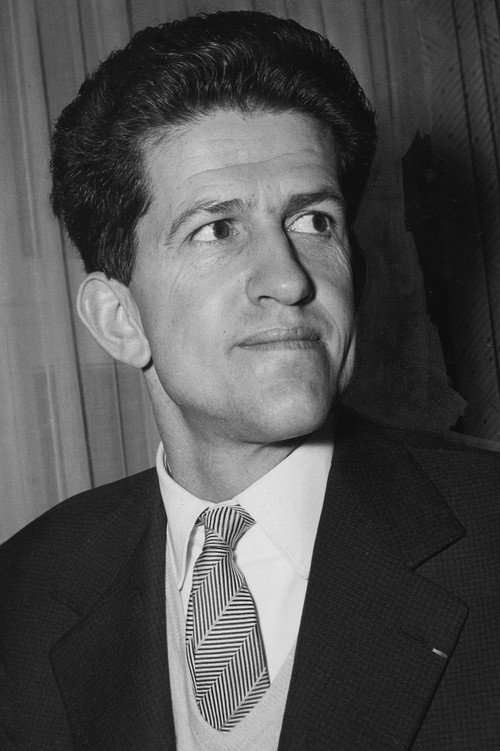
Gaston Rébuffat
Acting
Biography
Gaston Rébuffat, born May 7, 1921, in Marseille and died May 31, 1985, in Bobigny, was a French mountaineer, notably a member of the 1950 French expedition to Annapurna, a high-mountain guide, writer, and filmmaker. Gaston Rébuffat discovered climbing in the Calanques of Marseille. At sixteen, he joined the French Alpine Club (Haute-Provence section), where he discovered high-altitude mountaineering and met Henri Moulin, whom he considered his "big brother in mountaineering." He then explored the Alps and the Mont Blanc massif, which became his playground. In 1940, he joined Jeunesse et Montagne (Youth and Mountain), where he met Lionel Terray, who became his friend. It was at the "School, Youth, and Mountain" center in Valgaudemar that his passion for the mountains took deep root. He then moved to Chamonix, where he worked on his friend Lionel Terray's farm while waiting to be co-opted into the Chamonix Guides Company. In 1942, Gaston Rébuffat earned his high-mountain guide certification despite his young age (21, while the required age was 23). He continued working as an instructor with the youth organization "Jeunesse et Montagne" (Youth and Mountain), and in 1944 became an instructor at the National School of Mountaineering (École Nationale d'Alpinisme) and the Military High Mountain School (École Militaire de Haute Montagne). In June 1945, he joined the prestigious Chamonix Guides Company under the tutelage of Alfred Couttet. He thus became the third "outsider" in the Company, after Roger Frison-Roche and Édouard Frendo, whereas traditionally, one had to be born in the valley to be admitted. A modest skier, he worked as a guide in the summer, but instead of being a ski instructor in the winter, he tried his hand at writing. He participated in the first ascent of Annapurna in 1950 with, among others, Jean Couzy, Lionel Terray, Maurice Herzog, Louis Lachenal, Marcel Ichac, Marcel Schatz, Jacques Oudot, and Francis de Noyelle. This feat would remain a difficult chapter in his life. He did not reach the summit, but, along with Terray, he rescued Lachenal and Herzog, who were in distress. Like Lachenal, and unlike Herzog, he felt no patriotic or mystical mission in climbing this peak. Since the Himalayan Committee had contractually forbidden members of the expedition from writing accounts of their experience, only Maurice Herzog's "Annapurna Premier 8000" was authorized and declared the official account. In 1958, he directed the film dedicated to the mountains for Walt Disney Pictures' "Third Man on the Mountain" (1959), filmed in Zermatt, Switzerland, at the foot of the Matterhorn. Primarily a resident of Chamonix, he was also a frequent visitor to Sainte-Maxime, the hometown of his wife, daughter of the architect René Darde. Author of numerous books on the mountains, some with an educational purpose, he worked to popularize mountaineering techniques and knowledge of the mountain environment among young people. Also a lecturer, Gaston Rébuffat introduced the world of high altitudes to regions throughout France through screenings as part of the "Connaissance du Monde" (Knowledge of the World) lecture series. In 1984, he was made an Officer of the Legion of Honour, a year before his death from cancer on May 31, 1985. He is buried in the Chamonix-Mont-Blanc cemetery.
Filmography Movies
Acting
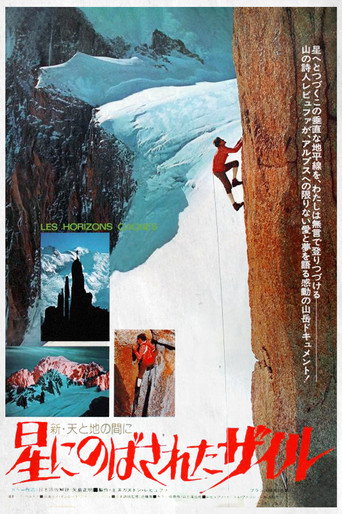
Les Horizons Gagnés
The guide Gaston Rébuffat, shares with us his view of his job and the nature that surrounds him by showing us some beautiful climbs made with friends, noting the importance of the friendship of the rope party. Born near the Calanques, he could have been a sailor, like him linked to storms and the stars. We follow him with Edwin Mattews (USA) in their ascent of the Barre des Ecrins, then in La Meije. Accompanied by Jean Juge (Switzerland), in the Mont Blanc Massif, for a crossing of the Aiguilles de Chamonix. With his Italian friend Lino Donvito, he climbs the Torre de Vijolet in the Dolomites. Then with Massulu Suzuki (Japan) in the Mont Blanc massif (Rochefort ridges, Dent du Géant via the south face). Christian Ringeval (France) accompanies him for an ascent of Vignemale. And finally return to the Mont Blanc massif, to the Grand Capucin (Bonatti route) with Konrad Krirch.
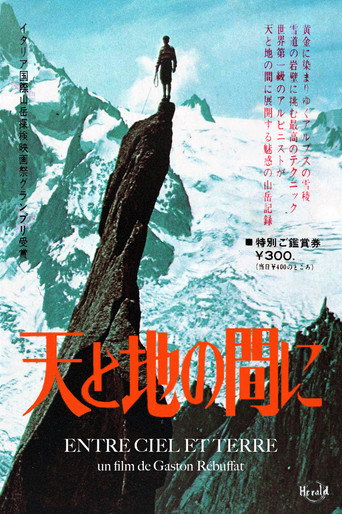
Entre Terre et Ciel
This is Gaston Rebuffat's fourth film, in which, with several close friends, he discovers the sublime landscapes of the Alps. “Mont-Blanc is beautiful. I climbed it several times depending on the time, the color of the sky and the shape of the cornices and ridges. Because of the weather and also because of this feeling of altitude, Mont-Blanc provides great pleasure. For the guide, Mont Blanc is his garden, but the garden becomes more beautiful when shown to a friend. Personally, I really like the bivouacs; only there one penetrates a little the mystery of the altitude. That's why I immediately accepted when Tazieff expressed the desire to spend the night at the top of Mont Blanc in an igloo. The film won the Grand Prix at the Trento Film Festival in 1961.
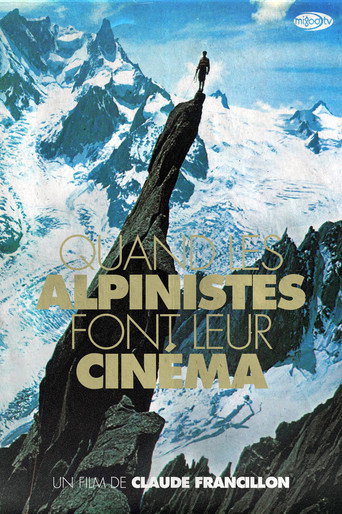
When the Mountaineers Make Their Cinema
Many mountaineers as part of their activity have used cameras and films to allow us to participate through images in their adventures and their emotions. Many of them have become true film professionals: Joseph Vallot, Lionel Terray, Marcel Ichac, Renè Vernadet, Jean Afanasieff, Pierre Royer, Denis Ducroz, Kurt Diemberg and many others are among the conquerors of the image of the mountain. The film depicts the passion of these men on the highest mountains in the world... behind the lens.
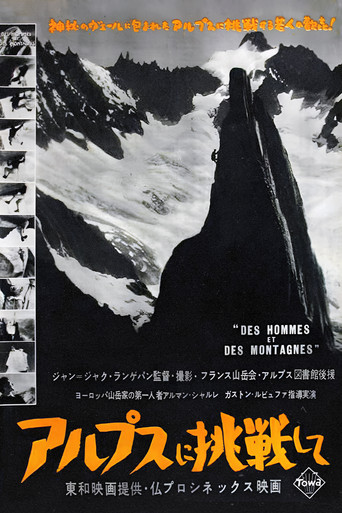
Des Hommes Et Des Montagnes
History, advice and demonstrations of mountaineering in the Mont Blanc massif by the renowned guides of the National School of Ski and Mountaineering from Chamonix. The film starts with an historical summary illustrating the aspirations and methods that lead man to conquer the mountains. Armand Charlet teaches mountaineering techniques and takes his students to the field for glacier or rock exercises. Gaston Rebuffat makes demonstrations of particularly dangerous climbs. At altitude, people move in solitude, cold and silence, like circus acrobats without spectators, but nothing stops the modern mountaineer.
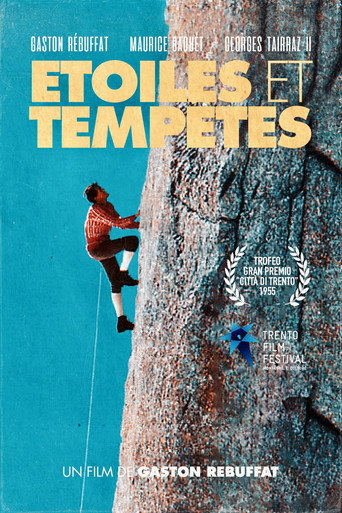
Stars and Storms
Gaston Rébuffat is part of the history of mountaineering. Marseillais prodigy, high mountain guide of the Chamonix guide company and famous for the ascent of the most famous north faces: some are 1st rehearsals, others 1st French or 1st as a guide. Filmed by Georges Tairraz, this masterpiece released in 1955 reveals the beauty of effort and the pleasure of sharing in the mountains. Apart from the feat, the mountains are not there to satisfy egocentric ambitions. A classic !
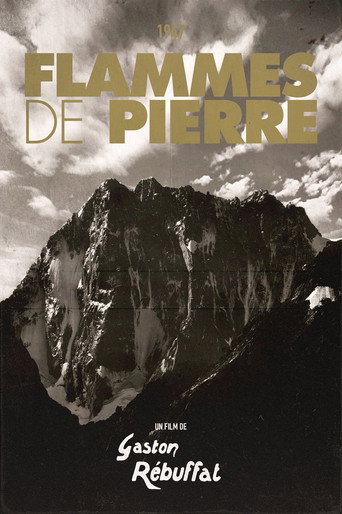
Flammes De Pierres
"Flammes de Pierre" is the first documentary made by Gaston Rébuffat himself in 1947. It depicts Rébuffat in full ascent of the Flammes De Pierre, wild ridges in the heart of the Mont Blanc massif overlooking Chamonix. Like Roger Frison-Roche, Walter Bonatti, René Desmaison or Giusto Gervasutti, Gaston Rébuffat has written and filmed the great pages of contemporary mountaineering but above all, he knew how to talk about it with enough poetry so that it is not simply airtight race stories for spectators. Stories that have been triggers for many readers, who have come to know “stone flames” thanks to him.
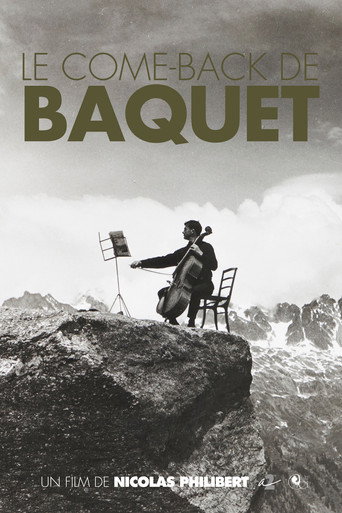
Baquet's Comeback
July 1956: like every summer, the actor and cellist Maurice Baquet temporarily deserts the stage and the cinema studios to go to Chamonix where the mountaineer Gaston Rebuffat is waiting for him. A few days later, the two men achieved a historic first, that of the south face of the Aiguille du Midi (3,842 m), a magnificent wall rising like a rampart above the Vallée Blanche. July 1988: to pay tribute to the memory of his friend Gaston, now deceased, Maurice Baquet once again climbed this wall suspended between heaven and earth with the man who, 50 years his junior, is considered one of his best contemporary mountaineers: Christophe Profit.
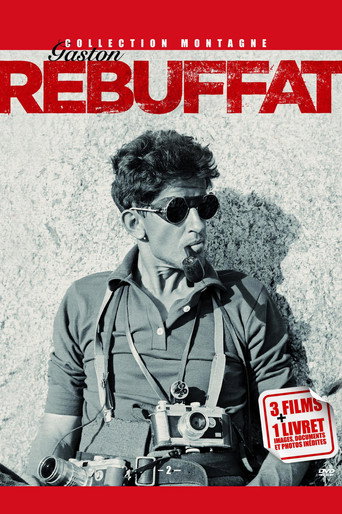
The World of Gaston Rébuffat
The World of Gaston Rébuffat is a documentary on mountaineering which takes place at Gendarme Du Pic Du Roc and Grande Candelle. Directed by Gilles Chappaz in 2009 and produced by Seven Doc, we find Christophe Profit, Françoise Rébuffat, Thierry Renault, Jean-Olivier Majastre, René Vernadet, Sam Beaugey and many others. Friendship of his rope companions, friendship of the mountain, friendship of all of nature, he spoke of the mountain with simplicity and happiness. A precursor, a visionary, Gaston Rébuffat was a resolutely committed person, without ever having spoken of an exploit, let alone a fight (among other achievements, he was the first to climb the six north faces of the Alps in a lifetime as a mountaineer).
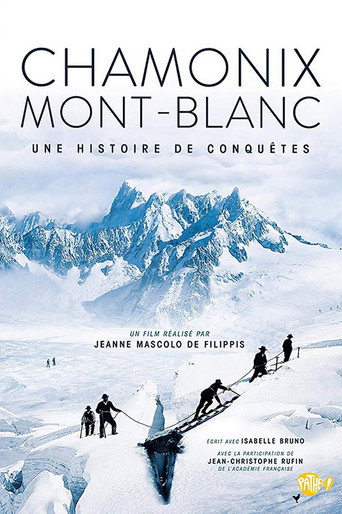
Chamonix - Mont Blanc, Une histoire de conquêtes
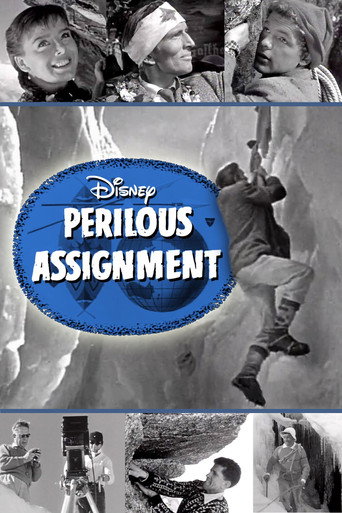
Perilous Assignment
"Perilous Assignment" is an episode of ABC's Walt Disney Presents. Disney loved to show viewers behind the scenes of the daring shoots of its theatrically released or TV shows. The theme of the episode is the making of his next film, The Third Man on the Mountain, an adaptation of James Ramsey Ullman's novel Banner in the Sky, based on the true story of the first ascent of the Matterhorn. Walt Disney will not be limited to a simple promotional making-of. He offers to meet exceptional people, including the French mountain guide Gaston Rébuffat. The latter will show climbing techniques and then reveal breathtaking images of his ascents of steep cliffs with a client for the ascent of Mont-Blanc, filmed for the occasion. In 1958, Walt Disney will therefore offer him to be deputy director on the high mountain scenes of the film "The Third Man on the Mountain".
Production
Les Horizons Gagnés
The guide Gaston Rébuffat, shares with us his view of his job and the nature that surrounds him by showing us some beautiful climbs made with friends, noting the importance of the friendship of the rope party. Born near the Calanques, he could have been a sailor, like him linked to storms and the stars. We follow him with Edwin Mattews (USA) in their ascent of the Barre des Ecrins, then in La Meije. Accompanied by Jean Juge (Switzerland), in the Mont Blanc Massif, for a crossing of the Aiguilles de Chamonix. With his Italian friend Lino Donvito, he climbs the Torre de Vijolet in the Dolomites. Then with Massulu Suzuki (Japan) in the Mont Blanc massif (Rochefort ridges, Dent du Géant via the south face). Christian Ringeval (France) accompanies him for an ascent of Vignemale. And finally return to the Mont Blanc massif, to the Grand Capucin (Bonatti route) with Konrad Krirch.
Stars and Storms
Gaston Rébuffat is part of the history of mountaineering. Marseillais prodigy, high mountain guide of the Chamonix guide company and famous for the ascent of the most famous north faces: some are 1st rehearsals, others 1st French or 1st as a guide. Filmed by Georges Tairraz, this masterpiece released in 1955 reveals the beauty of effort and the pleasure of sharing in the mountains. Apart from the feat, the mountains are not there to satisfy egocentric ambitions. A classic !
Entre Terre et Ciel
This is Gaston Rebuffat's fourth film, in which, with several close friends, he discovers the sublime landscapes of the Alps. “Mont-Blanc is beautiful. I climbed it several times depending on the time, the color of the sky and the shape of the cornices and ridges. Because of the weather and also because of this feeling of altitude, Mont-Blanc provides great pleasure. For the guide, Mont Blanc is his garden, but the garden becomes more beautiful when shown to a friend. Personally, I really like the bivouacs; only there one penetrates a little the mystery of the altitude. That's why I immediately accepted when Tazieff expressed the desire to spend the night at the top of Mont Blanc in an igloo. The film won the Grand Prix at the Trento Film Festival in 1961.
Des Hommes Et Des Montagnes
History, advice and demonstrations of mountaineering in the Mont Blanc massif by the renowned guides of the National School of Ski and Mountaineering from Chamonix. The film starts with an historical summary illustrating the aspirations and methods that lead man to conquer the mountains. Armand Charlet teaches mountaineering techniques and takes his students to the field for glacier or rock exercises. Gaston Rebuffat makes demonstrations of particularly dangerous climbs. At altitude, people move in solitude, cold and silence, like circus acrobats without spectators, but nothing stops the modern mountaineer.
Des Hommes Et Des Montagnes
History, advice and demonstrations of mountaineering in the Mont Blanc massif by the renowned guides of the National School of Ski and Mountaineering from Chamonix. The film starts with an historical summary illustrating the aspirations and methods that lead man to conquer the mountains. Armand Charlet teaches mountaineering techniques and takes his students to the field for glacier or rock exercises. Gaston Rebuffat makes demonstrations of particularly dangerous climbs. At altitude, people move in solitude, cold and silence, like circus acrobats without spectators, but nothing stops the modern mountaineer.
Les Horizons Gagnés
The guide Gaston Rébuffat, shares with us his view of his job and the nature that surrounds him by showing us some beautiful climbs made with friends, noting the importance of the friendship of the rope party. Born near the Calanques, he could have been a sailor, like him linked to storms and the stars. We follow him with Edwin Mattews (USA) in their ascent of the Barre des Ecrins, then in La Meije. Accompanied by Jean Juge (Switzerland), in the Mont Blanc Massif, for a crossing of the Aiguilles de Chamonix. With his Italian friend Lino Donvito, he climbs the Torre de Vijolet in the Dolomites. Then with Massulu Suzuki (Japan) in the Mont Blanc massif (Rochefort ridges, Dent du Géant via the south face). Christian Ringeval (France) accompanies him for an ascent of Vignemale. And finally return to the Mont Blanc massif, to the Grand Capucin (Bonatti route) with Konrad Krirch.
Entre Terre et Ciel
This is Gaston Rebuffat's fourth film, in which, with several close friends, he discovers the sublime landscapes of the Alps. “Mont-Blanc is beautiful. I climbed it several times depending on the time, the color of the sky and the shape of the cornices and ridges. Because of the weather and also because of this feeling of altitude, Mont-Blanc provides great pleasure. For the guide, Mont Blanc is his garden, but the garden becomes more beautiful when shown to a friend. Personally, I really like the bivouacs; only there one penetrates a little the mystery of the altitude. That's why I immediately accepted when Tazieff expressed the desire to spend the night at the top of Mont Blanc in an igloo. The film won the Grand Prix at the Trento Film Festival in 1961.
Flammes De Pierres
"Flammes de Pierre" is the first documentary made by Gaston Rébuffat himself in 1947. It depicts Rébuffat in full ascent of the Flammes De Pierre, wild ridges in the heart of the Mont Blanc massif overlooking Chamonix. Like Roger Frison-Roche, Walter Bonatti, René Desmaison or Giusto Gervasutti, Gaston Rébuffat has written and filmed the great pages of contemporary mountaineering but above all, he knew how to talk about it with enough poetry so that it is not simply airtight race stories for spectators. Stories that have been triggers for many readers, who have come to know “stone flames” thanks to him.
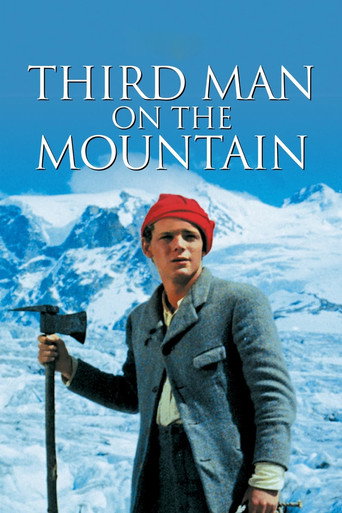
Third Man on the Mountain
Famous British mountaineer Winter wants to climb a difficult summit, the Citadel. He goes to a small village but no guide wants to accompany him. A young man from the village, Rudi Matt, whose father died fifteen years earlier during an attempt to climb the Citadel, is determined to accompany him, with the help of his uncle. Winter also manages to hire a guide from a neighboring village and competitor, Emil Saxo. The roped party of four men then begins the ascent of the still untouched summit.
Gallery