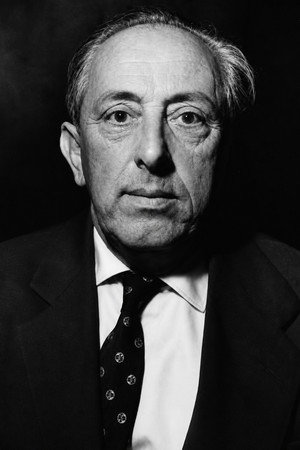
Géza von Cziffra Movies, TV Shows, and Filmography
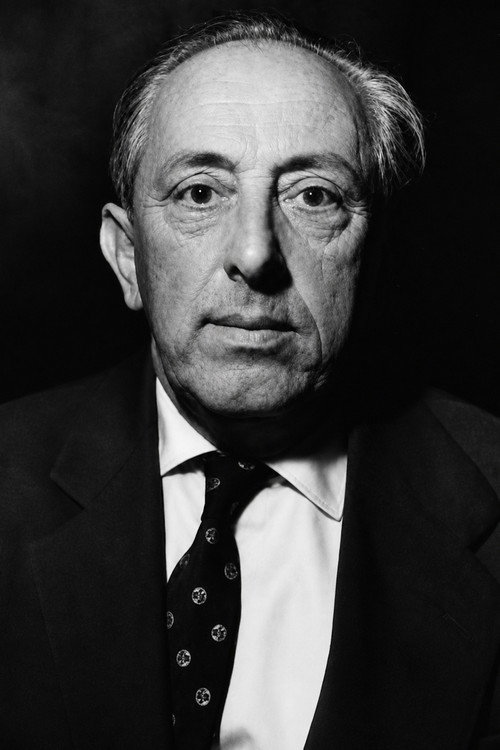
Géza von Cziffra
Directing
Biography
Géza von Cziffra (19 December 1900 – 28 April 1989) was a Hungarian and Austrian film director and screenwriter. Cziffra was a Banat German in origin, born in 1900 in Arad in the Banat region, at that date in the Kingdom of Hungary, now in Romania. Cziffra made films from the 1930s onwards, at first in Hungary, and from 1936 in Germany as well, where he was initially more active as a screenwriter. In 1945, in Prague, then occupied by the Germans, he made the film Leuchtende Schatten ("Glowing Shadows"). As adviser for the criminal police, he was assigned SS-Sturmbannführer Eweler, a member of the SD and brother of the actress Ruth Eweler. After some time, Cziffra banned Eweler from the studios for excessive and obstructive criticism. Shortly afterwards, he was arrested and taken to the Prague Gestapo Headquarters in the Pecec Palace, where he was accused of having eaten several times in the Czech restaurant "Neumann" without using ration stamps. He was eventually dispatched to Pankrác Prison, the remand and interrogation prison of Prague, and sentenced to six months' imprisonment, beginning on 12 February. He was released from detention on 19 April, shortly before the end of the war. In 1945, in Vienna, Cziffra founded the first post-war Austrian film production company: Cziffra-Film. Principally, and for preference, he made light entertainment and musical films, with well-known German and Austrian actors such as Peter Alexander, Rudolf Platte, Senta Berger and Hubert von Meyerinck. Through the input of musicians like Bill Ramsey or Bully Buhlan, the films mostly progressed to being musical revues with a local Austrian slant and flavour (Heimatfilme). Cziffra also worked as an actor himself, and later in his life published a number of books. He was married to the actress Ursula Justin, who starred in six of his films in the 1950s. He died on 28 April 1989 in Diessen am Ammersee in Bavaria. His remains are interred in the crematorium in the Ostfriedhof, Munich.
Filmography Movies

Production
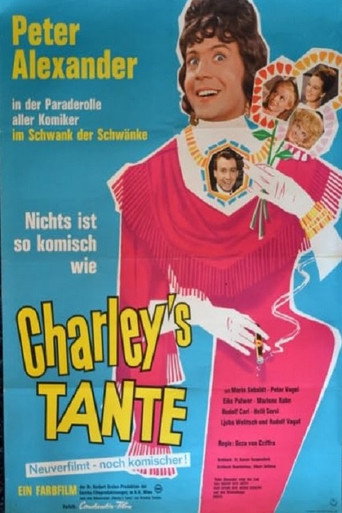
Charley's Aunt
An Austrian version of the famous farce Charley's Aunt. A man impersonates his own aunt.
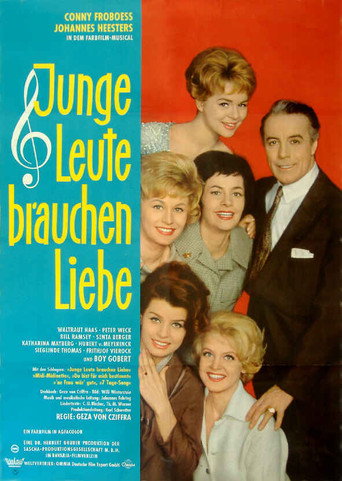
Junge Leute brauchen Liebe
The pretty young seamstress Annie works in the home of the famous Viennese fashion czar Charles Fürst. Hoping to one day win Her Majesty, as Fürst is known, Annie rejects all advances from jazz trumpeter Axel. Her efforts are vindicated when she mistakenly receives an invitation to a royal dinner and is allowed to accompany Charles on a business trip to Paris. But in the city of love, her hopes are abruptly dashed.
Junge Leute brauchen Liebe
The pretty young seamstress Annie works in the home of the famous Viennese fashion czar Charles Fürst. Hoping to one day win Her Majesty, as Fürst is known, Annie rejects all advances from jazz trumpeter Axel. Her efforts are vindicated when she mistakenly receives an invitation to a royal dinner and is allowed to accompany Charles on a business trip to Paris. But in the city of love, her hopes are abruptly dashed.
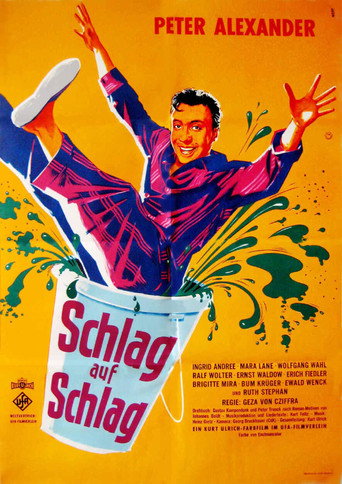
Schlag auf Schlag
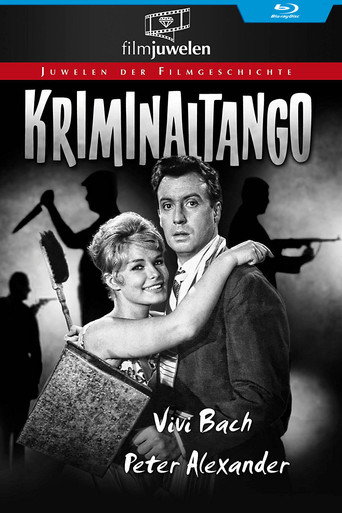
Kriminaltango
Peter, a young, bankrupt homeowner, wants to sell his house and move in with his aunt Agathe in the countryside. In the meantime, his friend Albert and his niece Inge are supposed to guard the house. When he learns that the three crooks Boxer-Franz, Taschen-August, and Klau-Maxe are already living there, he breaks into his own house, where he encounters the three burglars, who mistake him for a "colleague." The crooks expect him to pretend to be the homeowner and want to keep the proceeds for themselves.
Kriminaltango
Peter, a young, bankrupt homeowner, wants to sell his house and move in with his aunt Agathe in the countryside. In the meantime, his friend Albert and his niece Inge are supposed to guard the house. When he learns that the three crooks Boxer-Franz, Taschen-August, and Klau-Maxe are already living there, he breaks into his own house, where he encounters the three burglars, who mistake him for a "colleague." The crooks expect him to pretend to be the homeowner and want to keep the proceeds for themselves.
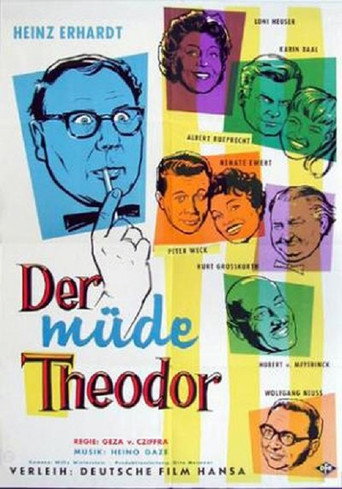
Der müde Theodor
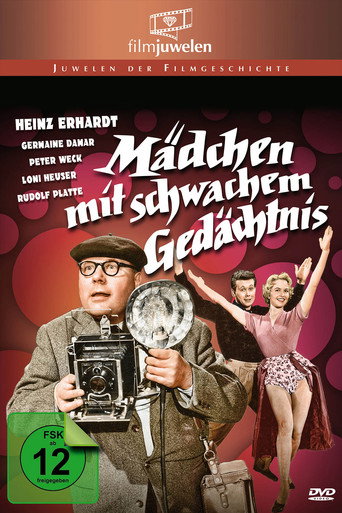
Mädchen mit schwachem Gedächtnis
Anny arrives in Munich to start a career as an actress, but soon ends up without money and job, sleeping on a park bench. When the police picks her up, she pretends to have amnesia and is taken to the police station. There she's surprised to get presented to her alleged parents. Not knowing yet what kind of game they play, she goes home with them and lets the rich couple coddle her.
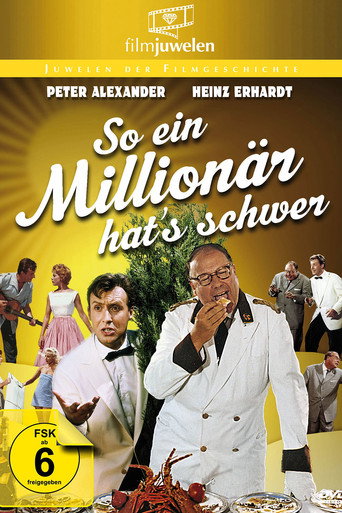
So ein Millionär hat's schwer
Edward Collins wants nothing more than to live a modest life. But as a millionaire with a luxurious villa, chauffeur, and everything his heart desires, women are desperately after him. This time, however, Edward wants to play it safe and, together with his devoted butler, Alfons Heinz Erhardt, hatches a plan. The sweet waitress Ninette Germaine Damar, whom he meets by chance, tells Edward that he is completely penniless. Ninette promptly gets him a temporary job as a parking attendant. But that's only when the complications really begin.
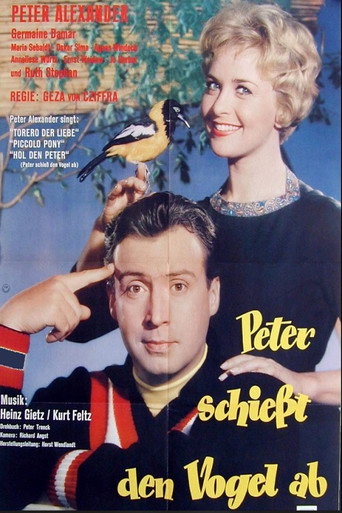
Peter schießt den Vogel ab
Peter schießt den Vogel ab is a German film comedy first released in 1959.
Gallery