Gérard Oury Movies, TV Shows, and Filmography
Gérard Oury
Directing
Biography
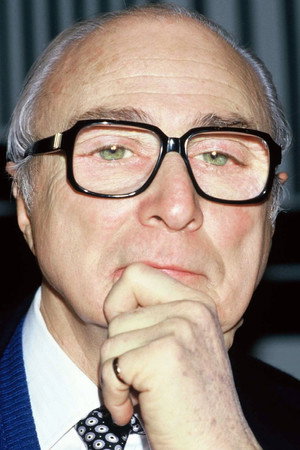
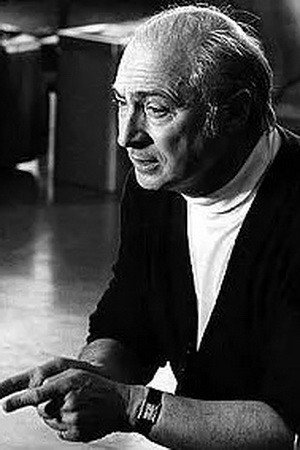
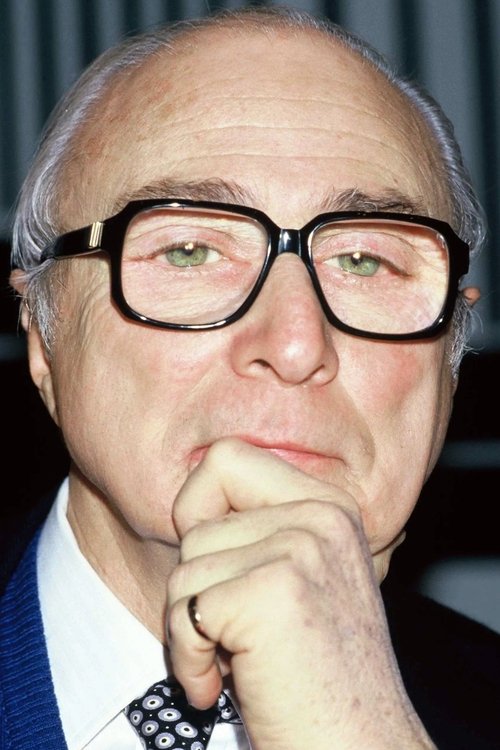
Gérard Oury (born Max-Gérard Houry Tannenbaum; 29 April 1919 – 20 July 2006) was a French film director, actor and writer. He is best known for a number of comedies he directed and co-wrote between the 1960s and 1980s, most notably The Sucker (1965), Don't Look Now... We're Being Shot At! (1966), The Brain (1969), The Mad Adventures of Rabbi Jacob (1973), and Ace of Aces (1982). Max-Gérard Houry-Tannenbaum was the only son of Serge Tannenbaum, a violinist of Russian-Jewish origin, and French Jewish Marcelle Houry, a journalist and art critic. Tannenbaum was absent from the life of Oury and he was raised in an unobservant house of his mother and maternal grandmother Berthe Goldner. Oury studied at the Lycée Janson de Sailly and then at the National Conservatory of Dramatic Art. He became a member of the Comédie-Française before World War II, but fled with all his family (mother, grandmother and unofficial wife, actress Jacqueline Roman) to Switzerland to escape the anti-Jewish persecutions by the Vichy government. When in 1942 his daughter Danièle Thompson was born, his fatherhood was concealed, to avoid her classification as a Jew. After 1945 he returned to the liberated Paris and restarted his career as an actor, performing in the theatre and in supporting roles in the cinema. Oury became a movie director in 1959 (The Itchy Palm) and gained his first success in 1961 with Crime Does Not Pay (Le crime ne paie pas). Pairing André Bourvil and Louis de Funès as a comic duo, he burst into commercial filmmaking with 1965's The Sucker (Le corniaud). The film was entered into the 4th Moscow International Film Festival. The following year, Don't Look Now... We're Being Shot At! (La Grande Vadrouille) was even more successful, attracting the largest audiences ever in France (17.27 million admissions). This box-office record stood for decades, only surpassed in 1997 by Titanic from James Cameron. Oury shot the 1969 comedy Le Cerveau (The Brain) in English, starring David Niven in the lead role as a criminal mastermind. With actress Jacqueline Roman, he was the father of French writer Danièle Thompson and grandfather of actor/writer Christopher Thompson. He lived together with the French actress Michèle Morgan for the second half of his life. He died aged 87 in Saint-Tropez on 20 July 2006. Source: Article "Gérard Oury" from Wikipedia in English, licensed under CC-BY-SA.
Filmography Movies
Acting
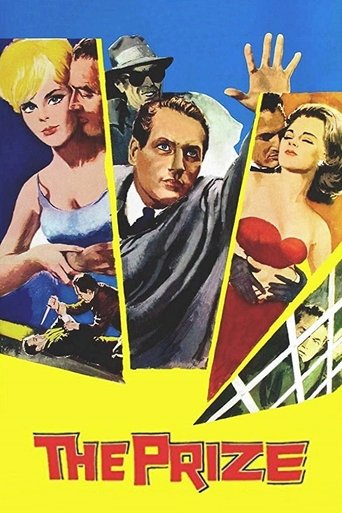
The Prize
A group of Nobel laureates descends on Stockholm to accept their awards. Among them is American novelist Andrew Craig, a former literary luminary now writing pulp detective stories to earn a living. Craig, who is infamous for his drinking and womanizing, formulates a wild theory that physics prize winner Dr. Max Stratman has been replaced by an impostor, embroiling Craig and his chaperone in a Cold War kidnapping plot.
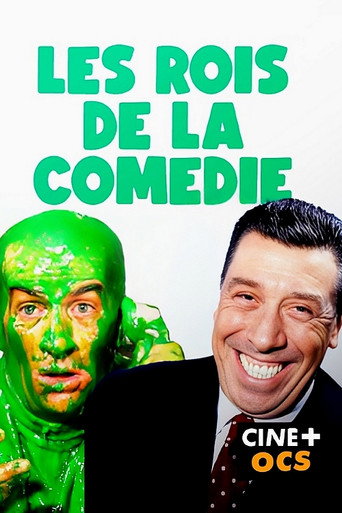
Les Rois de la comédie
At the end of the 1950s, four humor specialists simultaneously experienced recognition. Fernandel with “The Cow and the Prisoner”, Bourvil with “The Hunchback”, Jacques Tati with “My Uncle” and Louis de Funès with “Oscar” at the theater. On the big screen or on stage, each of these artists has a unique style of humor. They are the kings of French comedy. But how did they manage to become true box office champions? How did they experience their immense popularity? How do they still influence the comedy genre? And above all, are- are they funny in life? Where is the line between their character in the cinema and their real personality?
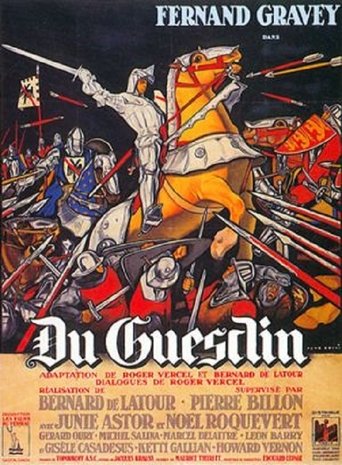
Du Guesclin
A chronicle of the life of Bertrand du Guesclin, grand officer of the French army in the 14th century.
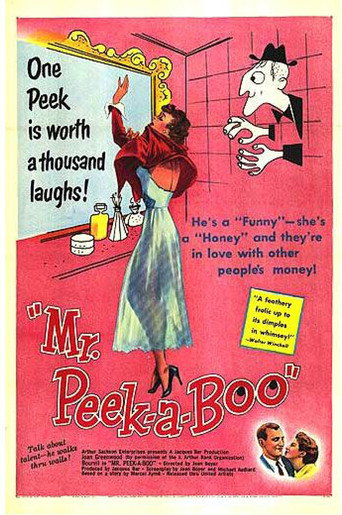
Mr. Peek-a-Boo
Léon, a humble civil servant, has the unusual ability to walk through walls, however thick they are. One day, he falls madly in love with a charming hotel thief by the name of Suzan.
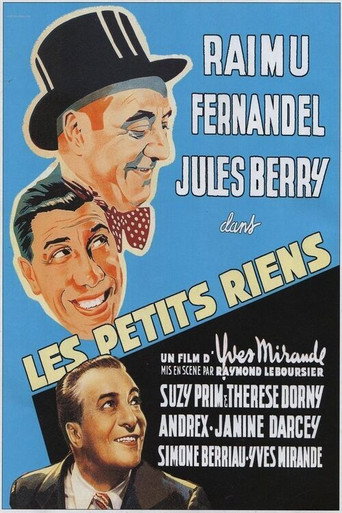
Little Nothings
Following a broadcast on the radio, each of the listeners remembers these "little nothings" (the title is borrowed from a play by Mozart), which have often changed their lives. Each of these stories told will prove that a tiny detail in life can change an entire destiny.
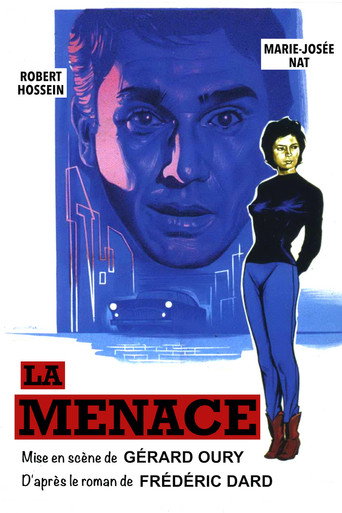
The Menace
Josepha is on the verge eighteen living with her drunken washed up actor uncle. She longs for the companionship of a group of her mo-ped riding peers who dabble in activities on the shady side of a legal dividing line. In order to get the semi-delinquent group to accept her, Josepha runs to the police with a tall tale about the local druggist, Savary. The police are looking for a sex murderer, and Josepha insists Savary is their man. What she does not know, however, can do her considerable damage.
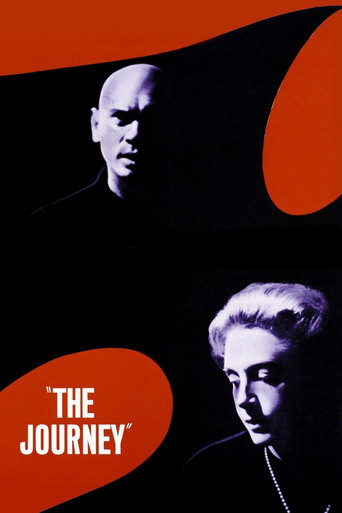
The Journey
A Communist officer falls hard for a married woman trying to escape from Hungary.
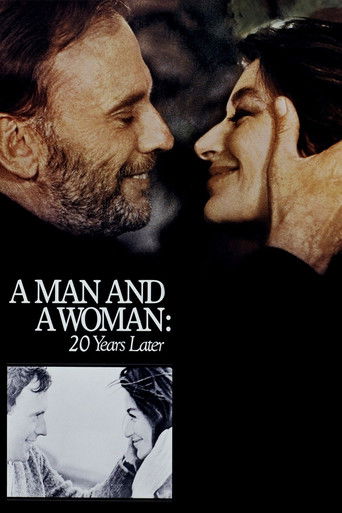
A Man and a Woman: 20 Years Later
Jean-Louis and Anne have had their fling and separated. Now 20 years have passed. He is still dating various women. She is now a big-time director whose most recent film was a very expensive bomb. She comes up with the idea of making a romance based upon her fling with Jean-Louis. She contacts him to gain his permission. Jean-Louis is still in racing and goes away for a desert rally while she begins filming. She finds the mood of their romance difficult to recapture in her film.
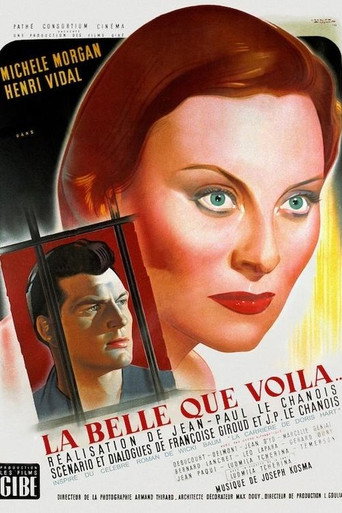
Here Is the Beauty
Melodrama of two struggling artists whose love for each other is thwarted.She has some success as a ballerina despite being wounded by him in a fit of jealousy. His career as a sculptor is stymied when he is arrested.
Production
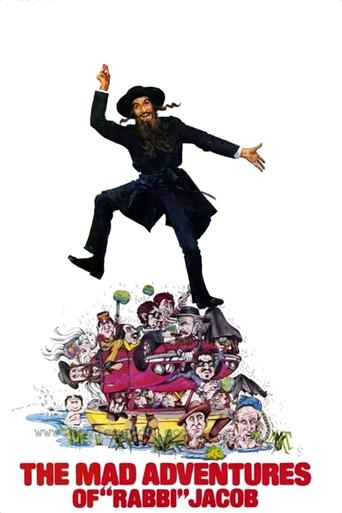
The Mad Adventures of Rabbi Jacob
In this riot of frantic disguises and mistaken identities, Victor Pivert, a blustering, bigoted French factory owner, finds himself taken hostage by Slimane, an Arab rebel leader. The two dress up as rabbis as they try to elude not only assasins from Slimane's country, but also the police, who think Pivert is a murderer. Pivert ends up posing as Rabbi Jacob, a beloved figure who's returned to France for his first visit after 30 years in the United States. Adding to the confusion are Pivert's dentist-wife, who thinks her husband is leaving her for another woman, their daughter, who's about to get married, and a Parisian neighborhood filled with people eager to celebrate the return of Rabbi Jacob.
The Mad Adventures of Rabbi Jacob
In this riot of frantic disguises and mistaken identities, Victor Pivert, a blustering, bigoted French factory owner, finds himself taken hostage by Slimane, an Arab rebel leader. The two dress up as rabbis as they try to elude not only assasins from Slimane's country, but also the police, who think Pivert is a murderer. Pivert ends up posing as Rabbi Jacob, a beloved figure who's returned to France for his first visit after 30 years in the United States. Adding to the confusion are Pivert's dentist-wife, who thinks her husband is leaving her for another woman, their daughter, who's about to get married, and a Parisian neighborhood filled with people eager to celebrate the return of Rabbi Jacob.
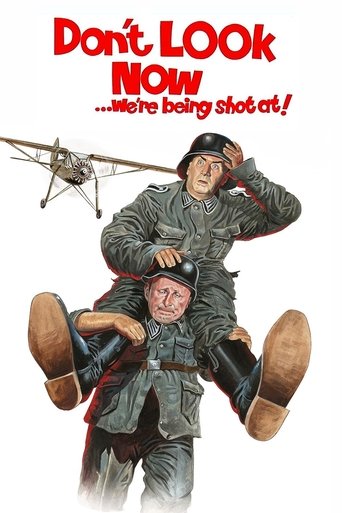
Don't Look Now... We're Being Shot At!
During World War II, two French civilians and a downed British Bomber Crew set out from Paris to cross the demarcation line between Nazi-occupied Northern France and the South. From there they will be able to escape to England. First, they must avoid German troops – and the consequences of their own blunders.
Don't Look Now... We're Being Shot At!
During World War II, two French civilians and a downed British Bomber Crew set out from Paris to cross the demarcation line between Nazi-occupied Northern France and the South. From there they will be able to escape to England. First, they must avoid German troops – and the consequences of their own blunders.
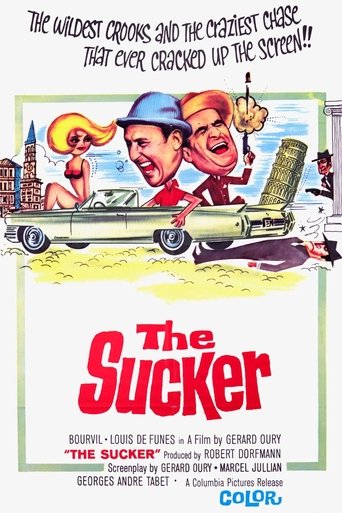
The Sucker
In this Franco-Italian gangster parody, a shopkeeper on his way to an Italian holiday suffers a crash that totals his car. The culprit can only compensate his ruined trip by driving an American friend's car from Naples to Bordeaux, but as it happens to be filled with such contraband as stolen money, jewelry and drugs, the involuntary and unwitting companions in crime soon attract all but recreational attention from the "milieu".
The Sucker
In this Franco-Italian gangster parody, a shopkeeper on his way to an Italian holiday suffers a crash that totals his car. The culprit can only compensate his ruined trip by driving an American friend's car from Naples to Bordeaux, but as it happens to be filled with such contraband as stolen money, jewelry and drugs, the involuntary and unwitting companions in crime soon attract all but recreational attention from the "milieu".
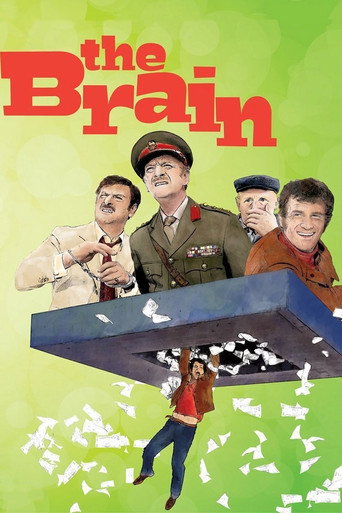
The Brain
Arthur and Anatole are two little robbers. They want to rob money, money that will travel in a special train from Paris to Bruxelles. They don't know that other people have planned to do the same thing.
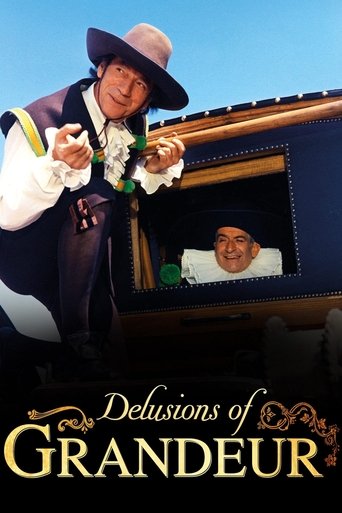
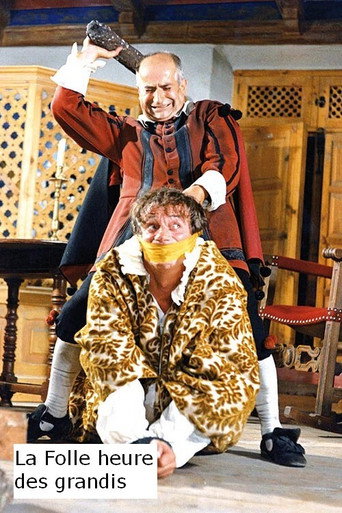
Delusions of Grandeur
Don Sallust is the minister of the King of Spain. Being disingenuous, hypocritical, greedy and collecting the taxes for himself, he is hated by the people he oppresses. Accused by The Queen, a beautiful princess Bavarian, of having an illegitimate child to one of her maids of honor, he was stripped of his duties and ordered to retire to a monastery.
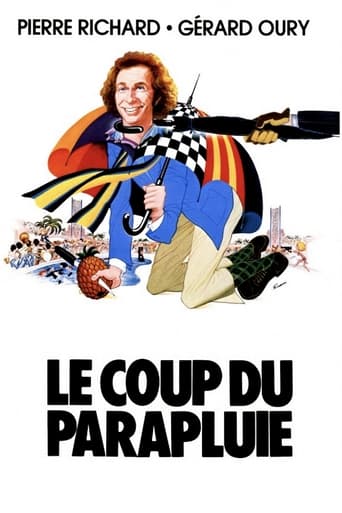
Umbrella Coup
Grégoire Lecomte, the unlucky actor anxious to find a "real job", goes to take a screen test for a role of a killer, but gets to mafiosi by mistake. He takes their don for a producer, and they mistake him for a hitman with whom they had an appointment. Deluded Lecomte signs contract with them. He is supposed to kill gun dealer Otto Krampe at his birthday party in Saint-Tropez by piercing him with a cap of the umbrella with a built-in syringe with potassium cyanide. Lecomte is not aware that it has to be a real murder.
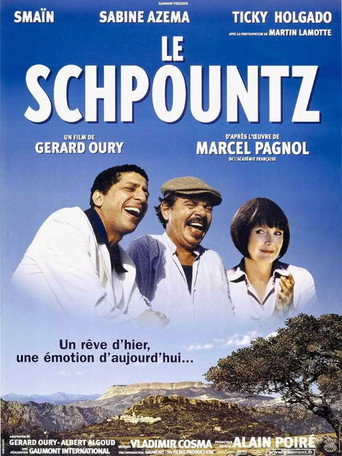
Le Schpountz
Irénée has no desire to work in his uncle's grocery shop and dreams of becoming an actor. His opportunity comes when a crew of movie makers came to his little village. Irénée begins to go over the top in order to be noticed, which earns him the traditional joke reserved to a "Schpountz" (naive person): a phoney contract and a departure for Paris.
Gallery