Gérard Desarthe Movies, TV Shows, and Filmography

Gérard Desarthe
Acting
Biography
No biography available.
Filmography Movies
Acting
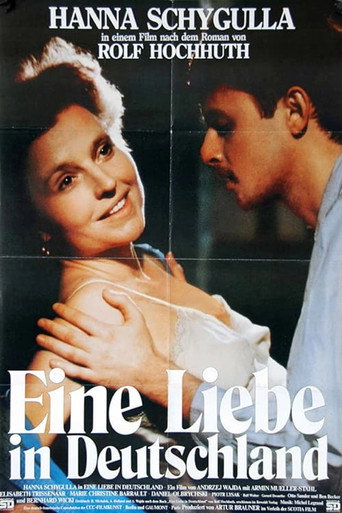
A Love in Germany
In May of 1983, a man turns 49 and, with his 17-year old son, journeys to the village in Baden that he left 40 years before. He wants to discover what happened then, the truth about an affair his mother had with a young Polish prisoner of war, how the authorities came to learn of it, the lovers' arrest, and the aftermath. While his son takes Polaroid photographs, he retraces the steps of his childhood and interviews those who should remember. The story is disclosed in flashbacks that focus on the lovers (Paulina and Stanislaus), on a jealous and conniving neighbor, and on Mayer, the local SS commander who wants to find a way out of inevitable consequences.
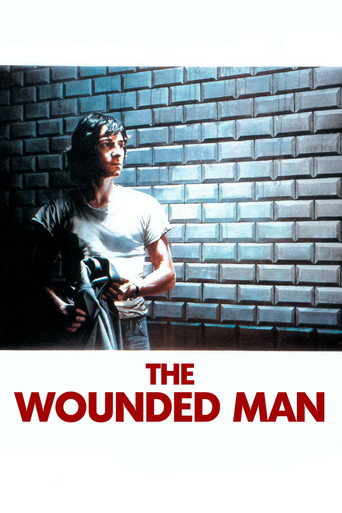
The Wounded Man
A fleeting encounter in a train station draws a withdrawn young man into a shadowy world of desire and danger. As obsession deepens, innocence destroyed, and an irreversible transformation begins.

The Police War
Fush and Ballestrat are the heads of each department of the French police. Both have the task of combating serious crime and cleaning up the underworld.
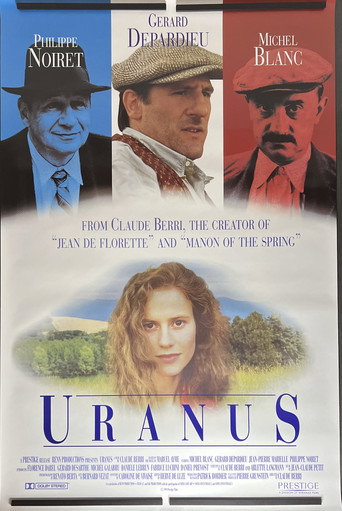
Uranus
After World War II, a small French village struggles to put the war behind as the controlling Communist Party tries to flush out Petain loyalists. The local bar owner, a simple man who likes to write poetry, who only wants to be left alone to do his job, becomes a target for Communist harassment as they try and locate a particular loyalist, and he pushes back.
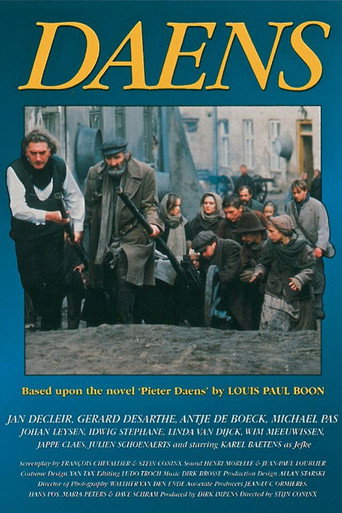
Priest Daens
In the 1890s, Father Adolf Daens goes to Aalst, a textile town where child labor is rife, pay and working conditions are horrible, the poor have no vote, and the Catholic church backs the petite bourgeoisie in oppressing workers. He writes a few columns for the Catholic paper, and soon workers are listening and the powerful are in an uproar. He's expelled from the Catholic party, so he starts the Christian Democrats and is elected to Parliament. After Rome disciplines him, he must choose between two callings, as priest and as champion of workers. In subplots, a courageous young woman falls in love with a socialist and survives a shop foreman's rape; children die; prelates play billiards.

Hecate
Set amid the European community in an unspecified North African country, a colony on the verge of nationalism just before the war. And colonized is what happens to a French diplomat, Julien Rochelle, when he meets the mysterious beauty Clothilde de Watteville. Schmid 's favorite axiom, that love is projection, never had such a thorough airing. Is Clothilde really the wife of a French official now holed up in Siberia? Or is she Hecate, goddess of black magic and devourer of the Arab boys she meets far from the European quarter? Only our projections know for sure; for the rest, she is a "woman looking out into the night." Drawn from a novel by Paul Morand, who based the main character on his wife Helene, Schmid's film achieves an atmosphere of magic in which psychological credibility is not so much absent as irrelevant-a film that distances itself from the drama it invokes, perhaps as the elusive Clothilde turns her back on the madness she provokes.

The French Calvinists
A few years after the revocation of theEdict of Nantes, the Camisards, Protestants from the Cévennes region, mostly peasants and silk workers, formed groups following Gédéon Laporte and fought Louis XIV's dragoons.
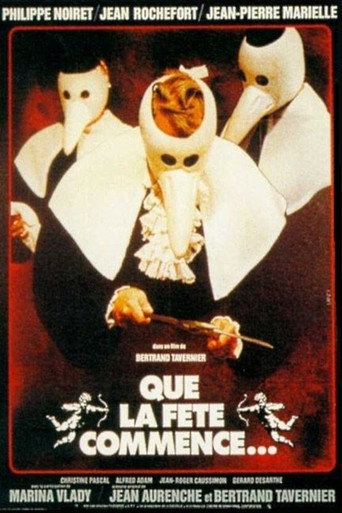
Let Joy Reign Supreme
A look at 18th-century France, when the depravity of the authorities contributed to social oppression, and the uprisings flared up one after another.

Roxana's Hands
Roxana Orlac, a famous violinist, loses the use of her hands in a terrible lift accident. Her career as a virtuoso seems to be over until Professor Christansen offers her a transplant of two new hands. What he omits to tell her is that the two hands in question belonged to a woman who murdered her own children. When unexplained incidents happen, followed by a murder in Roxana's entourage, she starts to wonder whether her new hands may be committing crimes of which she's unaware. Police Capitain Almeida, in charge of the investigation, falls in love with Roxana, but she remains the prime suspect. Is it possible that Roxana's hands are urging Roxana to do terrible things she's not even conscious of? Or is she the victim of some terrible plot?

La Baston
After doing some time in jail, René has finally said goodbye to his criminal past. But when his son is mortally ill and in desperate need of expensive medical help, René can't refuse the offer to crack a safe in a villa. What René and his pals don't know is that they serve as a decoy for criminals who have much bigger plans. Can he escape from the police?
Gallery