Frank-Otto Schenk Movies, TV Shows, and Filmography

Frank-Otto Schenk
Acting
Biography
No biography available.
Filmography Movies
Acting

The Legend of Paul and Paula
Paul and Paula have had bad experiences with love: Paul is financially well off but has lost all affection for his wife, and Paula leads a troublesome life raising two children on her own. They meet and discover a strong passion for each other. Life seems like a dream when they're together - but their short flights from the burdens of reality are once and again interrupted by Paul's ties to family and career.

Verwandte und Bekannte
Using the example of three generations of a Hamburg working class family, the rise of the working class from the founding of the Wilhelmin Empire to the First World War, over the time of the Weimar Republic and National Socialism to the destruction of the Third Reich.
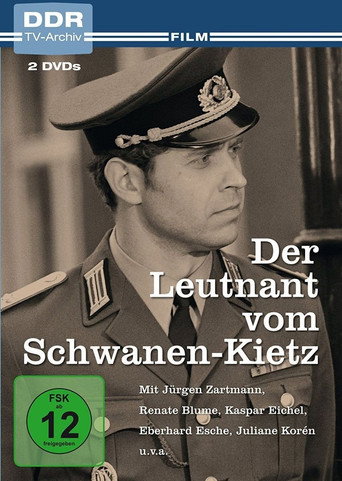
Der Leutnant vom Schwanenkietz
The film describes the activity of an ABV of the People's Police in its section in East Berlin. A mixture of “positive” characters from the beginning, the extensively staged “owl”, who is introduced as a criminal and over the course of time, especially due to the influence of the ABV, develops into a good citizen, and incorrigible characters, with whom the ABV fails with its extensive attempts at rehabilitation and who are arrested after having committed again offenses.
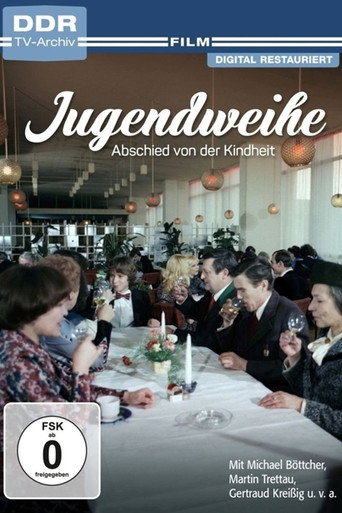
Jugendweihe
Every year in the spring the pupils of the 8th grade in the GDR receive the 'Jugendweihe' and are admitted to the circle of adults. This year, Tim is ready. For him and his classmates, the day begins with a ceremony in the culture house, then he goes with the whole family in a hotel restaurant, to celebrate the event properly.
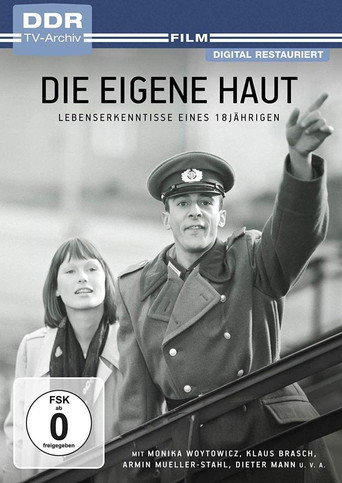
Die eigene Haut
Eighteen-year-old Wolfgang has just passed his A-levels and still has a few months to go before he has to start his military service. Instead of sitting around lazily, he wants to experience something during this time before the serious side of life begins. Wolfgang decides to hitchhike to Poland. There he makes friends with a group of young mountaineers, and Wolfgang's last period of complete freedom begins.
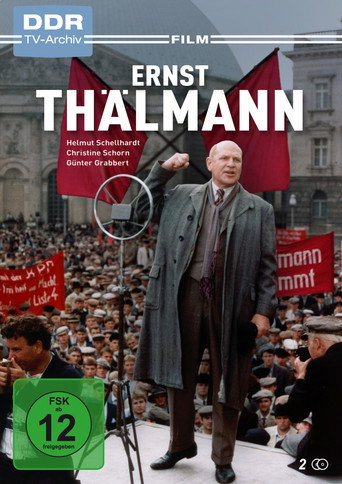
Ernst Thälmann
This elaborate two-part television film features a section from the life of communist worker leader Ernst Thälmann. It begins with the bloody riots on May 1, 1929 in Berlin, in which police officers shot at demonstrating workers, and ends with February 7, 1933, when Thälmann appeared as a speaker at the illegal meeting of the Central Committee of the Communist Party of Germany in goat neck. This period was marked by the struggle of the Communists against the ever stronger National Socialists and the rise of Adolf Hitler.
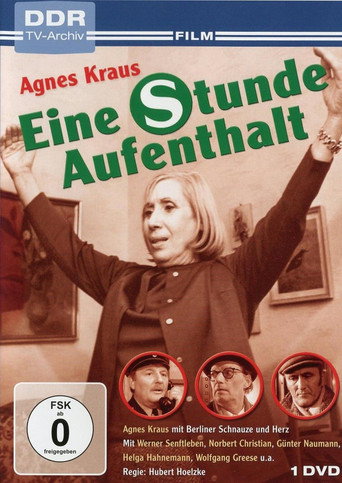
Eine Stunde Aufenthalt
A disruption on the Berlin S-Bahn: passengers have an involuntary one-hour layover at Frankfurter Allee S-Bahn station and use the time to take a closer look at their fellow passengers. Alice Räppel, a native Berliner with a heart and a snout, meets Egon Ziesemaus, who is usually plagued by bad luck. Klaus Fiedler, who wants to leave his family, gets to know the actress Inge, and other passengers also quickly make friends.
Der Weg ins Nichts
In 1923, Judge Böhnsdorf and Inspector Dumke convict 22-year-old Fritz Bondersen of treason, accused of selling military secrets on the testimony of General Director Gotthardt, and sentence him to 15 years in a Zuchthaus. Despite his protestations of innocence, Bondersen can’t produce proof. Two years later, his fiancée Edith Volkmann, aided by journalist Günther Borchert, tracks down a French officer whose eyewitness account could discredit Gotthardt’s statement. Their quest to expose a massive fraud offers Bondersen a final hope for justice.
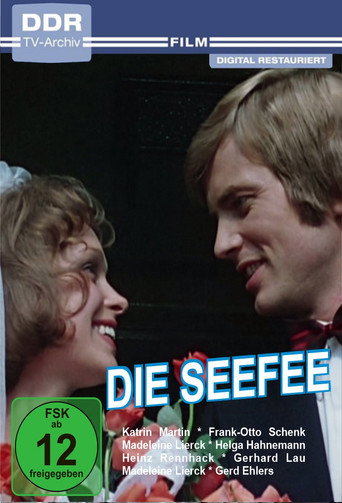
Die Seefee
Ulf would do anything to win Biggi's heart. Because he wants to impress her, he decides to join the sailing club. Despite the mockery of his friends, he is not dissuaded from his plan and spares no effort to make an impression on his beloved. But she only gives him the cold shoulder, whereupon he manipulates her boat. As a result, Biggi ends up in last place in an important regatta race. Both are threatened with expulsion, which is why they have to pull themselves together.
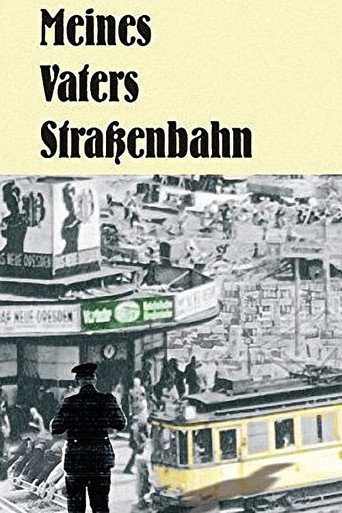
Meines Vaters Straßenbahn
Ralph grows up in pre-war Dresden as the eldest son of a principled and orderly streetcar conductor. With the rise to power of the Nazis, the war, the collapse and the hesitant new beginning, his firmly established middle-class world is also thrown off course. His father is one of the first to be called up to the front. His mother is left alone with the responsibility for Ralph and his younger brother Achim. In the air-raid shelter, during the nights of bombing and later in the daily struggle against misery and hunger, the mother quickly abandons all moral baggage and develops a pragmatic will to survive, for which she admires Ralph. At the same time, the boy is frightened by his mother's desperate claim to happiness because he perceives her affairs as a betrayal of his father, who has gradually faded into a symbol of a happy, carefree childhood.
Gallery