Directing
No biography available.
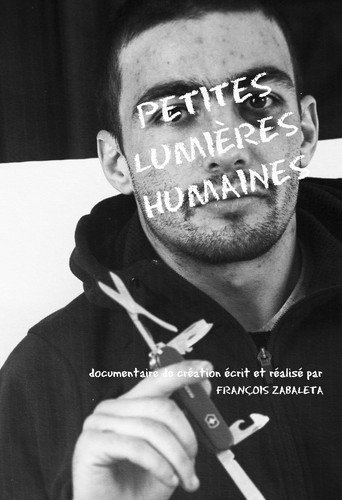
For a few months I investigated. I went to see sedentary people. I asked them to tell me about their life, about the schedule of their days. These are people who spend their lives at home. Whether they have to or not is not important. What matters here is how they cope with their lot what they do with it, don't do with it. How they find or do not find their salvation far from their neighbors.
"As far back as I can remember I've never been hungry". That's how begins the autobiographical story of a man - the movie maker himself - who reports both the anorexia nervosa that he went through as a child, then as a teenager, and the difficult relationship that, as an adult, he's been sustaining with foodstuff, or with the mere act of ingesting solid food.
At that time, we are in seventy-eight. I'm twenty years old. I'm in America, in San Francisco.
These are the last months of a man's life. Quentin Debeaumont. Sixty-one years old. Famous and celebrated writer. He experiences a romantic and sexual passion such as he has never experienced with a sixty-six-year-old man, Pavel Radulescu, a worker of Romanian origin who became a business manager and a fan of Greco-Roman wrestling. At first, he refuses his advances. Whether he is bisexual or homosexual, the question is never resolved. He ends up accepting them but in an unusual, ritualized form.
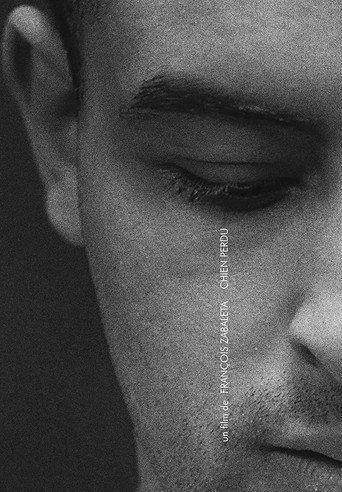
Thomas, an eight-year-old boy, has just been told by his mother who his father is, an American soldier from Oklahoma, stationed in a barracks in Orleans, who has been back home for exactly eight years before he knew he was to become the father of a French child. At the end of 1963, Thomas and his mother flew to America for ten days to meet Richard Walker, his unknown father.
The idea is simple. I went to ask men and women of all ages and from all walks of life to pose for my camera, with their favorite object, with their Rosebud. By way of introduction I told them the following: Choose an object with which you have a special connection. A unique bond. Almost superstitious. An object that represents you. Who would be like your double. An object that participates in your identity. An object that talks about you like no one has ever talked about. An object when you are no longer there that will take the place of you. It doesn't matter what. Regardless of its price, its rating. It may or may not be a work of art. The main thing is the strength of the bond that unites you. Its truth.
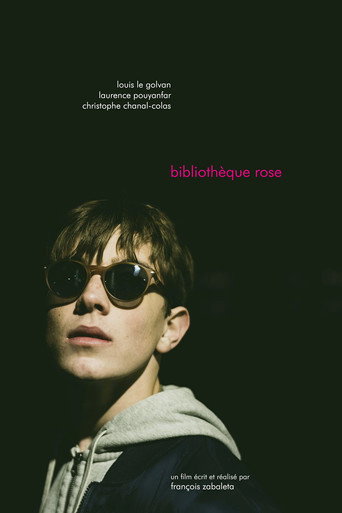
Valentin is a young man, convinced that Bruno, a married man he does not know, is the man of his life. He will do everything, absolutely everything, to convince him to fully live this love story.
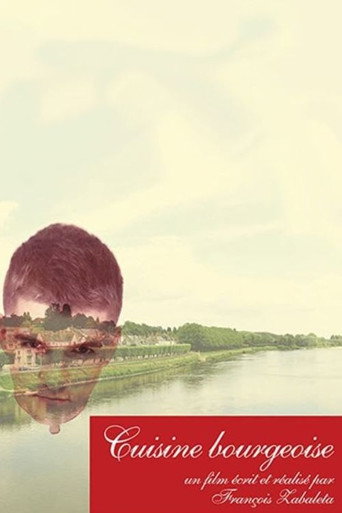
"My husband and I are fifteen years apart. When I met him, I was twenty-one years old. He was thirty-five. For the people of our small town in the center of France, I am a whore. A gigolo. A self-serving little slut." Thus begins Cuisine bourgeoise, which evokes, through the story of social dinners he is forced to attend, the hell of contempt, condescension, and icy ostracism that the local bourgeoisie subjects the narrator of this film, a young homosexual of twenty-one, living in a couple with an older man, in the very small town on the banks of the Loire where his partner is a prominent notable.
A love story in which the third character is a microphone. The other two characters, of course, are people who love each other. One is a man, the other too. The two have loved each other in secret for nineteen years. Yet they only see each other once a year, and only a few days, sometimes a few hours. In order for the miracle of shared feeling to continue, they develop virtual intimacy. Every night they talk to each other. Or rather, they take turns speaking. To address the loved one, he addresses a microphone.
This film is the portrait of a man who has had no luck in life. A man who never had a star, good or bad. This man was my father. What interested me, what motivated my desire to talk about him, is, paradoxically, because I did not know him. Because I know little about the adult man he was. And also because those close to him, his family and friends, only knew what he let them see. When he died one afternoon in August 1975, he was thirty-seven years old and he was starting to get better. He was starting to enjoy life again. That summer we were to spend together. We had to get to know each other. But chance, fate or providence decided otherwise. He was fishing at the edge of a pond. His line hit a high voltage line. His name was Michel. This film is his poetic tomb.