Filipa César Movies, TV Shows, and Filmography

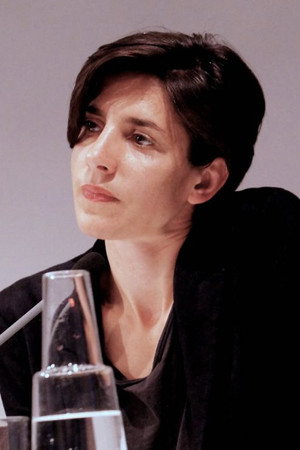
Filipa César
Directing
Biography
Filipa César is an artist and filmmaker interested in the porous boundaries between the moving image and its reception, the fictional dimensions of the documentary and the economies, politics and poetics inherent to cinema praxis. Since 2011, César has been researching the origins of cinema in Guinea-Bissau, developing that research into the collective project Luta ca caba inda (The struggle is not over yet). She was a participant of the research projects Living Archive and Visionary Archive, both organised by the Arsenal - Institute for Film and Video Art, Berlin. Her last film MANGROVE SCHOOL (2022), co-directed with Sónia Vaz Borges, was selected at Cinéma du Réel.
Filmography Movies
Production
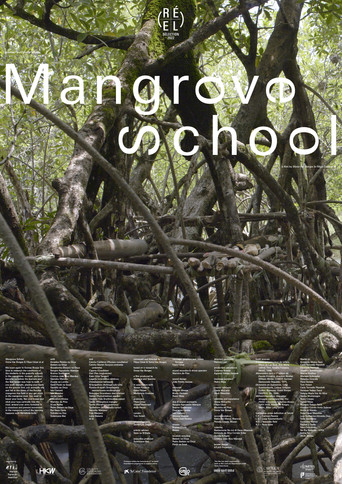
Mangrove School
We went to research the conditions of the students in the guerrilla schools in the mangroves. Instead, we soon became ourselves the learners and the first lesson was how to walk. In the mangrove school the learning happens with the whole body.
Navigating the Pilot School
Often underestimated as such, the anti-colonial wars of liberation were also large scale educational endeavours. Consider the educational strategies pursued by agronomist Amílcar Cabral and the PAIGC. Among those, the Pilot School to form “the best students from our schools in liberated areas, and [to be] integrated in our educational system for the liberated areas”.
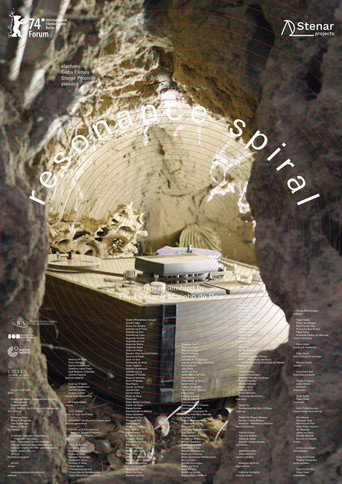
Resonance Spiral
The Mediateca Onshore in Malafo, a village in Guinea-Bissau, is an archive and a club for agropoetic practices. As Amílcar Cabral talks feminism on tape, the directors speak in the mangroves about the contradictions of depicting the community.
Rapport!
Shot during an NLP (neuro-linguistic programming) seminar in Berlin, a group fluxuates between guided meditation and discussion on consciousness and self-acceptance. Neuro-linguistic programming is a set of techniques and beliefs that are used primarily towards personal development. NLP is based on the idea that mind, body, and language create an individual's perception of the world, and an individuals behaviors can be changed by "perceiving and feeling yourself". Rapport focuses on the staging of the self that takes place during this kind of group therapy.
Transmission from the Liberated Zones
The Portuguese colonial past is actualized through performance.
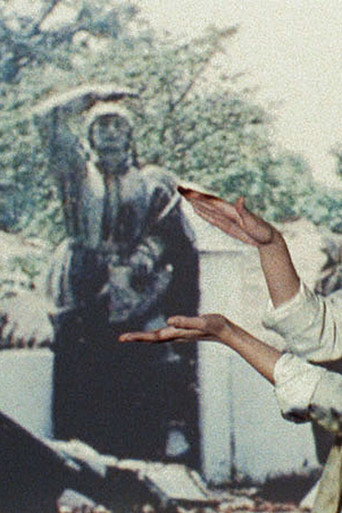
Cacheu
In Cacheu, Filipa César once again applies the economic technique of using a single shot – letting a 16mm film roll to the end – without editing. Here, the montage is a process that takes place before shooting, so that the image produced is the result of a performative assemblage between text, acting, projected image and framing by the cameraman and director of photography, Matthias Biber. A lecture, performed by Joana Barrios, brings together elements of César’s research on four colonial statues, which are stored today at one of the first establishment for slave trade in the West African country of Guinea Bissau – the Cacheu fortresses, constructed by the Portuguese in 1588.
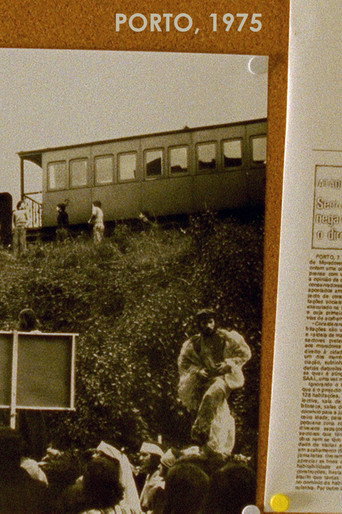
Porto, 1975
In Porto, 1975 the subjective viewpoint of the camera takes us through another emblematic example of Portuguese history from the 1970s, thanks to a single long take lasting the whole duration of a 16 mm reel. Bouça was a social housing project initiated in 1973, just before the end of Salazar’s Estado Novo, and conceived by an architect whose renown would subsequently become international: Álvaro Siza. César’s camera wanders lightly around the housing development, crosses through an apartment and stops in an architecture agency installed in what should have been the nursery school.
Conakry
"Conakry" is a homage to the Guinean-Bissauan and Cape Verdean anti-colonial leader Amílcar Cabral. This poetic film is a single shot 16mm film staged at the Haus der Kulturen der Welt in Berlin and based on the archival images. The film-maker Filipa César, invited the Portuguese writer and artist Grada Kilomba and the American radio activist Diana McCarty to reflect on the images and their history, questioning what these film archive mean in a post-African liberation world.
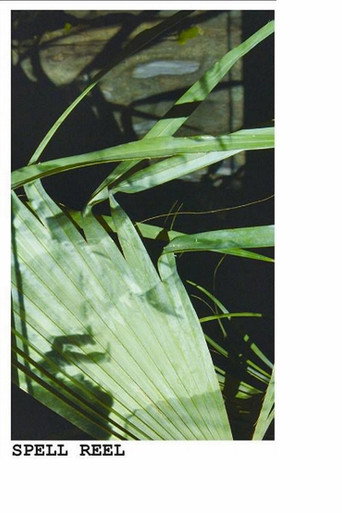
Spell Reel
The first image is in black and white, upside down and projected into a black box that then becomes the frame. It now hovers like a time capsule near a man’s face. He looks down, listening in on a female guerrilla fighter and translating her words from Fulani. Within the capsule, money is counted and paid out as a new currency, the numbers of the years run backwards in the black box. A 16-mm film glides through the man's hands and is transferred to a laptop screen frame by frame.
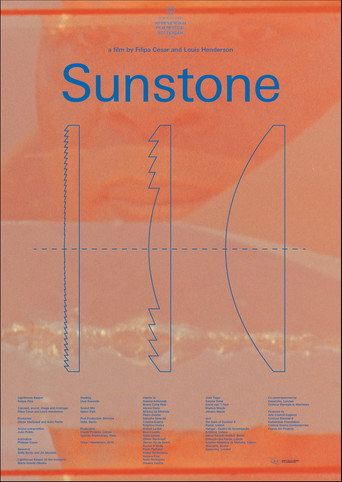
Sunstone
The lighthouse, as a man-made object built to shed light into the dark unknown, encapsulates perfectly the desires of the Enlightenment project of modernity: the domination of nature through reason and intellect, the advancement of technology and trade on a global scale, the illuminatory transparency of European Christian morality – a beacon in the dark. This 'op-film' will be a disorienting and disoccidenting dérive from optical navigation to algorithms of locating – an essay against the grain of Western patterns of referencing and situating. From a film made with lenses and ensitive celluloid to the desktop locating engine, we will navigate from the material production of Fresnel lenses to the invention of global navigation satellite systems (GNSS) – the tool that announces the obsolescence of the lighthouse.
Gallery