Evelyn Cron Movies, TV Shows, and Filmography

Evelyn Cron
Acting
Biography
No biography available.
Filmography Movies
Acting
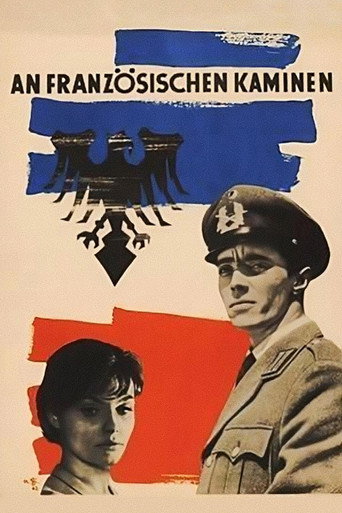
At a French Fireside
Bundeswehr soldier Klaus’ regiment is stationed in France, to take part in NATO maneuvers. The soldiers are ordered to be kind to the populace, since the West German High Command wishes the French to forget the atrocities that were committed during the Second World War. Klaus falls in love with Jeanne, the daughter of the local mayor. He discovers that his commanders intend to demolish the ruins of a local church, in which civilians were murdered by the German occupation forces at 1944. A local journalist who researches the event discovers that West German General Rucker ordered the massacre, but he is mysteriously murdered. Klaus defies his commanding officer Siebert, who instructs him to steal the documents indicting Rucker, and hands the evidence over to Jeanne.
Es geht nicht ohne Liebe
Irene Klaussen, a brilliant, tomboyish Berlin student, falls for new classmate Peter Lemke. To prove herself, she follows him, first to a school dance in a borrowed gown, then to a year’s stint on a remote oil‐plant construction in Granow. Ostracized at first, she wins respect under FDJ secretary Anton by mastering every trade and helping him study for engineering school. After returning to Berlin, she discovers Peter’s infidelity and, disillusioned, goes back to Granow, finding true partnership and purpose with Anton.
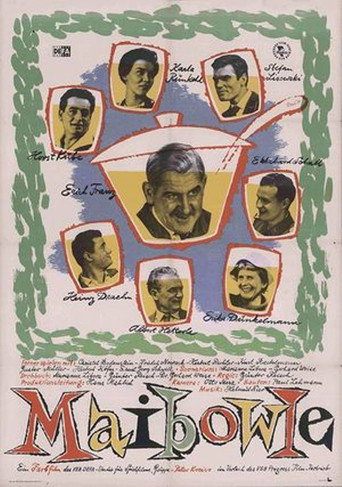
The Punch Bowl
It is the 65th birthday of Wilhelm Lehmann, foreman of a chemical company. All members of the large family are expected. Preparations are also being made in the company: Wilhelm is to be awarded the »Labor banner« and, as every year, the sons are responsible for the may bowl. But instead of family members, telegrams with rejections flutter into the house.
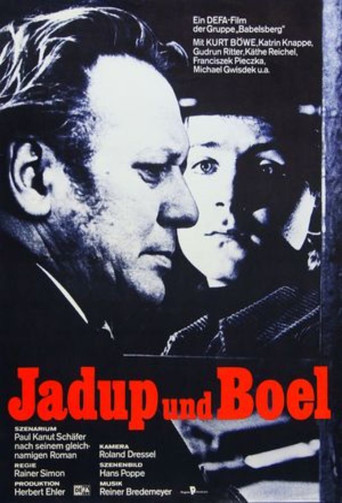
Jadup and Boel
In a small town, everyone has tried to forget what happened shortly after WWII. That is, until a stranger finds a book that Jadup (Kurt Böwe) gave to the young refugee Boel (Katrin Knappe), who resettled in the town over 30 years ago. Painful memories about Boel and the post-war period begin to surface and shake up the whole town. Boel vanished back then and nobody knew why. Word spread about a rape and some tried to blame a Russian soldier. Jadup, the town's respected and popular mayor, remembers, though, how he mistrusted Boel and did not help her through this difficult time; HE didn't even notice THAT Boel loved him. Jadup's confrontation with the past gives him a new, critical view of his current situation and surroundings.
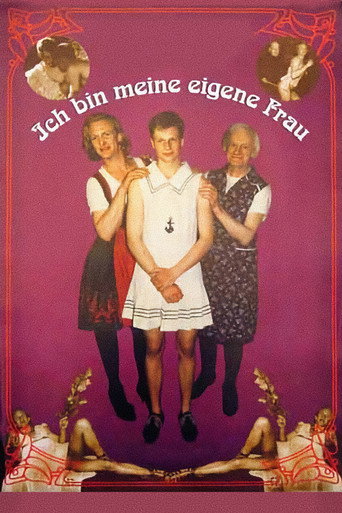
I Am My Own Woman
The life story of Charlotte von Mahlsdorf, who survived the Nazi reign as a trans woman and helped start the German gay liberation movement. Documentary with some dramatized scenes. Two actors play the young and middle aged Charlotte and she plays herself in the later years.

The Beautiful Lurette
The beautiful and charming laundress Lurette is a well sought-after young woman in Ludwig XV’s Paris. Her heart is already taken, however, and she makes elaborate plans during Carnival to obtain the man she truly loves, the carpenter Campistrel. During her plans to make Campistrel jealous and recognize his love for her, she meets the Duke of Marly, who plans to make her his mistress. The unsuspecting Lurette finds herself caught in a love triangle, and her peer, Marcelline, must save the beautiful Lurette from these scandalous schemes.
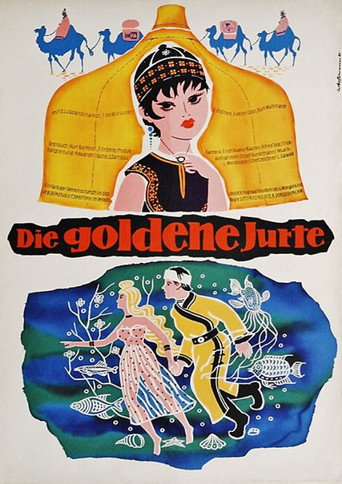
The Golden Ger
Herder Pagwa lives in a hut in a valley of beautiful flowers, where he hoards a mysterious chest whose secret is not revealed even to his three sons. The elder two believe that the chest is filled with gold and precious stones, so they break it open. From then on, water floods the valley, the earth withers and the people and animals start dying of thirst. The youngest son seeks out the wise Arat to ask for advice.
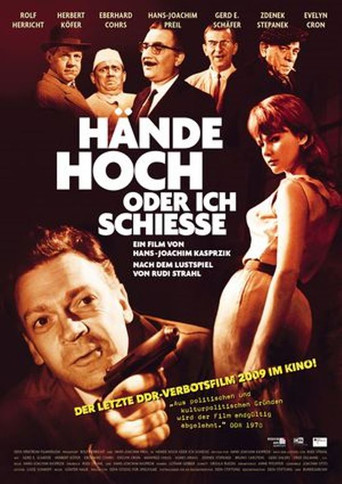
Hände hoch oder ich schieße
Small town policeman Holms suffers from a rather unusual problem: Because of the low crime rate, there is simply not enough to do for him. Deadly bored, he sinks into the depths of depression and requests the help of a psychiatrist. But his imagination is far more effective: In his dreams, he chases gangsters in London. Finally, some small-time crooks find a way to help "their" policeman out of his emotional misery: They steal a memorial from the market square and thus help Holms to a spectacular case.
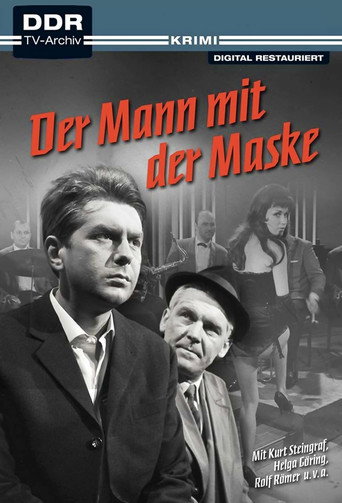
Der Mann mit der Maske
It's Saturday lunchtime in a small town near Munich and there's not much going on. The local bank is already closed, doors and windows are barred. The few passers-by in the main shopping street do not notice that a violent crime is being committed behind these windows. When the police later take up the investigation, a young bank employee becomes the only witness. His statements seem contradictory. And yet it is several other people who now have to struggle with conflicts of conscience. The more gaps in the police's chain of evidence, the more serious the decision to tell the truth and risk their own happiness. It's Saturday lunchtime in a small town near Munich and there's not much going on. The local bank is already closed, doors and windows are barred.
Gallery