Acting
No biography available.
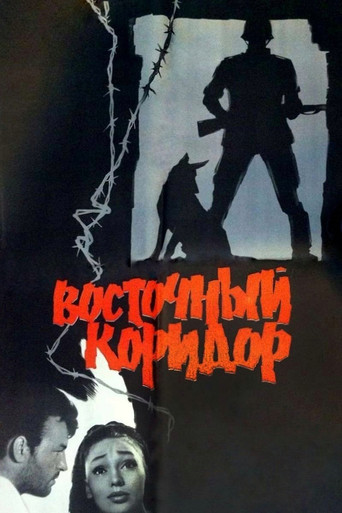
This film is war parabola with expressive visual style. This not typical point of view about the war for Soviet cinema.
Agata is badly ill and nobody knows how to cure her. No doctor can help. Friends of Agata learn, that she is ill, because all children have Grannies but Agata does not. They go to the shop "Electronic Granny" and beg the dealer to sell them one Electronic Granny. The dealer warns them, that her electronic circuits are very sensitive - and this Granny will only work if loved. Agata get healthy and plays with her new Granny and other friends. Granny can invite new games and even fly with all children to the Moon. But later due to the jealousy and bad heabits children forget that they must love Granny, they begin to treat her just as a robot that "must do what they ask". As a result Granny dies. To resurect her Agata and friends must get off their ambitions, rudeness, jealousy and again become loving, cheerful and kind.
A lithuanian village just after the end of the second World War: Neither German nor Russian its inhabitants must, despite their wounds, find new craft to dream of a better future ahead of them.
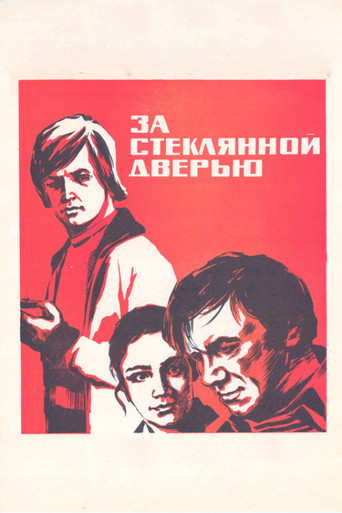
Gunar Berg is studying at the Polytechnic Institute. He is eighteen years old and comes from a well-off family. In order to not be financially dependent on his parents, Gunar decides to work as an orderly at a cardiology clinic. Here, facing human tragedies on a daily basis, Gunar will discover something important...
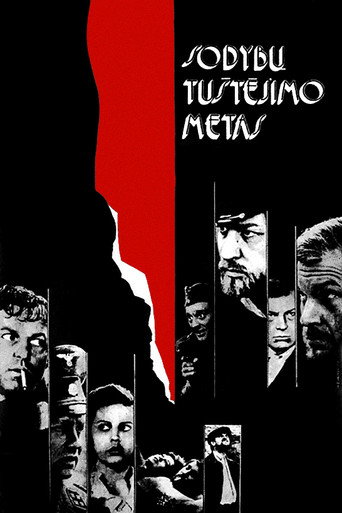
The film covers the events in Lithuania in 1940-1945 and tells about the life of the Lithuanian intelligentsia. The characters are placed in crisis situations, when the problem of choosing a path, the problem of social and historical self-determination of the fate of the people and each person inevitably arises.
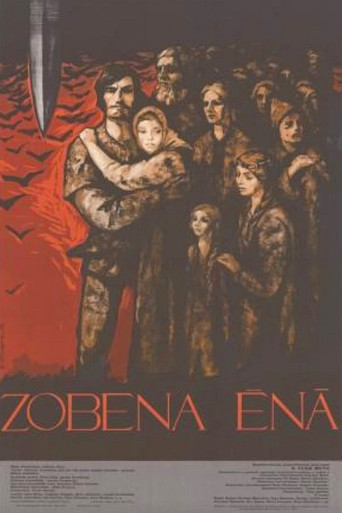
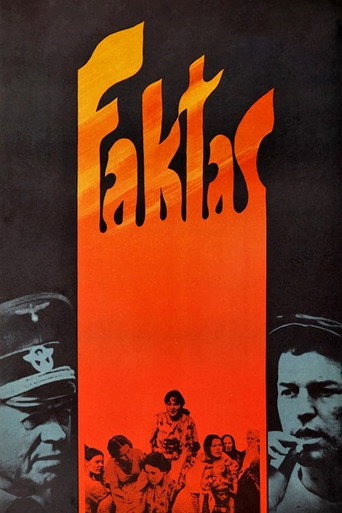
Facts is a dramatization of a massacre in a Lithuanian village during World War II when Nazis rounded up over 100 men, women, and children accused of partisan activity and then torched the houses in which they were held. Using Russian interrogations of a few survivors, the testimony of villagers, and some of the Germans responsible for the killing, the film gradually reconstructs the event and its context.
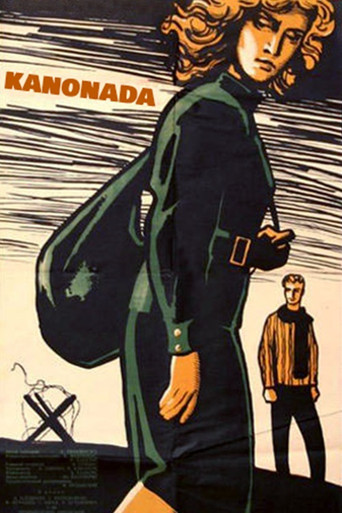
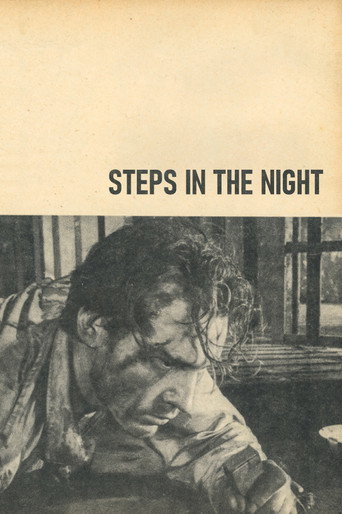
In 1943, Alex, who recently returned to the city of Kaunas, tries to join the anti-Nazi resistance, but is captured and imprisoned. He soon starts planning his escape.
Pranas, now a celebrity singer, returns to his homeland from a big city. He is greeted at the airport and driven to his native village by a childhood friend Jonas, who works there as a doctor.