Acting
No biography available.
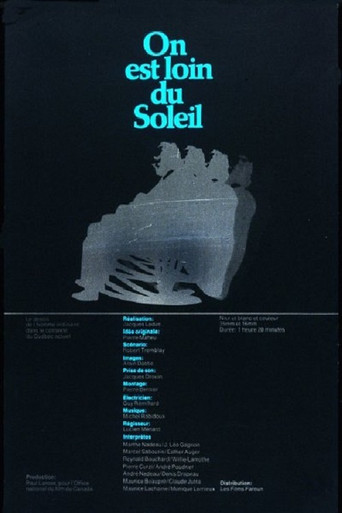
The six members of the working-class Bessette family each mimic a certain stage of the life of the iconic Brother André and are an incarnation of his values and characteristics.
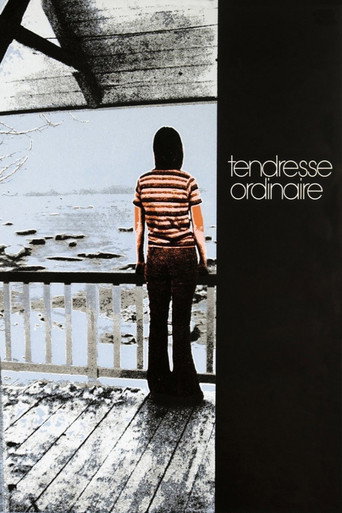
A lonely woman spends the winter isolated and reminiscing about the past as she waits for her husband to return from a prolonged absence.
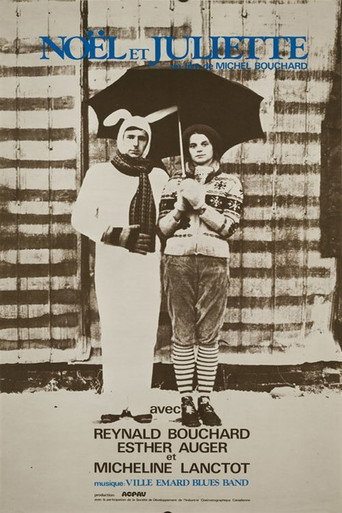
A seemingly idle guy and an unprincipled girl to whom everything seems to come easily will see their lives sealed in a brutal way.
A fact-based account of ordinary citizens who found themselves arrested and imprisoned without charge for weeks during the October Crisis in 1970 Quebec.
A tribute to Indigenous women everywhere, this short documentary focuses on 5 women from across Canada. Of varied ages and backgrounds, they have achieved success in a variety of careers: as the Yukon legislature's first Indigenous woman minister (Margaret Joe), as a deck hand on a fishing boat (Corinne Hunt), as a teacher (Sophie MacLeod), as a lawyer (Roberta Jamieson), and as a band council chief (Sophie May Pierre - St. Mary’s Indian Band of the Ktunaxa Nation off the Ktunaxa Nation).
In this feature documentary, a Haitian, exiled in Canada for twenty years, returns to his country after the departure of Jean-Claude Duvalier. Through his encounters with former friends, professors and colleagues, the face of this newfound Haiti gradually takes shape… Shot in Haiti after the fall of the Duvalier regime, this film, beyond a simple observation, shares with us the hopes of the Haitian people as well as their fears and uncertainties regarding this country that has yet to be built.
The interior delta of the Niger River is a vast region inhabited by a million people. A unique social, political and communal organization has developed over this territory, giving a profound meaning to living together in relation to the movement of the river. The delta is fashioned as much by the immutable alternation of the seasons as by a state of perpetual metamorphosis. A single place can successively accommodate a spawning ground, then a fishing zone.
On a wedding day, women are confined to the kitchen to prepare the meal while the men wait to be served. While men talk politics and sports, women talk about their condition. A teenager observes the gap between the sexes. Co-directed by two actresses, Paule Baillargeon and Frederique Collin, The Red Kitchen is the birth of the Quebec women's cinema. The birth of the film was difficult, and funding has been largely achieved through donations from friends and a benefit concert. This war of the sexes takes place in a demanding formal research, based on the improvisation of the actors, whose preparation took place over long sessions in the workshop. The end result mixes black humour, horror and a very expressive fantasy that gave rise to heated debates.
Produced in 1988, this feature documentary presents a living history of Quebec's last 40 years as seen through the eyes of one couple. Pauline Julien and Gérald Godin, two Quebec artists, share their perspectives on the events that have marked Quebec's evolution. Julien, a singer, and Godin, a poet, express their love and passion for the province (and each other) while providing a unique take on the Quebec nationalist movement.
Alanis Obomsawin, a North American Indian who earns her living by singing and making films, is the mother of an adopted child. She talks about her life, her people, and her responsibilities as a single parent. Her observations shake some of our cultural assumptions.
Exploration of the connections between sex, love and technology.
This feature documentary follows three newly arrived people in Canada and their experiences with the Canadian Refugee process. As claims are assessed and paperwork is double checked, we begin to examine exactly who can be considered a refugee.
Dancing Around the Table: Part One provides a fascinating look at the crucial role Indigenous people played in shaping the Canadian Constitution. The 1984 Federal Provincial Conference of First Ministers on Aboriginal Constitutional Matters was a tumultuous and antagonistic process that pitted Prime Minister Pierre Elliot Trudeau and the First Ministers—who refused to include Indigenous inherent rights to self-government in the Constitution—against First Nations, Inuit and Métis leaders, who would not back down from this historic opportunity to enshrine Indigenous rights. The conference was Pierre Elliott Trudeau’s last constitutional meeting before he resigned and the process was handed over to his successor, Brian Mulroney.
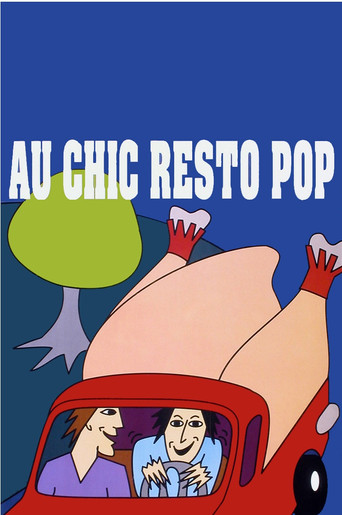
In a poor eastern quarter of Montreal, a restaurant is dedicated for the poors only: le Chic Resto Pop. It used the surplus of some merchants to offer cheap meals. The young people who work there for free get a lot of satisfaction in their work in spite of the difficulties. The movie is build around six songs written by them.