Camera
No biography available.
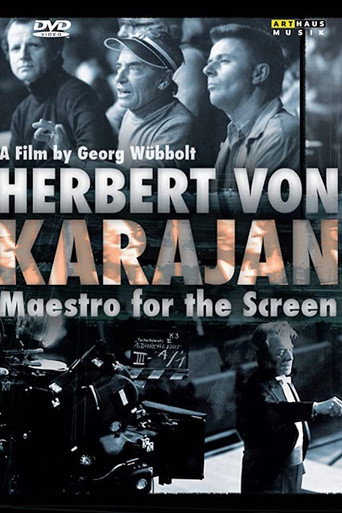
Over twenty-five years after his death in July 1989, the controversial Austrian conductor Herbert von Karajan remains an enigma. He was the most successful conductor in the history of classical music. Many of his recordings - of Italian opera, of Wagner and Richard Strauss, of Sibelius, Beethoven and Brahms - are treasured by music lovers around the world. Yet, even at the peak of his fame, his performances were variously criticised for being too opulent, too manicured, lacking warmth or spiritual depth. This musical profile explores the many paradoxes in the life and music of this controversial figure, who forged his international reputation in London with the Philharmonia Orchestra shortly after the end of the Second World War and went on to reign supreme in the classical music world during his three decades with the Berlin Philharmonic. The film also examines Karajan's belief in the visual power of music, and his determination to leave behind a substantial legacy of music on film.
A documentary on the occasion of Liselotte Pulver's 90th birthday.
Documentary on conductor Herbert van Karajan, focusing on his early adoption of audio and video recording technology and his impetus to make use of it to preserve his musical legacy for future generations.
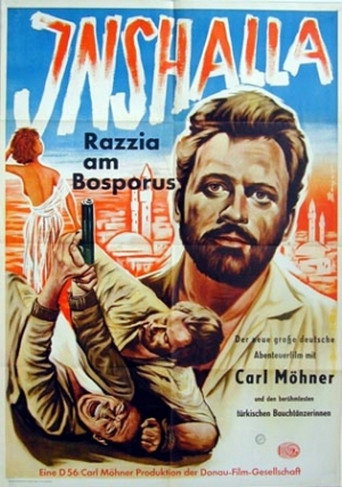
An Interpol agent fighting smugglers in Istanbul.
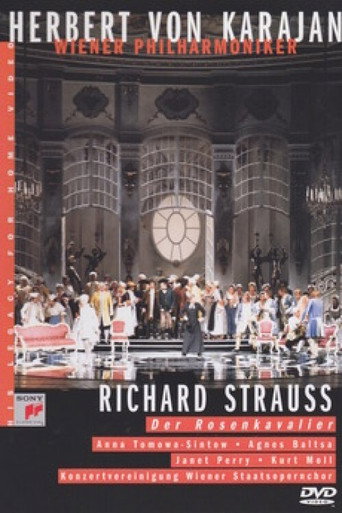
A production of Strauss' opera 'Der Rosenkavalier' performed at the Saltzburg Festival in 1984. Includes the Vienna State Opera Choir, the Philharmonic Orchestra with singers Wilma Lipp, Anna Tomowa-Sintow and Agnes Baltsa. Conducted by Herbert Von Karaja
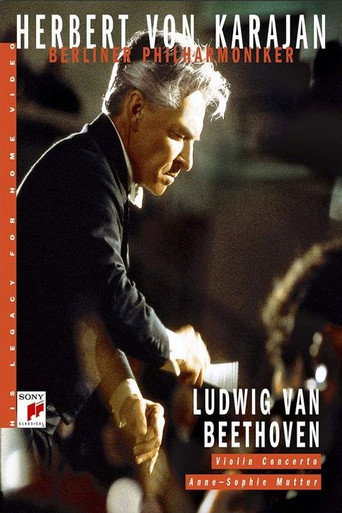
Premiered in 1806, Beethoven’s Violin Concerto in D Major paved the way for three great violin concertos of the 19th and 20th centuries: Brahms, Tchaikovsky, and Sibelius. Extremely expressive and astonishing in it emotional scope, the work nonetheless received an ambivalent response at its premiere. Renowned for his knowledge of Beethoven’s oeuvre, the conductor Herbert von Karajan and the Berliner Philharmoniker are joined by the virtuoso violinist Anne-Sophie Mutter for a masterful performance.
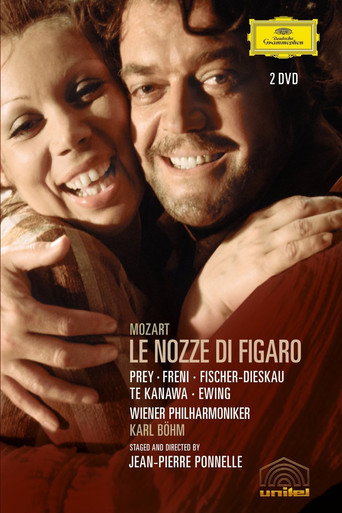
Mozart's Marriage of Figaro is a comedy whose dark undertones explore the blurred boundaries between dying feudalism and emerging Enlightenment. Herman Prey's Figaro is admirably sung in a firm baritone and aptly characterized. So too, is his antagonist, Dietrich Fischer-Dieskau as the Count perpetually frustrated by the scheming wiles of Figaro and Susanna, here the perky Mirella Freni, who sings and acts like a dream. The Countess is creamy-voiced Kiri Te Kanawa, and the Cherubino, Maria Ewing, looks just like the horny, teenaged page she's supposed to be. The all-star leads are complemented by worthy supporting singers, the Vienna Philharmonic at the top of its form, and the experienced Mozartian, Karl Böhm conducting a stylishly fleet performance.
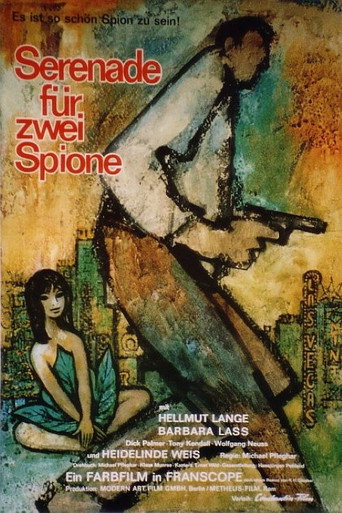
An international gang of gun dealers in the USA has stolen the prototype of a laser rifle from a German laboratory. The FBI agent Cormoran is being sent to recover the state-of-the-art and highly effective weapon. But there are some indications that he has defected to the enemy. Since agent 007 is currently on another mission, the chief of intelligence has to fall back on his second best man, the previous number 006. And so the German secret agent John Krim is given the assignment to get the rifle back, find evidence of Cormoran’s treachery and finally eliminate the colleague. Krim’s journey takes him across the ocean, and there he experiences incredible adventures in San Francisco, Los Angeles and Las Vegas. Two women get in his way, and Krim can’t be sure whether he can trust them or whether they too are working for the other side.
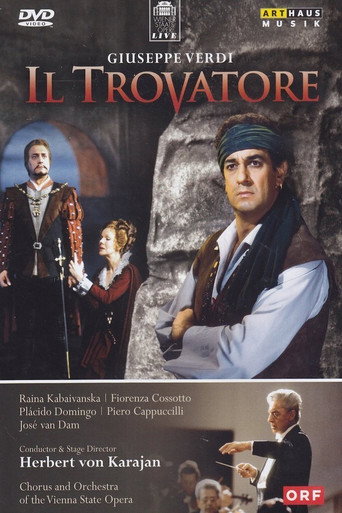
The gypsy Azucena (Fiorenza Cossotto) takes revenge for her mother who was accused of putting a curse on one of the old Count di Luna's two sons: she decides to abduct the younger child and throw it in the flames. But when she is about to carry out this fatal act, the gypsy sacrifices her own child and keeps the old Count’s son, whom she names Manrico (IL TROVATORE, Plácido Domingo). Later, as adults, the troubadour Manrico and the Count di Luna’s elder son (Piero Cappucilli) do not know each other, but become rivals for the beautiful Leonora (Raina Kabaivanska). Manrico succeeds in winning the young woman’s heart, and she sacrifices herself for him, deceiving the Count’s son. Mad with jealousy, the latter orders the execution of the troubadour in front of his mother. Azucena reveals to him that Manrico was his brother. This legendary performance of Giuseppe Verdi's most successful opera was recorded at the Vienna State Opera under the baton of Herbert von Karajan.
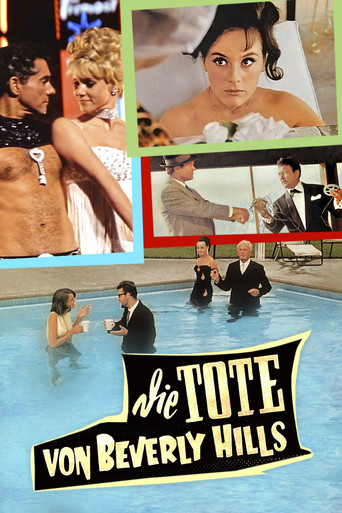
Detective C.G. begins to investigate the death of an attractive woman whose naked body was found in Beverly Hills. When he recovers her journal, he is taken into her past where he finds that she lead a sexually promiscuous life. Perhaps in the pages of the diary will be a clue to her killer's identity.
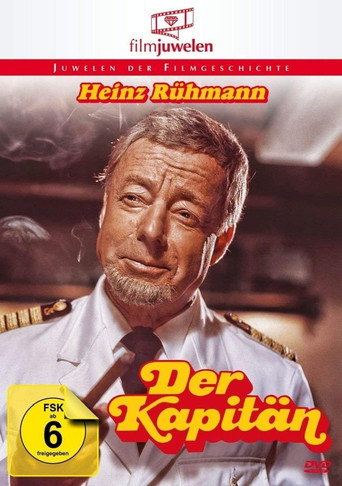
Captain Ebbs is an older, experienced seaman who has, however, only sailed on freighters. While his current old barge, the Martin Luther, has to go into the shipyard for an overhaul, the shipping company gives him command of the elegant cruise ship Julia to temporarily replace a colleague who has fallen ill. The rough Ebbs finds his way into his new job only with difficulty and initially puts his foot in his social mouth.