Ernest Gold Movies, TV Shows, and Filmography

Ernest Gold
Sound
Biography
From Wikipedia, the free encyclopedia Ernst Sigmund Goldner (July 13, 1921 – March 17, 1999), known professionally as Ernest Gold, was an Austrian-born American composer. He is most noted for his work on the film Exodus produced in 1960. Career NBC Orchestra performed Gold's first symphony in 1939, only a year after he moved to the United States. In 1941, he composed a symphony that was later played at Carnegie Hall in 1945. Gold moved to Hollywood in the same year to work with Columbia Pictures, his first significant role being the score for the melodrama Girl of the Limberlost (1945). After this opportunity, Gold wrote scores for other minor films. For the next ten years, he continued to work on B movies, mainly orchestrating and arranging music for western movies and melodramas. He was asked by Stanley Kramer to orchestrate Not as a Stranger (1955). The music for the film was written by George Antheil. This production opened the door for Gold to work with other scores written by Antheil and to orchestrate more of Kramer's films. Gold worked on almost every film Kramer made, including A Child Is Waiting and It's a Mad Mad Mad Mad World. Gold produced his first original film score in 1958 for Too Much, Too Soon. His big break came in 1959, when he was asked to score On the Beach (1959 film) after Antheil became ill and he recommended Gold for the job. Gold is most widely recognized for his work on Exodus (1960). He was contracted by Otto Preminger and, atypically, was able to watch the filming of the movie. Gold spent time in Israel to write the score. In 1968, Gold wrote a Broadway musical called I'm Solomon. He also wrote music for television including Fun with Dick and Jane. In his later life, Gold was the musical director of the Santa Barbara Symphony Orchestra. He also founded the Los Angeles Senior Citizens Orchestra. His concert works include a piano concerto, a string quartet, and a piano sonata. Ernest Gold's "Fight for Survival" from Exodus was sampled by Moby in his song Porcelain. Gold's contributions were recognized with Academy Award nominations and Golden Globe nominations. He won a Golden Globe in 1960 for Best Motion Picture Score for 1959's On the Beach. This film was also nominated for a Music Academy Award that same year. In 1960, Gold's Exodus was nominated for a Golden Globe under the Best Original Score category. The film won an Academy Award for Best Music and a Grammy for Best Soundtrack Album. For his contributions, Gold had his name engraved in the Hollywood Walk of Fame. He was the first composer to receive this honor.
Filmography Movies
Acting

The Victory of Charity
A music professor facing redundancy and a serious hoarding habit is pushed to extremes when he discovers his girlfriend has given a treasured 1960s band jacket to charity. He enlists a young ambitious musicologist to accompany him on a mission to retrieve the jacket.

Something a Little Less Serious: A Tribute to 'It's a Mad Mad Mad Mad World'
A star-studded documentary and tribute to the classic comedy, It's a Mad Mad Mad Mad World.
Production

Judgment at Nuremberg
In 1947, four German judges who served on the bench during the Nazi regime face a military tribunal to answer charges of crimes against humanity. Chief Justice Haywood hears evidence and testimony not only from lead defendant Ernst Janning and his defense attorney Hans Rolfe, but also from the widow of a Nazi general, an idealistic U.S. Army captain and reluctant witness Irene Wallner.

Inherit the Wind
Schoolteacher Bertram Cates is arrested for teaching his students Darwin's theory of evolution. The case receives national attention and one of the newspaper reporters, E.K. Hornbeck, arranges to bring in renowned defense attorney and atheist Henry Drummond to defend Cates. The prosecutor, Matthew Brady is a former presidential candidate, famous evangelist, and old adversary of Drummond.
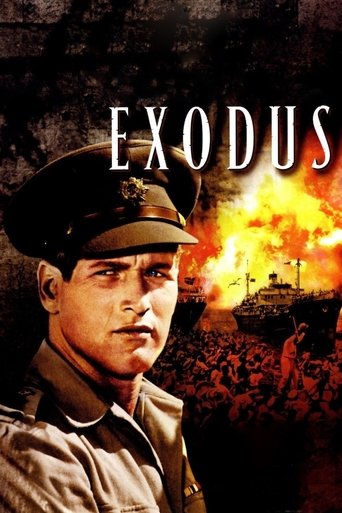
Exodus
Ari Ben Canaan, a passionate member of the Jewish paramilitary group Haganah, attempts to transport 600 Jewish refugees on a dangerous voyage from Cyprus to Palestine on a ship named the Exodus. He faces obstruction from British forces, who will not grant the ship passage to its destination.
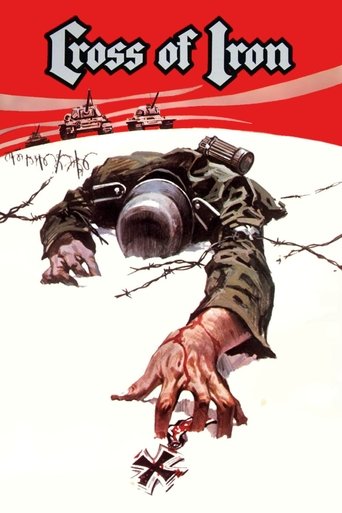
Cross of Iron
It is 1943, and the German army—ravaged and demoralised—is hastily retreating from the Russian front. In the midst of the madness, conflict brews between the aristocratic yet ultimately pusillanimous Captain Stransky and the courageous Corporal Steiner. Stransky is the only man who believes that the Third Reich is still vastly superior to the Russian army. However, within his pompous persona lies a quivering coward who longs for the Iron Cross so that he can return to Berlin a hero. Steiner, on the other hand is cynical, defiantly non-conformist and more concerned with the safety of his own men rather than the horde of military decorations offered to him by his superiors.
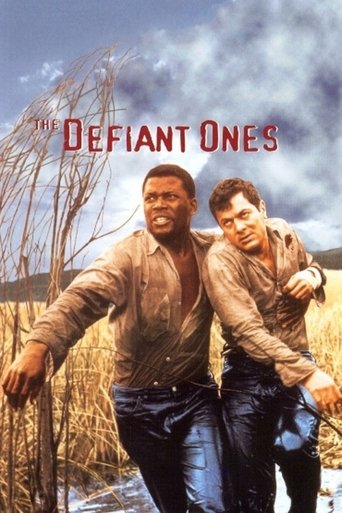
The Defiant Ones
Two convicts—one white, one black—escape while chained to each other.
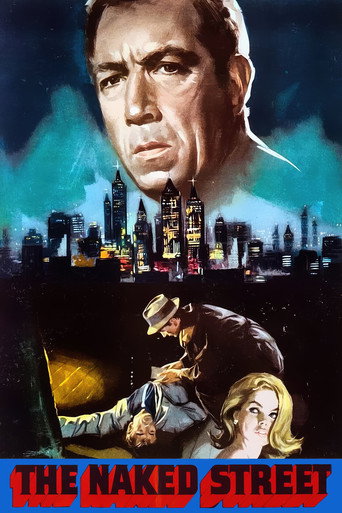
The Naked Street
To make an honest woman of his pregnant sister, Rosalie, callous New York mobster Phil Regal intimidates witnesses and bribes a store clerk to get Rosalie’s condemned boyfriend, Nicky Bradna, out of prison. But Regal’s meddling deeds soon backfire.

It's a Mad, Mad, Mad, Mad World
A group of strangers come across a man dying after a car crash who proceeds to tell them about the $350,000 he buried in California. What follows is the madcap adventures of those strangers as each attempts to claim the prize for himself.

Affair in Havana
While in Havana, a musician gets involved with a crippled man and his beautiful wife... with deadly results.

The Young Philadelphians
Up and coming young lawyer Anthony Lawrence faces several ethical and emotional dilemmas as he climbs the Philadelphia social ladder. His personal and professional skills are tested as he tries to balance the needs of his fiance Joan, the expectations of his colleagues and his own obligation to defend his friend Chester on a murder count.
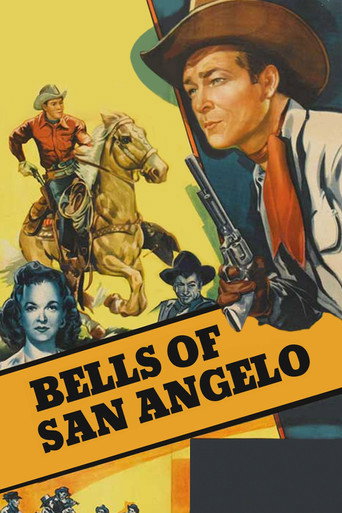
Bells of San Angelo
Gridley is mining silver from an old Mexican mine and bringing it into the USA thru a passage into his worthless mine. Border guard Rogers suspects Gridley and finally finds the secret entrance to the Mexican mine. He sends Lee Madison for help only to have her captured by Gridley. Trigger brings help that takes care of Gridley's men and now Roy has to rescue Madison.
Gallery