Erik Balling Movies, TV Shows, and Filmography
Erik Balling
Writing
Biography
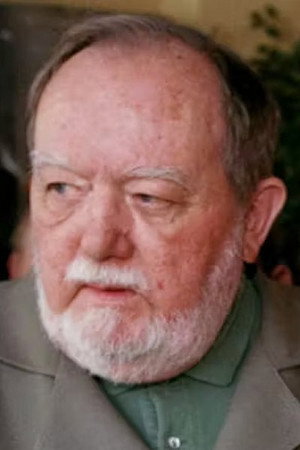
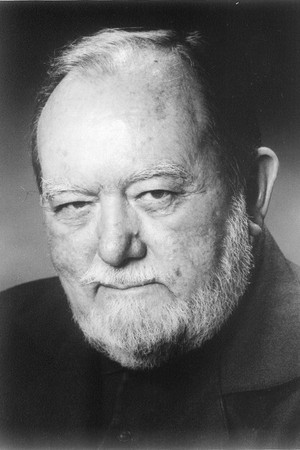
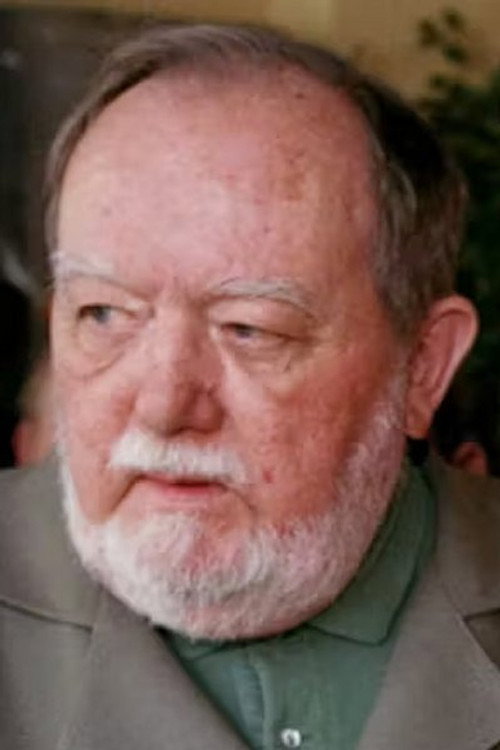
Erik Balling was one of the most beloved Danish filmmaker in the 20th century. Balling was a director, a producer and a writer. Erik Balling was mostly famous for creating such TV epics as "Matador" and "Huset På Christianshavn" and the film-series of "Olsen banden". Erik Balling was born the 19th of November 1925 in the Danish city of Nyborg, as a son of a priest. In 1946 Balling was hired as an assistant at "Nordisk Film Kompagni" - the world's oldest film production company. His talent was soon recognised, and Balling soon had the opportunity to work as a director. His debut as a director came in 1952, with the film: "Vi arme syndere". Balling soon gained a reputation of having good technical skills, and after that film his talent was widely recognised. In 1957 he became head of "Nordisk Film" - the youngest one ever. Balling was mostly famous for his comedies. In his early days he directed Poeten og Lillemor (1959) and Sommer i Tyrol (1964), which were very popular at the time. In the middle of the 1960s Balling tried to chance his style when it came to comedies. At this time the popular James Bond films circled the globe, Balling's next film was inspired by those films, teaming up with Henning Bahs to make the Jamed Bond spoof "Slå Først Frede" (1965), which became very popular in Denmark - so popular it spawned a sequel Slap af, Frede! (1966). This co-work with Henning Bahs was so fruitful that they made many more movies together. This co-work eventually led to film-series of "Olsen banden", which started with Olsen-banden (1968) - and eventually they made a total of 14 "Olsen banden" film, plus a TV series and a movie version where the characters in "Olsen banden" are children. "Olsen banden" was about a small band of small time criminals, trying to become millionaires. "Olsen banden" were not only very popular in Denmark, but also in East-Germany, Poland, Sweden and Norway - especially in Norway and Sweden, who eventually made their own national versions of "Olsen banden", namely the Norwegian "Olsen banden" and the Swedish "Jönssonligan" - Henning Bahs and Erik Balling also helped the Norwegians and the Swedes to write those. In that late 60s and early 70s Balling made the popular Danish TV series "Huset På Christianshavn", which also became the basis for a movie: "Ballade på Christianshavn (1971)". In 1970 Balling produced the very popular Danish TV epic "Matador". More than fifty percent of Denmark's population watched "Matador" in those days. "Matador" was about life in a smaller city in Denmark in the 30s and 40s. Balling was always known for his warm style, when he portrayed humans. Throughout his life, he received many prizes. He was 80 years old when he died the 19th of November 2005.
Filmography Movies
Acting
Bandefører Balling
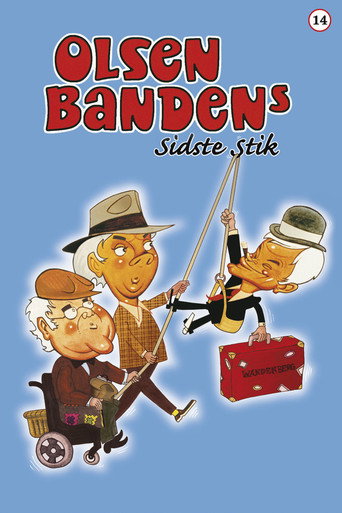
The Olsen Gang's Last Trick
Egon escapes from the psychiatric ward, where he has been incarcerated since the gang's last coup. Keld and Benny pick him up, and when Egon, as always, is planning the big heist, the Olsen Gang is once again on the move.
Profil af et job 1 – Folkene bag kameraet
Production
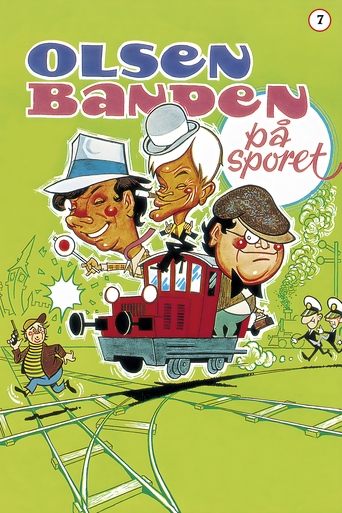
The Olsen Gang on the Track
Egon and his two cronies managed to sneak a fortune with them to Spain. Here they live a life in a whirl of pleasures, but they are not truly happy. While Egon always has the money chained to him, Bøffen still manages to steal them. Egon ends up in jail once again, and when he comes out, he has a brilliant plan.
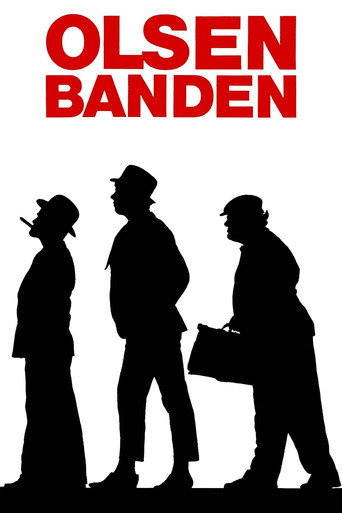
The Olsen Gang
The first of 14 Olsen Gang films presents us with Egon Olsen, head of the gang, and his friends Benny and Kjeld, who want to become the best known gang in Denmark and eventually Europe by stealing a famous Bavarian work of art currently displayed in a Copenhagen museum. Although Egon's plan works out fine, there is only trouble ahead for the little gang.
The Olsen Gang
The first of 14 Olsen Gang films presents us with Egon Olsen, head of the gang, and his friends Benny and Kjeld, who want to become the best known gang in Denmark and eventually Europe by stealing a famous Bavarian work of art currently displayed in a Copenhagen museum. Although Egon's plan works out fine, there is only trouble ahead for the little gang.
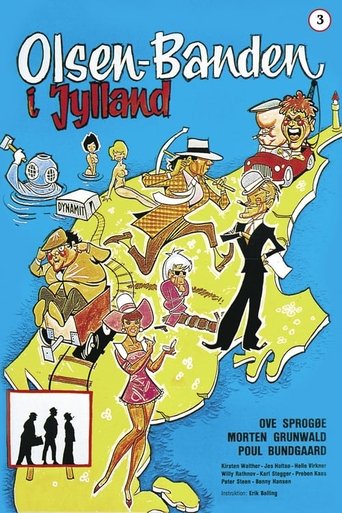
The Olsen Gang in Jutland
The Olsen gang in Jutland. Ones again Egon Olsen has a plan when he gets out of Vridslose State Prison. He has found out that the Germans left a large sum of money (in American dollars and gold bars) in one of their commando bunkers, when they were defeated in 1945; the only problem it's in Jutland. Egon, Benny and Kjeld "appropriate" a car and drives to Jutland along with Kjelds wife and child Yvonne and Borge. They look forward to fooling the the people in Jutland, but of course, things don't go quite as planed. It ends with Benny, Kjeld, Borge and Yvonne sitting in the train back to Copenhagen, were they are overtaken by Egon in his car on the road next to the track. This is the last time the Olsen gang goes to Jutland.
The Olsen Gang in Jutland
The Olsen gang in Jutland. Ones again Egon Olsen has a plan when he gets out of Vridslose State Prison. He has found out that the Germans left a large sum of money (in American dollars and gold bars) in one of their commando bunkers, when they were defeated in 1945; the only problem it's in Jutland. Egon, Benny and Kjeld "appropriate" a car and drives to Jutland along with Kjelds wife and child Yvonne and Borge. They look forward to fooling the the people in Jutland, but of course, things don't go quite as planed. It ends with Benny, Kjeld, Borge and Yvonne sitting in the train back to Copenhagen, were they are overtaken by Egon in his car on the road next to the track. This is the last time the Olsen gang goes to Jutland.
The Olsen Gang on the Track
Egon and his two cronies managed to sneak a fortune with them to Spain. Here they live a life in a whirl of pleasures, but they are not truly happy. While Egon always has the money chained to him, Bøffen still manages to steal them. Egon ends up in jail once again, and when he comes out, he has a brilliant plan.
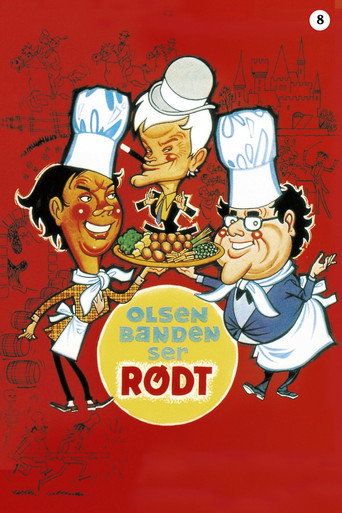
The Olsen Gang Sees Red
Egon and the gang are hired to stage a robbery of an antique Chinese vase for an economically challenged baron. Naturally they fooled, which infuriates Egon. The gang tries to get back at the baron by switching the vase with a cheap Hong Kong copy. One attempt is made during the barons hunting party, where Egon ends up being bricked up in the catacombs. In another attempt, the gang has to coordinate breaking through several walls at The Royal Theater in Copenhagen with the "Elverhøj" overture.
The Olsen Gang Sees Red
Egon and the gang are hired to stage a robbery of an antique Chinese vase for an economically challenged baron. Naturally they fooled, which infuriates Egon. The gang tries to get back at the baron by switching the vase with a cheap Hong Kong copy. One attempt is made during the barons hunting party, where Egon ends up being bricked up in the catacombs. In another attempt, the gang has to coordinate breaking through several walls at The Royal Theater in Copenhagen with the "Elverhøj" overture.
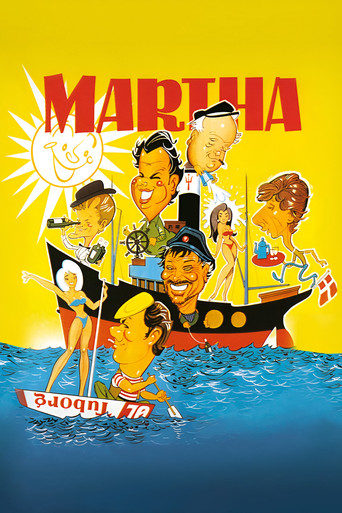
Martha
The oldest ship in the fleet, Martha, and her jolly crew, must race Harald and win, or it's the scrappers next.
Martha
The oldest ship in the fleet, Martha, and her jolly crew, must race Harald and win, or it's the scrappers next.
Gallery